RCSI School of Physiotherapy, RCSI University of Medicine and Health Sciences, Dublin 2, DO2 YN77, Ireland.
Division of Population Health Sciences, RCSI University of Medicine and Health Sciences, Dublin, Ireland.
BMC Health Serv Res. 2022 Aug 28;22(1):1095. doi: 10.1186/s12913-022-08473-6.
Effective support interventions to manage the transition to home after stroke are still mostly unknown.
The purpose of this systematic review was to investigate the effectiveness of support interventions at transition from organised stroke services to independent living at home.
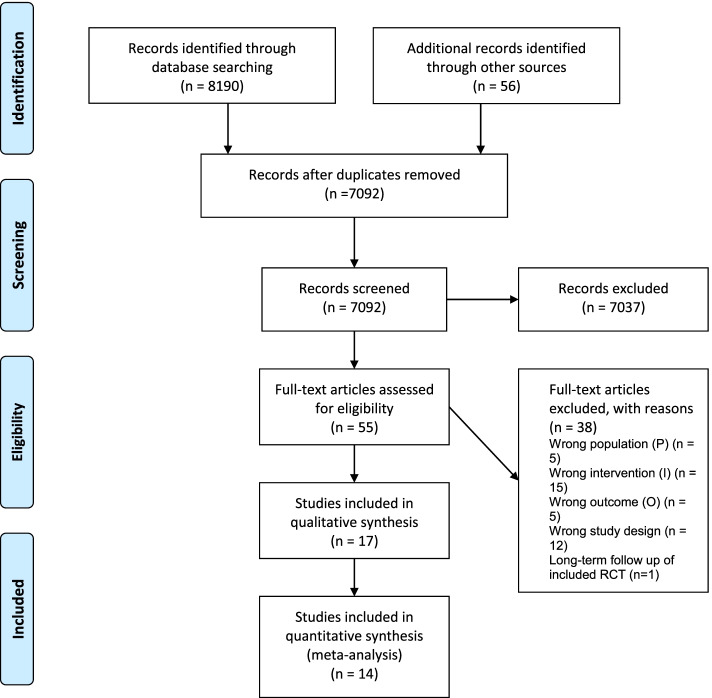
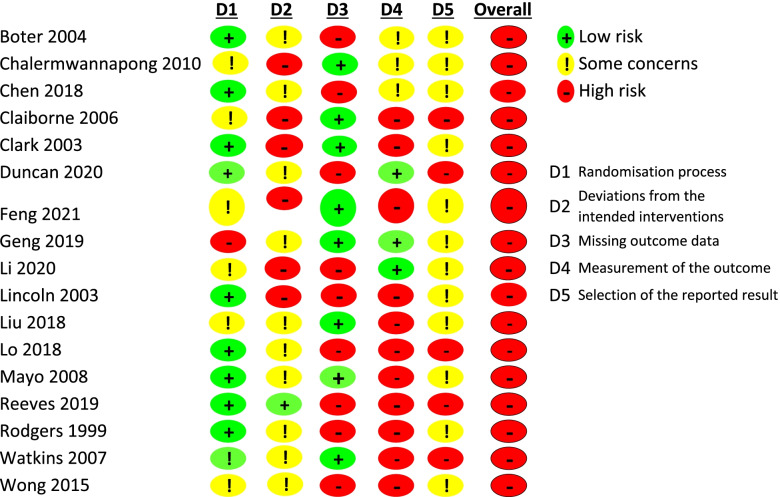
The Cochrane Central Register of Controlled Trials, six databases including MEDLINE and Embase, trial registries, grey literature, and Google Scholar were all searched, up to June 2021. We included randomised controlled trials enrolling people with stroke to receive either standard care or any type of support intervention from organised stroke services to home. The primary outcome was functional status. Two authors determined eligibility, extracted data, evaluated risk of bias (ROB2), and verified the evidence (GRADE). Where possible we performed meta-analyses using Risk Ratios (RR) or Mean Differences (MD).
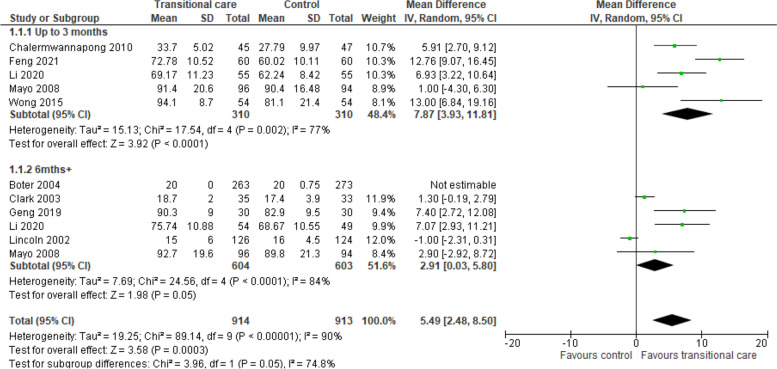
We included 17 studies. Support interventions led to important improvements in functional status, as determined by the Barthel Index up, to 3-months (MD 7.87 points, 95%CI:6.84 to 19.16; 620 participants; five studies; I = 77%). Results showed modest but significant functional gains in the medium to long-term (6-12 month follow up, MD 2.91 points, 95%CI:0.03 to 5.81; 1207 participants; six studies; I = 84%). Certainty of evidence was low. Support interventions may enhance quality of life for up to 3-months (MD 1.3,95% CI:0.84 to 1.76), and reduce depression (SMD -0.1,95% CI:-0.29 to - 0.05) and anxiety (MD -1.18,95% CI:-1.84 to - 0.52) at 6-12 months. Effects on further secondary outcomes are still unclear.
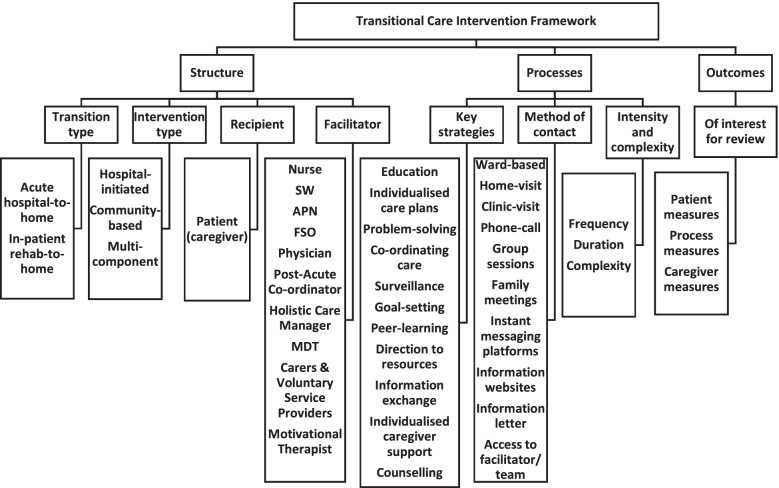
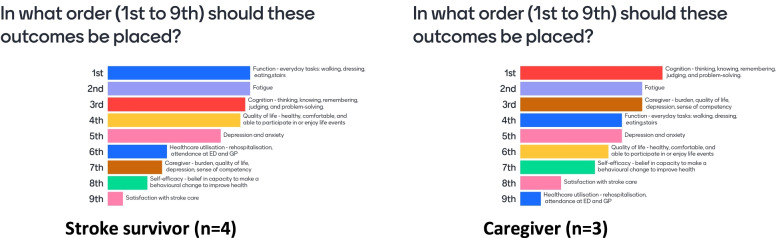
Incorporating support interventions as people who have experienced a stroke transition from hospital to home can improve functional status and other outcomes. Due to study heterogeneity, the essential components of effective transition of care interventions are still unknown. Adoption of core outcome sets in stroke research would allow for greater comparison across studies. Application of a development and evaluation framework engaging stakeholders would increase understanding of priorities for stroke survivors, and inform the key components of an intervention at transition from hospital-to-home.
CRD42021237397 - https://www.crd.york.ac.uk/prospero.
有效支持干预措施以管理中风后向家庭的过渡仍知之甚少。
本系统评价的目的是调查从有组织的中风服务向独立居家生活过渡时,支持干预措施的效果。
我们检索了 Cochrane 对照试验中央注册库、包括 MEDLINE 和 Embase 在内的 6 个数据库、试验注册处、灰色文献和 Google Scholar,检索截至 2021 年 6 月。我们纳入了随机对照试验,这些试验招募了中风患者,以接受有组织的中风服务提供的标准护理或任何类型的支持干预。主要结局是功能状态。两名作者确定了纳入标准、提取数据、评估了偏倚风险(ROB2)并验证了证据(GRADE)。如果可能,我们使用风险比(RR)或均数差值(MD)进行了荟萃分析。
我们纳入了 17 项研究。支持干预措施在功能状态方面有显著的改善,这是通过 Barthel 指数来衡量的,随访时间为 3 个月(MD 7.87 分,95%CI:6.84 至 19.16;620 名参与者;5 项研究;I²=77%)。结果表明,在中至长期(6-12 个月随访时,MD 2.91 分,95%CI:0.03 至 5.81;1207 名参与者;6 项研究;I²=84%)有适度但显著的功能获益。证据的确定性较低。支持干预措施可能在 3 个月内提高生活质量(MD 1.3,95%CI:0.84 至 1.76),并在 6-12 个月时降低抑郁(SMD -0.1,95%CI:-0.29 至 -0.05)和焦虑(MD -1.18,95%CI:-1.84 至 -0.52)。进一步的次要结局的效果仍不清楚。
在中风患者从医院过渡到家庭时,纳入支持干预措施可以改善功能状态和其他结局。由于研究存在异质性,有效过渡护理干预措施的基本组成部分仍不清楚。在中风研究中采用核心结局集将允许在研究之间进行更大的比较。采用涉及利益相关者的发展和评估框架将增加对中风幸存者优先事项的理解,并为从医院到家庭的过渡提供干预的关键组成部分。
CRD42021237397 - https://www.crd.york.ac.uk/prospero.