Experimental Haemostasis Group, Department for BioMedical Research, DBMR, University of Bern, Bern, Switzerland.
Wallace H. Coulter Department of Biomedical Engineering, Georgia Institute of Technology and Emory University, Atlanta, GA, United States.
Front Immunol. 2022 Aug 12;13:948190. doi: 10.3389/fimmu.2022.948190. eCollection 2022.
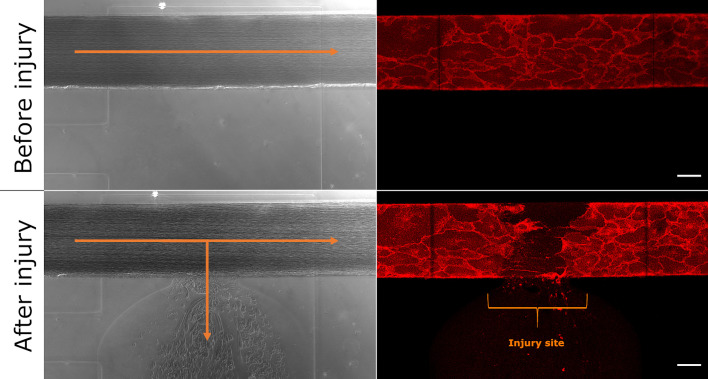
Complement lectin pathway components, in particular mannan-binding lectin (MBL) and MBL-associated serine proteases (MASPs) have been shown to interact with coagulation factors and contribute to clot formation. Here we investigated the role of MBL and MASP-1 in the haemostatic response following mechanical vessel injury in a human microfluidic bleeding model.
We studied haemostasis in a microvascular bleeding model in the presence of human endothelial cells and human whole blood under flow conditions. We monitored incorporation of proteins into the clot with fluorescently labelled antibodies and studied their effects on clot formation, platelet activation, and bleeding time with specific inhibitors. Platelet activation was also studied by flow cytometry.
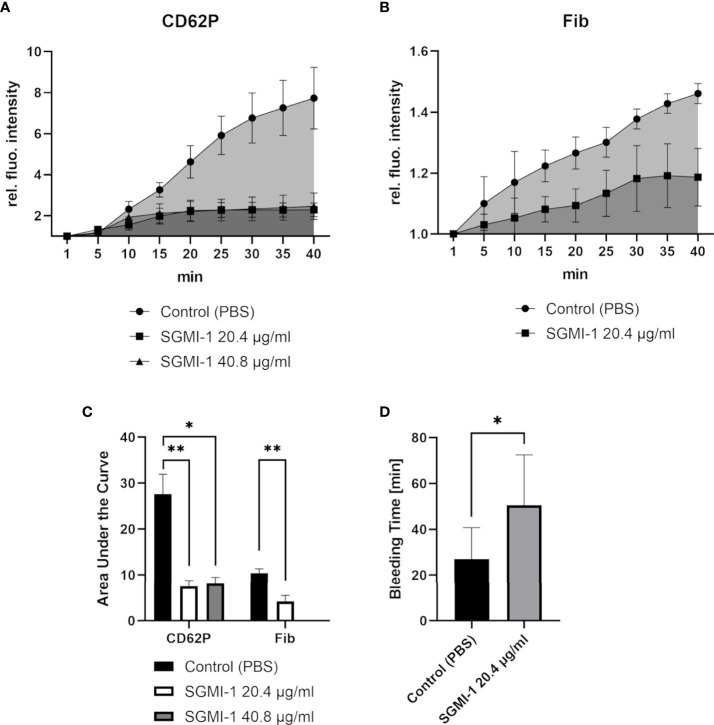
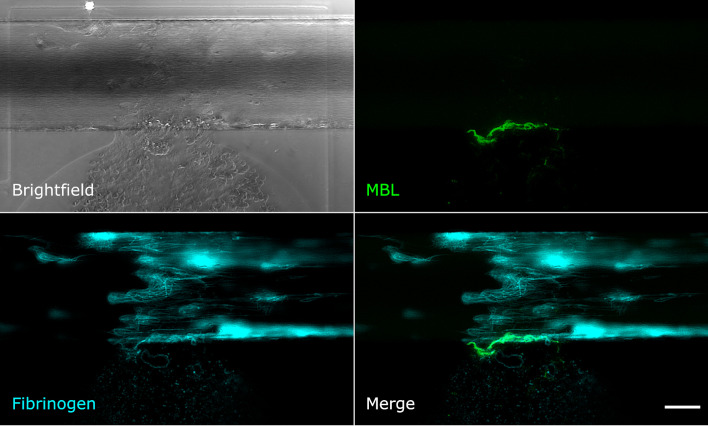
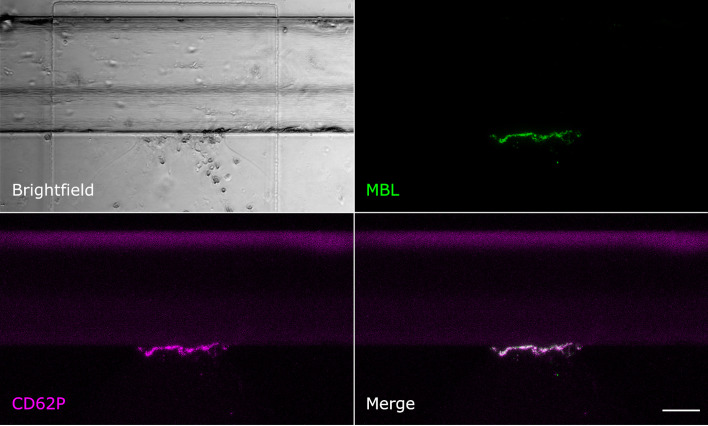
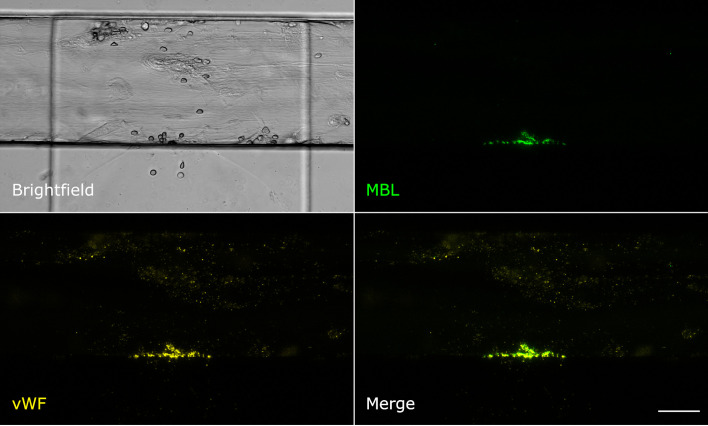
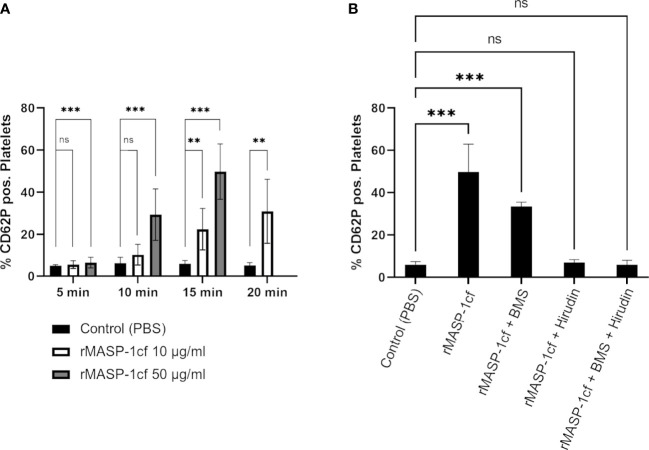
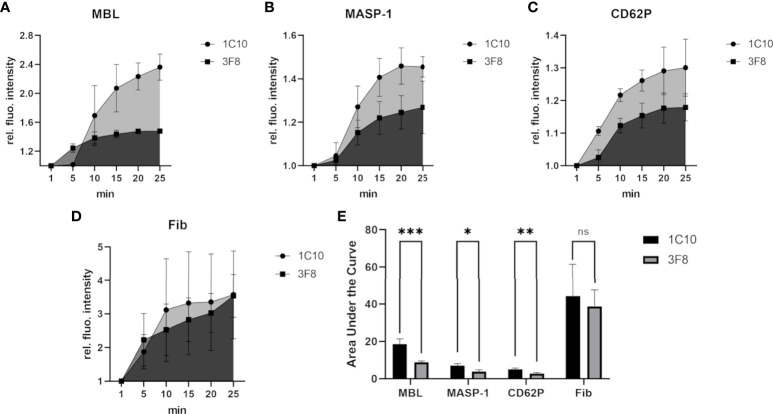
Upon vessel injury, MBL accumulated at the injury site in a well-defined wall-like structure. MBL showed partial colocalisation with fibrin, and strong colocalisation with von Willebrand factor and (activated) platelets. Flow cytometry ruled out direct binding of MBL to platelets, but confirmed a PAR4- and thrombin-dependent platelet-activating function of MASP-1. Inhibiting MBL during haemostasis reduced platelet activation, while inhibiting MASP-1 reduced platelet activation, fibrin deposition and prolonged bleeding time.
We show in a microvascular human bleeding model that MBL and MASP-1 have important roles in the haemostatic response triggered by mechanical vessel injury: MBL recognises the injury site, while MASP-1 increases fibrin formation, platelet activation and shortens bleeding time. While the complement lectin pathway may be harmful in the context of pathological thrombosis, it appears to be beneficial during the physiological coagulation response by supporting the crucial haemostatic system.
补体凝集素途径成分,特别是甘露聚糖结合凝集素(MBL)和 MBL 相关丝氨酸蛋白酶(MASPs)已被证明与凝血因子相互作用并有助于血栓形成。在这里,我们在人微血管出血模型中研究了机械血管损伤后凝血反应中 MBL 和 MASP-1 的作用。
我们在存在人内皮细胞和人全血的情况下在流动条件下研究了微血管出血模型中的止血。我们用荧光标记的抗体监测蛋白质掺入血栓中,并研究它们对血栓形成、血小板活化和出血时间的影响,使用特定的抑制剂。还通过流式细胞术研究血小板活化。
血管损伤后,MBL 在损伤部位积聚形成明确的壁状结构。MBL 与纤维蛋白部分共定位,并与血管性血友病因子和(活化的)血小板强烈共定位。流式细胞术排除了 MBL 与血小板的直接结合,但证实了 MASP-1 对 PAR4 和凝血酶依赖性血小板活化功能。在止血过程中抑制 MBL 可减少血小板活化,而抑制 MASP-1 可减少血小板活化、纤维蛋白沉积和延长出血时间。
我们在人微血管出血模型中表明,MBL 和 MASP-1 在机械血管损伤触发的止血反应中具有重要作用:MBL 识别损伤部位,而 MASP-1 增加纤维蛋白形成、血小板活化和缩短出血时间。虽然补体凝集素途径在病理性血栓形成的情况下可能有害,但它似乎通过支持关键的止血系统在生理凝血反应中是有益的。