• 文献检索
  • 文档翻译
  • 深度研究
  • 学术资讯
  • Suppr Zotero 插件Zotero 插件
  • 邀请有礼
  • 套餐&价格
  • 历史记录
应用&插件
Suppr Zotero 插件Zotero 插件浏览器插件Mac 客户端Windows 客户端微信小程序
定价
高级版会员购买积分包购买API积分包
服务
文献检索文档翻译深度研究API 文档MCP 服务
关于我们
关于 Suppr公司介绍联系我们用户协议隐私条款
关注我们

Suppr 超能文献

核心技术专利:CN118964589B侵权必究
粤ICP备2023148730 号-1Suppr @ 2026

文献检索

告别复杂PubMed语法,用中文像聊天一样搜索,搜遍4000万医学文献。AI智能推荐,让科研检索更轻松。

立即免费搜索

文件翻译

保留排版,准确专业,支持PDF/Word/PPT等文件格式,支持 12+语言互译。

免费翻译文档

深度研究

AI帮你快速写综述,25分钟生成高质量综述,智能提取关键信息,辅助科研写作。

立即免费体验

2010年至2021年期间非临床青少年样本中非自杀性自伤行为的全球患病率及特征:一项荟萃分析。

Global prevalence and characteristics of non-suicidal self-injury between 2010 and 2021 among a non-clinical sample of adolescents: A meta-analysis.

作者信息

Xiao Qingqing, Song Xiaozhen, Huang Lijuan, Hou Dandan, Huang Xuehua

机构信息

Mental Health Center, West China Hospital, Sichuan University, Chengdu, China.

West China School of Nursing, Sichuan University, Chengdu, China.

出版信息

Front Psychiatry. 2022 Aug 10;13:912441. doi: 10.3389/fpsyt.2022.912441. eCollection 2022.

DOI:10.3389/fpsyt.2022.912441
PMID:36032224
原文链接:https://pmc.ncbi.nlm.nih.gov/articles/PMC9399519/
Abstract

BACKGROUND

Adolescents with immature mind and unstable emotional control are high-risk groups of non-suicidal self-injury (NSSI) behavior. We meta-analyzed the global prevalence of NSSI and prevalence of NSSI characteristics in a non-clinical sample of adolescents between 2010 and 2021.

METHODS

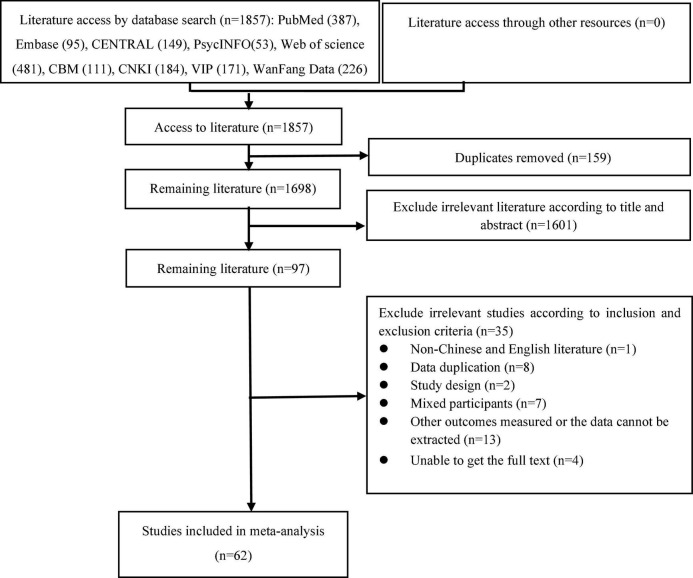
A systematic search for relevant articles published from January 1, 2010 to June 30, 2021 was performed within the scholarly database search engines of CBM, CNKI, VIP, Wanfang, PubMed, Web of Science, PsycINFO, and Embase. Eligibility criteria were as follows: provided cross-sectional data on the prevalence of NSSI; the subjects were non-clinical sample adolescents; and a clear definition of NSSI was reported. We used the following definiton of NSSI as our standard: the deliberate, self-inflicted destruction of body tissue, such as cutting, burning, and biting, without attempted suicide. The quality evaluation tool for cross-sectional studies recommended by the JBI was used. The global prevalence of NSSI was calculated based on the random-effects model by Comprehensive Meta-analysis version 3.0. Subgroup analyses were performed to compare the prevalence according to sex, living place, smoking or drinking history, and family structure.

RESULTS

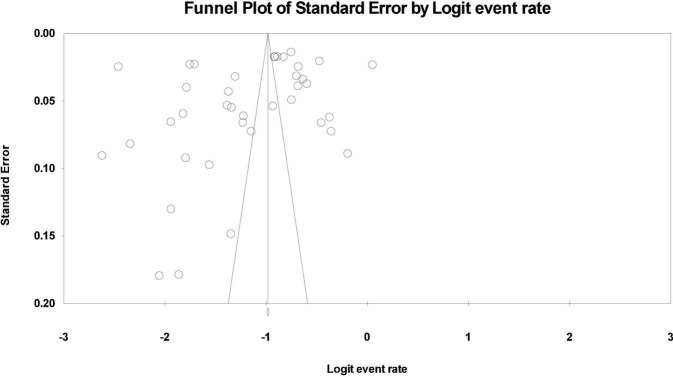
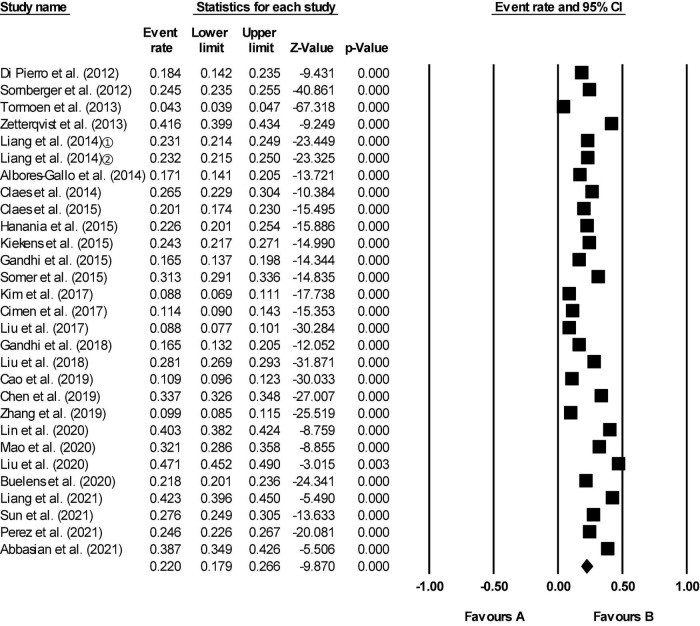
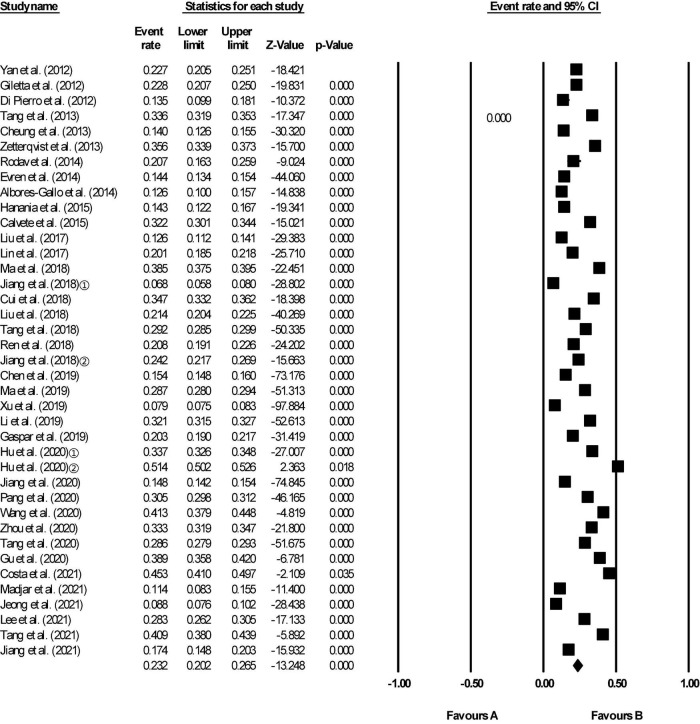
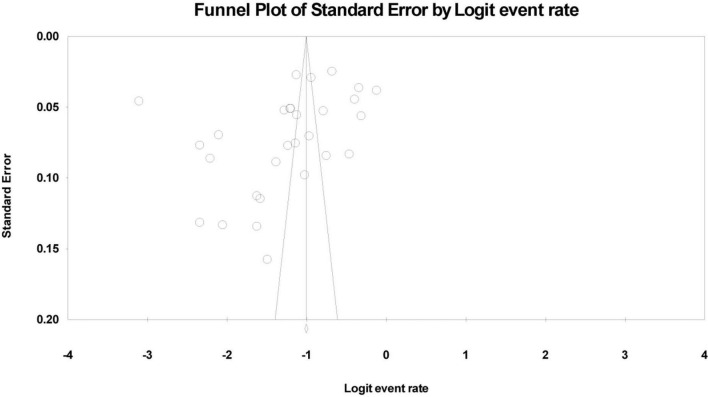
Sixty-two studies involving 264,638 adolescents were included. The aggregate prevalence of NSSI among a non-clinical sample of adolescents was similar between over a lifetime (22.0%, 95% CI 17.9-26.6) and during a 12-month period (23.2%, 95% CI 20.2-26.5). Repetitive NSSI was more common than episodic NSSI (20.3% vs. 8.3%) but the frequency of mild injury (12.6%) was similar to that of moderate injury (11.6%). Multiple-method NSSI occurred slightly more often compared than one-method NSSI (16.0% vs. 11.1%). The top three types of NSSI in adolescents were banging/hitting (12.0%, 95% CI 8.9-15.9), pinching (10.0%, 95% CI 6.7-14.8), and pulling hair (9.8%, 95% CI 8.3-11.5), and the least common type was swallowing drugs/toxic substances/chemicals (1.0%, 95% CI 0.5-2.2). Subgroup analyses showed that being female, smoking, drinking, having siblings, and belonging to a single-parent family may be linked to higher prevalence of NSSI.

CONCLUSION

This meta-analysis found a high prevalence of NSSI in non-clinical sample of adolescents, but there are some changes in severity, methods, and reasons. Based on the current evidence, adolescents in modern society are more inclined to implement NSSI behavior by a variety of ways, which usually are repetitive, and moderate and severe injuries are gradually increasing. It is also worth noting that adolescents with siblings or in single-parent families are relatively more likely to implement NSSI behavior due to maladjustment to the new family model. Future research needs to continue to elucidate the features and risk factors of NSSI so as to intervene in a targeted way.

LIMITATION

The limitation of this study is that the heterogeneity among the included studies is not low, and it is mainly related to Chinese and English studies. The results of this study should be used with caution.

SYSTEMATIC REVIEW REGISTRATION

[www.crd.york.ac.uk/prospero/], identifier [CRD42022283217].
https://cdn.ncbi.nlm.nih.gov/pmc/blobs/40bb/9399519/43211d8aa142/fpsyt-13-912441-g005.jpg
https://cdn.ncbi.nlm.nih.gov/pmc/blobs/40bb/9399519/42181b10069a/fpsyt-13-912441-g001.jpg
https://cdn.ncbi.nlm.nih.gov/pmc/blobs/40bb/9399519/e09dd350adc6/fpsyt-13-912441-g002.jpg
https://cdn.ncbi.nlm.nih.gov/pmc/blobs/40bb/9399519/cacae387e7e1/fpsyt-13-912441-g003.jpg
https://cdn.ncbi.nlm.nih.gov/pmc/blobs/40bb/9399519/23ff84edbffe/fpsyt-13-912441-g004.jpg
https://cdn.ncbi.nlm.nih.gov/pmc/blobs/40bb/9399519/43211d8aa142/fpsyt-13-912441-g005.jpg
https://cdn.ncbi.nlm.nih.gov/pmc/blobs/40bb/9399519/42181b10069a/fpsyt-13-912441-g001.jpg
https://cdn.ncbi.nlm.nih.gov/pmc/blobs/40bb/9399519/e09dd350adc6/fpsyt-13-912441-g002.jpg
https://cdn.ncbi.nlm.nih.gov/pmc/blobs/40bb/9399519/cacae387e7e1/fpsyt-13-912441-g003.jpg
https://cdn.ncbi.nlm.nih.gov/pmc/blobs/40bb/9399519/23ff84edbffe/fpsyt-13-912441-g004.jpg
https://cdn.ncbi.nlm.nih.gov/pmc/blobs/40bb/9399519/43211d8aa142/fpsyt-13-912441-g005.jpg
摘要

背景

心智不成熟且情绪控制不稳定的青少年是非自杀性自伤(NSSI)行为的高危人群。我们对2010年至2021年间非临床样本青少年中NSSI的全球患病率及NSSI特征患病率进行了荟萃分析。

方法

在CBM、CNKI、VIP、万方、PubMed、Web of Science、PsycINFO和Embase等学术数据库搜索引擎中,对2010年1月1日至2021年6月30日发表的相关文章进行系统检索。纳入标准如下:提供NSSI患病率的横断面数据;研究对象为非临床样本青少年;报告了NSSI的明确定义。我们采用以下NSSI定义作为标准:故意自我造成身体组织破坏,如切割、灼烧和咬噬,且无自杀企图。使用了JBI推荐的横断面研究质量评估工具。基于随机效应模型,采用Comprehensive Meta-analysis 3.0软件计算NSSI的全球患病率。进行亚组分析以比较不同性别、居住地点、吸烟或饮酒史以及家庭结构的患病率。

结果

纳入62项研究,涉及264,638名青少年。在非临床样本青少年中,NSSI的终生患病率(22.0%,95%CI 17.9 - 26.6)与12个月期间患病率(23.2%,95%CI 20.2 - 26.5)相似。重复性NSSI比偶发性NSSI更常见(20.3%对8.3%)但轻度损伤频率(12.6%)与中度损伤频率(11.6%)相似。多种方式的NSSI比单一方式的NSSI略多(16.0%对11.1%)。青少年中NSSI的前三种类型是撞击/击打(12.0%,95%CI 8.9 - 15.9)、掐捏(10.0%,95%CI 6.7 - 14.8)和拔头发(9.8%,95%CI 8.3 - 11.5),最不常见的类型是吞服药物/有毒物质/化学品(1.0%,95%CI 0.5 - 2.2)。亚组分析表明,女性、吸烟、饮酒、有兄弟姐妹以及属于单亲家庭可能与NSSI的较高患病率相关。

结论

这项荟萃分析发现非临床样本青少年中NSSI患病率较高,但在严重程度、方式和原因方面存在一些变化。基于当前证据,现代社会的青少年更倾向于通过多种方式实施NSSI行为,这些行为通常具有重复性且中度和重度损伤逐渐增加。还值得注意的是,有兄弟姐妹或处于单亲家庭的青少年因对新家庭模式适应不良而相对更易实施NSSI行为。未来研究需要继续阐明NSSI的特征和危险因素,以便进行有针对性的干预。

局限性

本研究的局限性在于纳入研究间的异质性不低,且主要与中英文研究相关。本研究结果应谨慎使用。

系统评价注册

[www.crd.york.ac.uk/prospero/],标识符[CRD42022283217]

相似文献

1
Global prevalence and characteristics of non-suicidal self-injury between 2010 and 2021 among a non-clinical sample of adolescents: A meta-analysis.2010年至2021年期间非临床青少年样本中非自杀性自伤行为的全球患病率及特征:一项荟萃分析。
Front Psychiatry. 2022 Aug 10;13:912441. doi: 10.3389/fpsyt.2022.912441. eCollection 2022.
2
Folic acid supplementation and malaria susceptibility and severity among people taking antifolate antimalarial drugs in endemic areas.在流行地区,服用抗叶酸抗疟药物的人群中,叶酸补充剂与疟疾易感性和严重程度的关系。
Cochrane Database Syst Rev. 2022 Feb 1;2(2022):CD014217. doi: 10.1002/14651858.CD014217.
3
Prevalence of and risk factors for non-suicidal self-injury in rural China: Results from a nationwide survey in China.中国农村非自杀性自伤的流行率及风险因素:来自中国全国性调查的结果。
J Affect Disord. 2018 Jan 15;226:188-195. doi: 10.1016/j.jad.2017.09.051. Epub 2017 Sep 28.
4
Non suicidal self injury and suicidal behavior among adolescents: co-occurrence and associated risk factors.青少年非自杀性自伤与自杀行为:共病及相关危险因素。
BMC Psychiatry. 2022 Feb 9;22(1):96. doi: 10.1186/s12888-022-03763-z.
5
The pooled prevalence and influential factors of non-suicidal self-injury in non-clinical samples during the COVID-19 outbreak: A meta-analysis.COVID-19疫情期间非临床样本中非自杀性自伤的合并患病率及影响因素:一项荟萃分析。
J Affect Disord. 2023 Dec 15;343:109-118. doi: 10.1016/j.jad.2023.09.036. Epub 2023 Oct 5.
6
A meta-analysis of co-occurrence of non-suicidal self-injury and suicide attempt: Implications for clinical intervention and future diagnosis.非自杀性自伤与自杀未遂共现的荟萃分析:对临床干预和未来诊断的启示
Front Psychiatry. 2022 Aug 12;13:976217. doi: 10.3389/fpsyt.2022.976217. eCollection 2022.
7
Characteristics and functions of non-suicidal self-injury in a community sample of adolescents.青少年社区样本中非自杀性自伤行为的特征与功能
Psychol Med. 2007 Aug;37(8):1183-92. doi: 10.1017/S003329170700027X. Epub 2007 Mar 12.
8
Sex Differences in the Global Prevalence of Nonsuicidal Self-Injury in Adolescents: A Meta-Analysis.青少年非自杀性自伤全球患病率的性别差异:一项荟萃分析。
JAMA Netw Open. 2024 Jun 3;7(6):e2415436. doi: 10.1001/jamanetworkopen.2024.15436.
9
Global Lifetime and 12-Month Prevalence of Suicidal Behavior, Deliberate Self-Harm and Non-Suicidal Self-Injury in Children and Adolescents between 1989 and 2018: A Meta-Analysis.全球范围内 1989 年至 2018 年儿童和青少年自杀行为、蓄意自伤和非自杀性自伤的终生发生率和 12 个月发生率:一项荟萃分析。
Int J Environ Res Public Health. 2019 Nov 19;16(22):4581. doi: 10.3390/ijerph16224581.
10
A systematic review and meta-analysis of factors related to non-suicidal self-injury among Chinese adolescents.一项关于中国青少年非自杀性自伤相关因素的系统评价和荟萃分析。
Psychiatry Res. 2023 Aug;326:115329. doi: 10.1016/j.psychres.2023.115329. Epub 2023 Jul 10.

引用本文的文献

1
The Relationship Between Nonsuicidal Self-Injury and Depression Symptoms in Chinese Adolescents: A Cross-Lagged Panel Network Analysis.中国青少年非自杀性自伤行为与抑郁症状之间的关系:一项交叉滞后面板网络分析
Psychol Res Behav Manag. 2025 Aug 28;18:1809-1823. doi: 10.2147/PRBM.S530888. eCollection 2025.
2
The mediating roles of stressful life events and negative affect in the relationship between childhood maltreatment and non-suicidal self-injury among clinical adolescents.应激性生活事件和消极情绪在临床青少年童年期虐待与非自杀性自伤关系中的中介作用
Eur J Psychotraumatol. 2025 Dec;16(1):2542045. doi: 10.1080/20008066.2025.2542045. Epub 2025 Sep 2.
3

本文引用的文献

1
Influential Factors of Non-suicidal Self-Injury in an Eastern Cultural Context: A Qualitative Study From the Perspective of School Mental Health Professionals.东方文化背景下非自杀性自伤的影响因素:一项基于学校心理健康专业人员视角的定性研究
Front Psychiatry. 2021 Sep 28;12:681985. doi: 10.3389/fpsyt.2021.681985. eCollection 2021.
2
Gender Differences in the Prevalence of and Factors Related to Non-Suicidal Self-Injury among Middle and High School Students in South Korea.韩国中学生非自杀性自伤的发生率及相关因素的性别差异。
Int J Environ Res Public Health. 2021 Jun 2;18(11):5965. doi: 10.3390/ijerph18115965.
3
Intermittent theta burst stimulation for non-suicidal self-injury in adolescents with major depressive disorder: a randomized, sham-controlled trial.
间歇性θ波爆发刺激治疗青少年重度抑郁症患者的非自杀性自伤行为:一项随机、假刺激对照试验。
Mol Psychiatry. 2025 Aug 29. doi: 10.1038/s41380-025-03183-x.
4
Electrophysiological characteristics in adolescents with non-suicidal self-injury: an event-related potential study and source analysis.非自杀性自伤青少年的电生理特征:一项事件相关电位研究及源分析
Front Psychiatry. 2025 Aug 7;16:1596035. doi: 10.3389/fpsyt.2025.1596035. eCollection 2025.
5
Unveiling the neural signatures of adolescents with non-suicidal self-injury behavior: an fNIRS study.揭示非自杀性自伤行为青少年的神经特征:一项功能近红外光谱研究。
Front Psychiatry. 2025 Jul 24;16:1604474. doi: 10.3389/fpsyt.2025.1604474. eCollection 2025.
6
The Contribution of Social and Structural Determinants of Health Deficits to Mental and Behavioral Health Among a Diverse Group of Young People.健康赤字的社会和结构决定因素对不同青年群体心理和行为健康的影响
Int J Environ Res Public Health. 2025 Jun 26;22(7):1013. doi: 10.3390/ijerph22071013.
7
Implementing twelve-weeks of loving-kindness meditation and mindfulness of breathing for adolescents with nonsuicidal self-injury and their parents: a mixed method pilot study.对有非自杀性自伤行为的青少年及其父母实施为期十二周的慈爱冥想和呼吸正念训练:一项混合方法的试点研究。
BMC Psychol. 2025 Jul 23;13(1):822. doi: 10.1186/s40359-025-03151-8.
8
Assessment of suicidal risk factors in young depressed persons with non-suicidal self-injury based on an artificial intelligence.基于人工智能对伴有非自杀性自伤行为的年轻抑郁症患者自杀风险因素的评估
BMC Psychol. 2025 Jul 8;13(1):751. doi: 10.1186/s40359-025-03065-5.
9
Clinical and psychological profiles of patients with different patterns of nonsuicidal self-injury.不同非自杀性自伤模式患者的临床和心理特征。
Front Psychiatry. 2025 Jun 19;16:1570880. doi: 10.3389/fpsyt.2025.1570880. eCollection 2025.
10
Interconnectivity among different nonsuicidal self-injurious methods - a network analysis.不同非自杀性自伤方法之间的相互关联性——一项网络分析
BMC Psychiatry. 2025 Jul 1;25(1):601. doi: 10.1186/s12888-025-07045-2.
Prevalence and psychosocial risk factors of nonsuicidal self-injury among adolescents during the COVID-19 outbreak.
新冠疫情期间青少年非自杀性自伤行为的患病率及心理社会风险因素
Curr Psychol. 2021 Jun 1:1-10. doi: 10.1007/s12144-021-01931-0.
4
Maladaptive behaviours in adolescence and their associations with personality traits, emotion dysregulation and other clinical features in a sample of Italian students: a cross-sectional study.意大利学生样本中青少年的适应不良行为及其与人格特质、情绪调节障碍和其他临床特征的关联:一项横断面研究。
Borderline Personal Disord Emot Dysregul. 2021 May 4;8(1):14. doi: 10.1186/s40479-021-00154-w.
5
Characteristics and Unidimensionality of Non-suicidal Self-injury in a Community Sample of Spanish Adolescents.西班牙青少年社区样本中非自杀性自伤的特征和单维性。
Psicothema. 2021 May;33(2):251-258. doi: 10.7334/psicothema2020.249.
6
Self-Injurious Behavior in Community Youth.社区青少年的自伤行为。
Int J Environ Res Public Health. 2021 Feb 17;18(4):1955. doi: 10.3390/ijerph18041955.
7
Nonsuicidal self-injury thoughts and behavioural characteristics: Associations with suicidal thoughts and behaviours among community adolescents.非自杀性自伤意念和行为特征:与社区青少年自杀意念和行为的关联。
J Affect Disord. 2021 Mar 1;282:1247-1254. doi: 10.1016/j.jad.2020.12.201. Epub 2021 Jan 6.
8
Non-suicidal self-injury is associated with psychotic like experiences, depression, and bullying in Korean adolescents.非自杀性自伤与韩国青少年的精神病样体验、抑郁和欺凌有关。
Early Interv Psychiatry. 2021 Dec;15(6):1696-1704. doi: 10.1111/eip.13115. Epub 2021 Jan 18.
9
Online Self-Injury Activities among Psychiatrically Hospitalized Adolescents: Prevalence, Functions, and Perceived Consequences.精神科住院青少年的网络自伤行为:流行率、功能及感知后果。
Res Child Adolesc Psychopathol. 2021 Apr;49(4):519-531. doi: 10.1007/s10802-020-00734-4. Epub 2021 Jan 6.
10
Association between parenting and non-suicidal self-injury among adolescents in Yunnan, China: a cross-sectional survey.中国云南青少年养育方式与非自杀性自伤行为的关联:一项横断面调查
PeerJ. 2020 Dec 7;8:e10493. doi: 10.7717/peerj.10493. eCollection 2020.