Jeng Jing-Yi, Carlton Adam J, Goodyear Richard J, Chinowsky Colbie, Ceriani Federico, Johnson Stuart L, Sung Tsung-Chang, Dayn Yelena, Richardson Guy P, Bowl Michael R, Brown Steve D M, Manor Uri, Marcotti Walter
School of Bioscience, University of Sheffield, Sheffield S10 2TN, UK.
Sussex Neuroscience, School of Life Sciences, University of Sussex, Falmer, Brighton BN1 9QG, UK.
Mol Ther Methods Clin Dev. 2022 Jul 31;26:355-370. doi: 10.1016/j.omtm.2022.07.012. eCollection 2022 Sep 8.
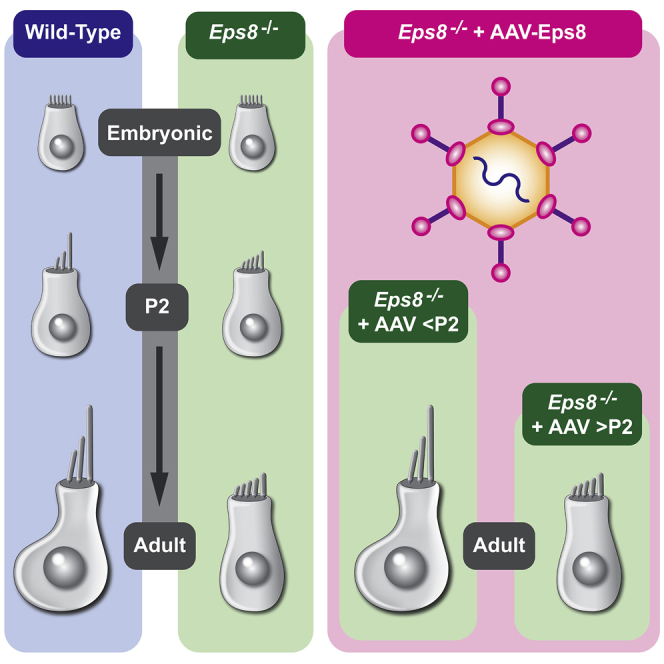
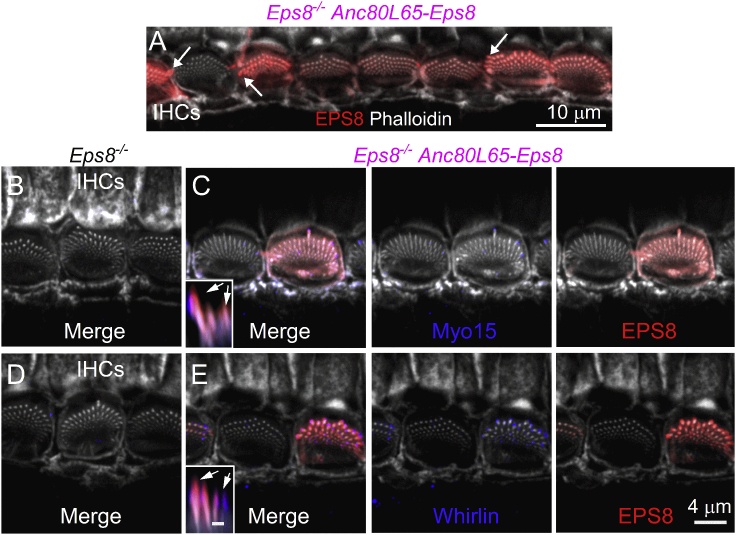
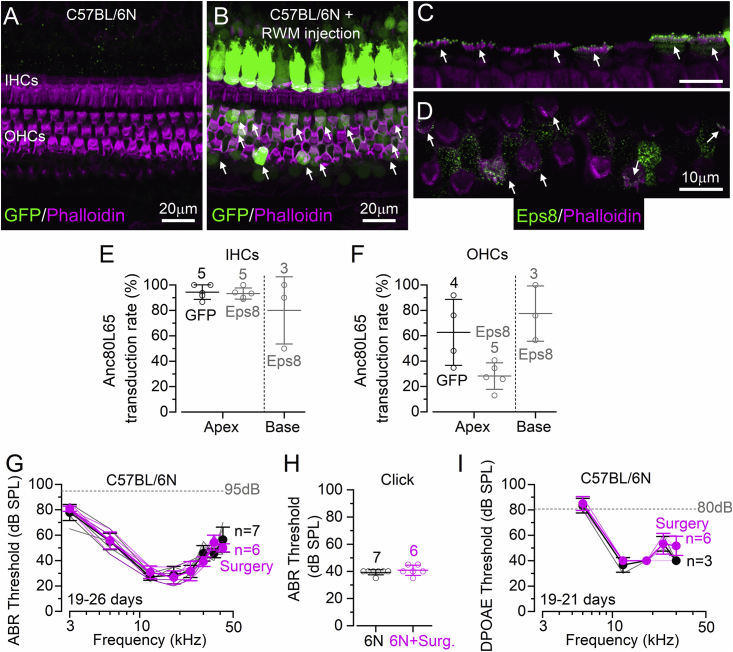
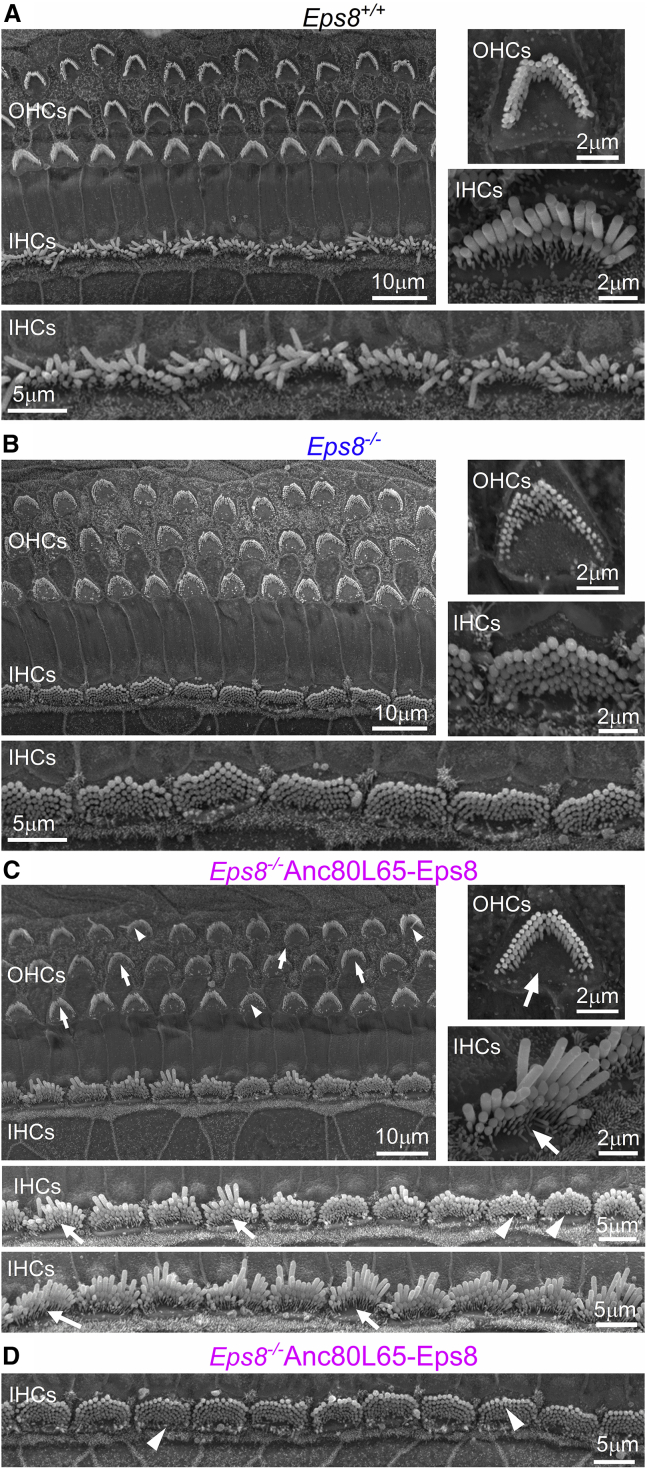
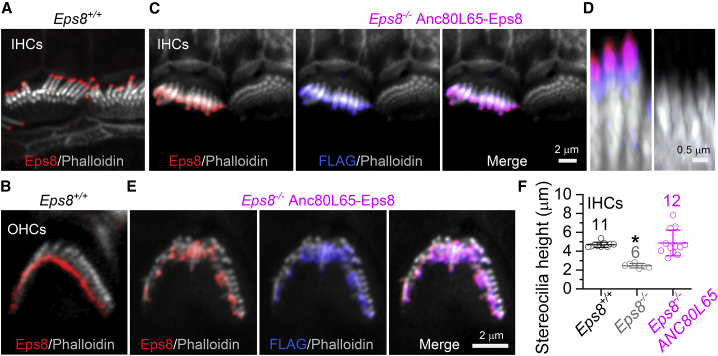
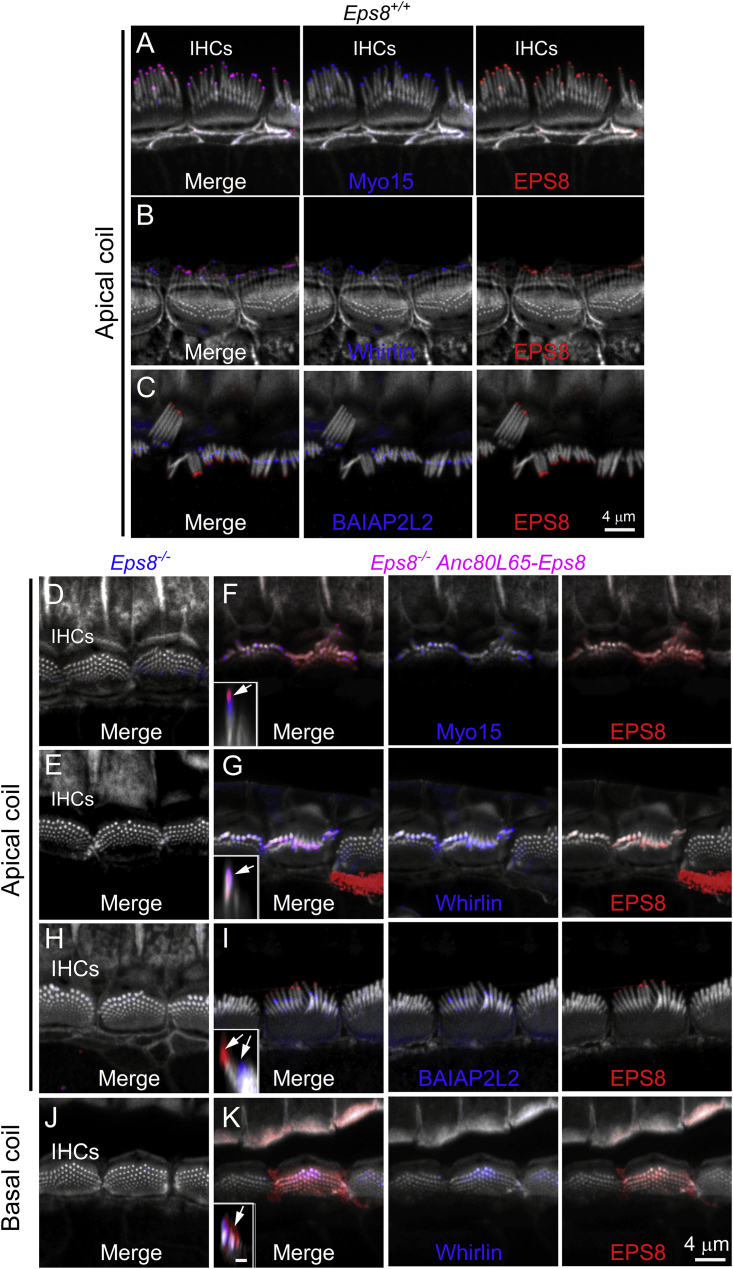
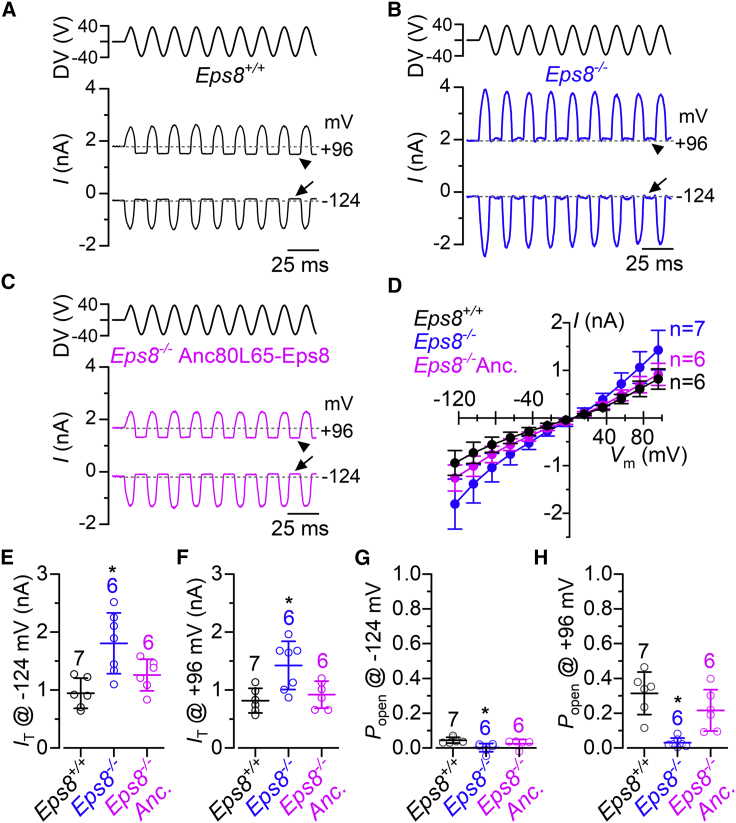
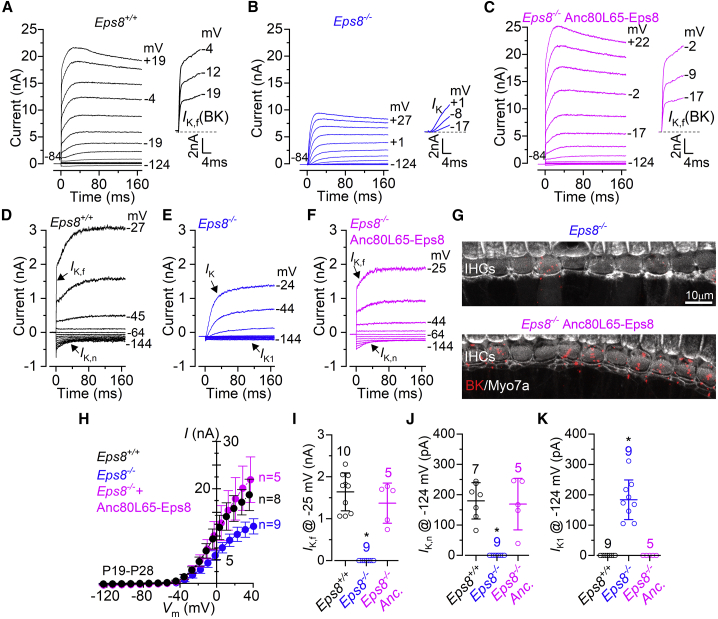
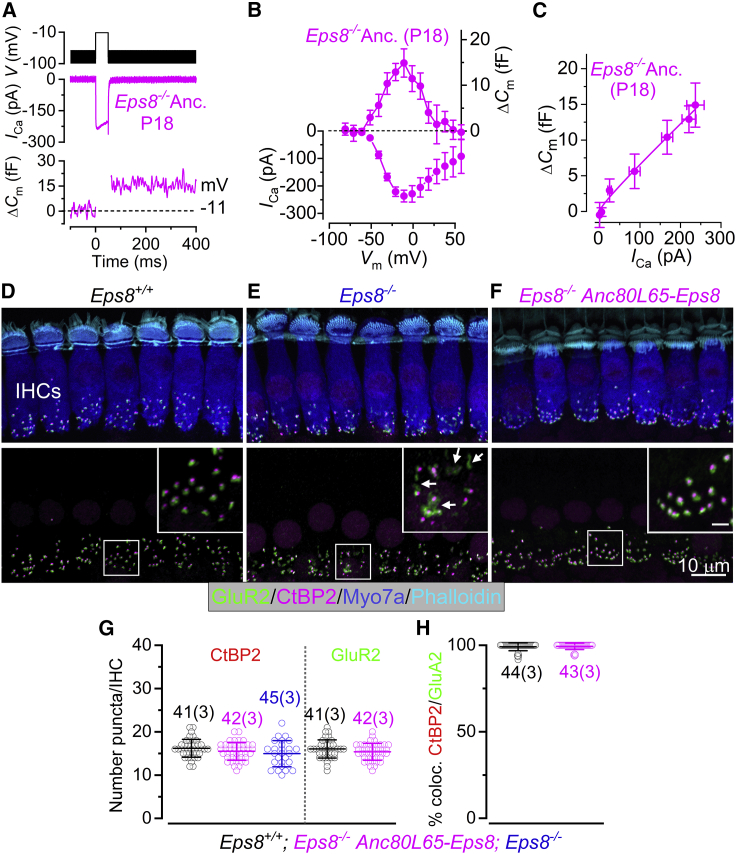
The transduction of acoustic information by hair cells depends upon mechanosensitive stereociliary bundles that project from their apical surface. Mutations or absence of the stereociliary protein EPS8 cause deafness in humans and mice, respectively. knockout mice ( ) have hair cells with immature stereocilia and fail to become sensory receptors. Here, we show that exogenous delivery of using Anc80L65 in P1-P2 mice rescued the hair bundle structure of apical-coil hair cells. Rescued hair bundles correctly localize EPS8, WHIRLIN, MYO15, and BAIAP2L2, and generate normal mechanoelectrical transducer currents. Inner hair cells with normal-looking stereocilia re-expressed adult-like basolateral ion channels (BK and KCNQ4) and have normal exocytosis. The number of hair cells undergoing full recovery was not sufficient to rescue hearing in mice. Adeno-associated virus (AAV)-transduction of P3 apical-coil and P1-P2 basal-coil hair cells does not rescue hair cells, nor does Anc80L65-Eps8 delivery in adult mice. We propose that AAV-induced gene-base therapy is an efficient strategy to recover the complex hair-cell defects in mice. However, this therapeutic approach may need to be performed since, at postnatal ages, hair cells appear to have matured or accumulated damage beyond the point of repair.
毛细胞对声学信息的转导依赖于从其顶端表面伸出的机械敏感静纤毛束。静纤毛蛋白EPS8的突变或缺失分别导致人类和小鼠耳聋。敲除小鼠的毛细胞静纤毛不成熟,无法成为感觉受体。在这里,我们表明,在出生后第1至2天的小鼠中使用Anc80L65外源递送EPS8可挽救顶圈毛细胞的毛束结构。挽救后的毛束能正确定位EPS8、WHIRLIN、MYO15和BAIAP2L2,并产生正常的机械电换能电流。具有外观正常静纤毛的内毛细胞重新表达了类似成年的基底外侧离子通道(BK和KCNQ4),并具有正常的胞吐作用。完全恢复的毛细胞数量不足以挽救耳聋小鼠的听力。腺相关病毒(AAV)转导出生后第3天的顶圈毛细胞和出生后第1至2天的基底圈毛细胞无法挽救毛细胞,在成年耳聋小鼠中递送Anc80L65-Eps8也不行。我们提出,AAV诱导的基因疗法是恢复耳聋小鼠复杂毛细胞缺陷的有效策略。然而,这种治疗方法可能需要在出生后早期进行,因为在出生后的年龄段,耳聋小鼠的毛细胞似乎已经成熟或积累了无法修复的损伤。