Guo Caiyu, Zeng Fanye, Liu Hui, Wang Jianlin, Huang Xue, Luo Judong
Department of Radiotherapy, The Affiliated Changzhou No. 2 People's Hospital of Nanjing Medical University, Changzhou, China.
Department of Radiotherapy, Graduate School of Dalian Medical University, Dalian, China.
Front Genet. 2022 Aug 9;13:956915. doi: 10.3389/fgene.2022.956915. eCollection 2022.
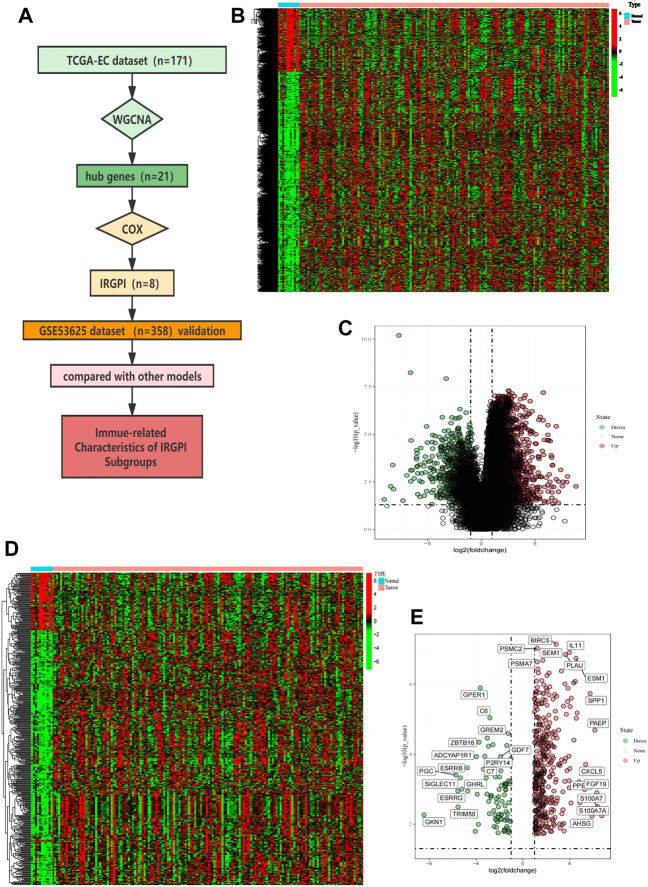
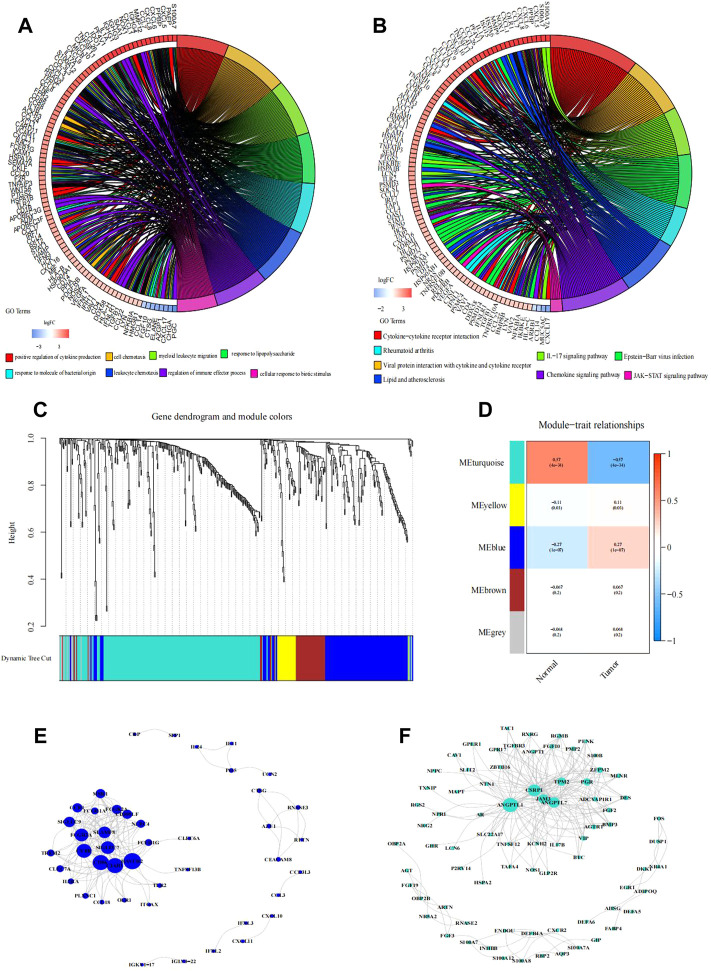
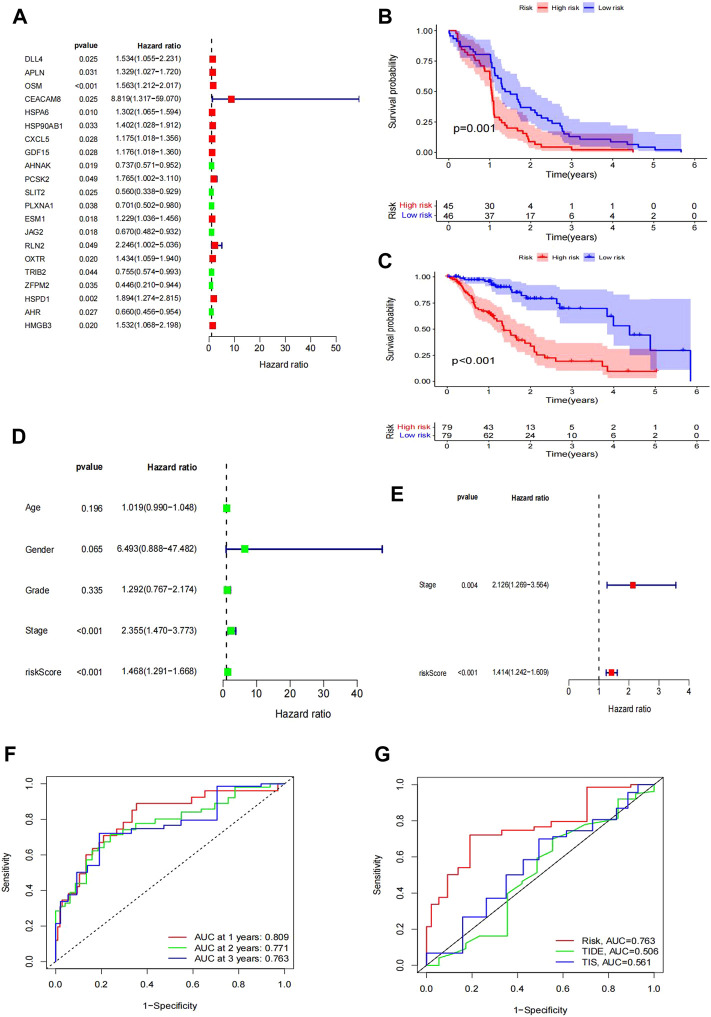
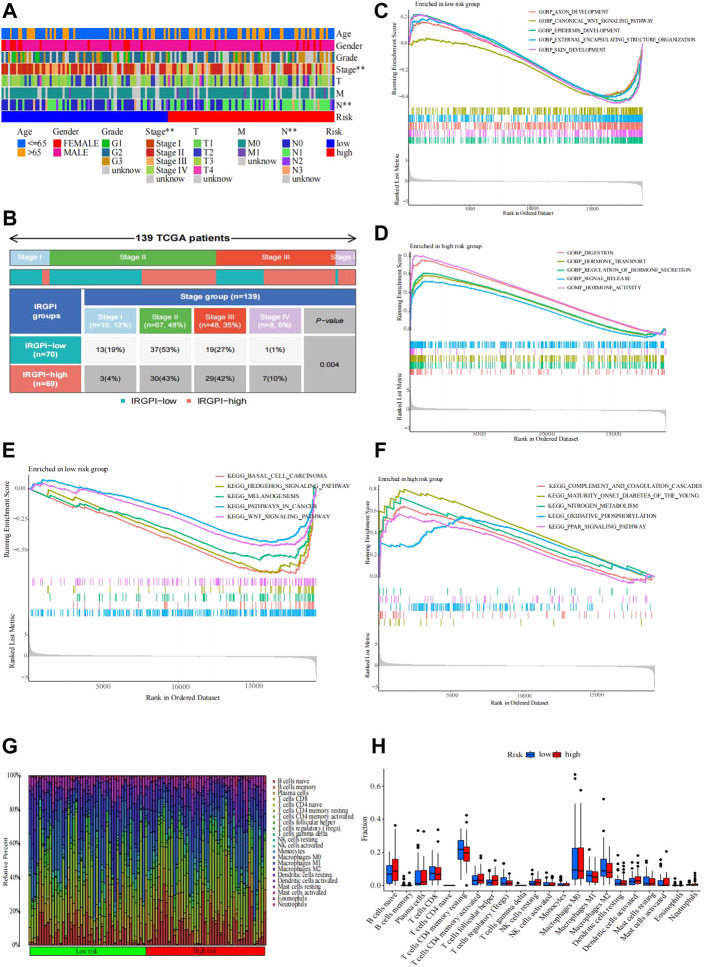
Esophageal cancer is a tumor type with high invasiveness and low prognosis. As immunotherapy has been shown to improve the prognosis of esophageal cancer patients, we were interested in the establishment of an immune-associated gene prognostic index to effectively predict the prognosis of patients. Methods: To establish the immune-related gene prognostic index of esophageal cancer (EC), we screened 363 upregulated and 83 downregulated immune-related genes that were differentially expressed in EC compared to normal tissues. By multivariate Cox regression and weighted gene coexpression network analysis (WGCNA), we built a prognostic model based on eight immune-related genes (IRGs). We confirmed the prognostic model in both TCGA and GEO cohorts and found that the low-risk group had better overall survival than the high-risk group. Results: In this study, we identified 363 upregulated IRGs and 83 downregulated IRGs. Next, we found a prognostic model that was constructed with eight IRGs (OSM, CEACAM8, HSPA6, HSP90AB1, PCSK2, PLXNA1, TRIB2, and HMGB3) by multivariate Cox regression analysis and WGCNA. According to the Kaplan-Meier survival analysis results, the model we constructed can predict the prognosis of patients with esophageal cancer. This result can be verified by the Gene Expression Omnibus (GEO). Patients were divided into two groups with different outcomes. IRGPI-low patients had better overall survival than IRGPI-high patients. Our findings indicated the potential value of the IRGPI risk model for predicting the prognosis of EC patients.
食管癌是一种侵袭性高、预后差的肿瘤类型。由于免疫疗法已被证明可改善食管癌患者的预后,我们对建立一种免疫相关基因预后指数以有效预测患者预后很感兴趣。方法:为建立食管癌的免疫相关基因预后指数,我们筛选了363个上调和83个下调的免疫相关基因,这些基因在食管癌组织与正常组织中差异表达。通过多变量Cox回归和加权基因共表达网络分析(WGCNA),我们构建了一个基于8个免疫相关基因(IRGs)的预后模型。我们在TCGA和GEO队列中均验证了该预后模型,发现低风险组的总生存期优于高风险组。结果:在本研究中,我们鉴定出363个上调的IRGs和83个下调的IRGs。接下来,我们通过多变量Cox回归分析和WGCNA发现了一个由8个IRGs(OSM、CEACAM8、HSPA6、HSP90AB1、PCSK2、PLXNA1、TRIB2和HMGB3)构建的预后模型。根据Kaplan-Meier生存分析结果,我们构建的模型可以预测食管癌患者的预后。这一结果可通过基因表达综合数据库(GEO)得到验证。患者被分为两组,预后不同。IRGPI低的患者总生存期优于IRGPI高的患者。我们的研究结果表明了IRGPI风险模型在预测食管癌患者预后方面的潜在价值。