Wang Jinyu, Li Sheng
School of Basic Medical Science, Lanzhou University, Lanzhou, China.
The First People's Hospital of Lanzhou City, Lanzhou, China.
Front Med (Lausanne). 2022 Aug 10;9:946100. doi: 10.3389/fmed.2022.946100. eCollection 2022.
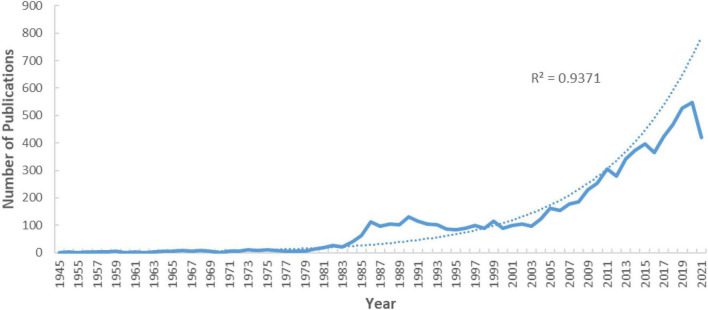
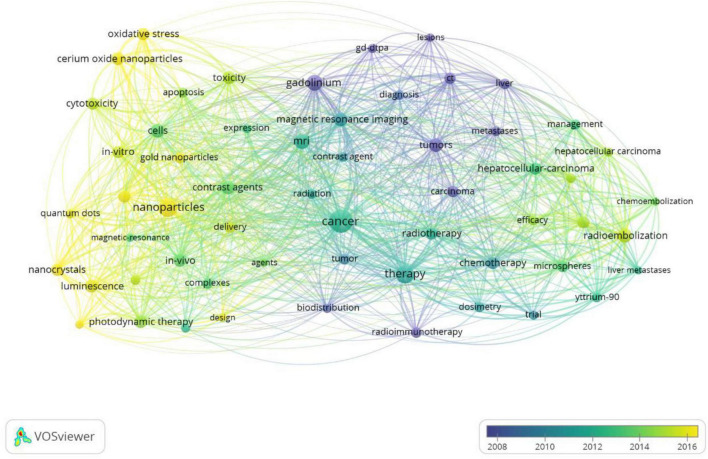
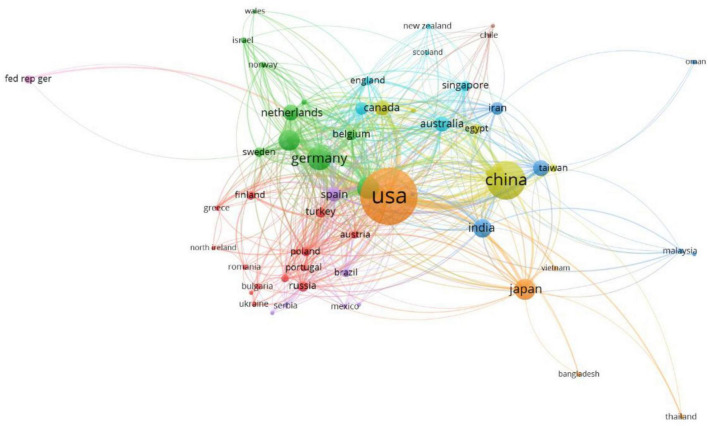
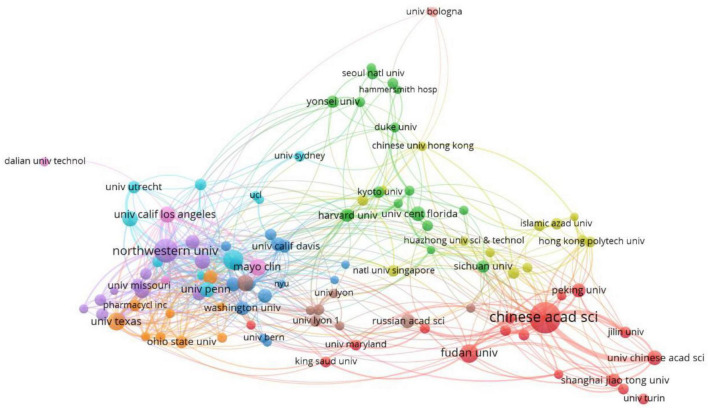
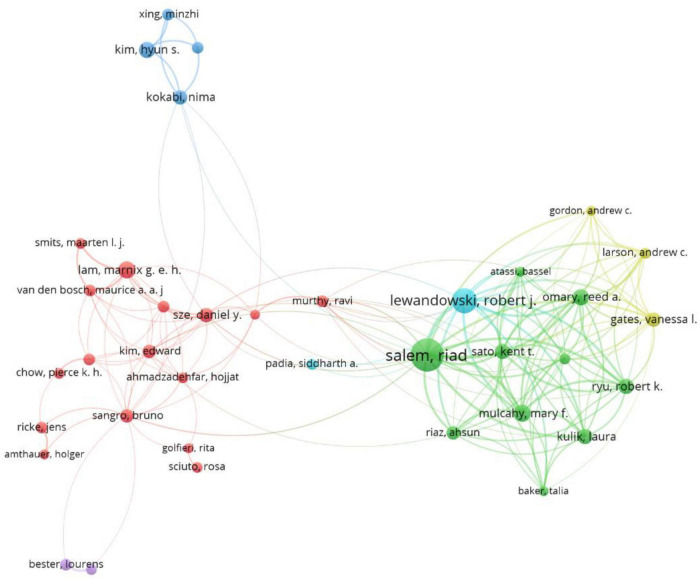
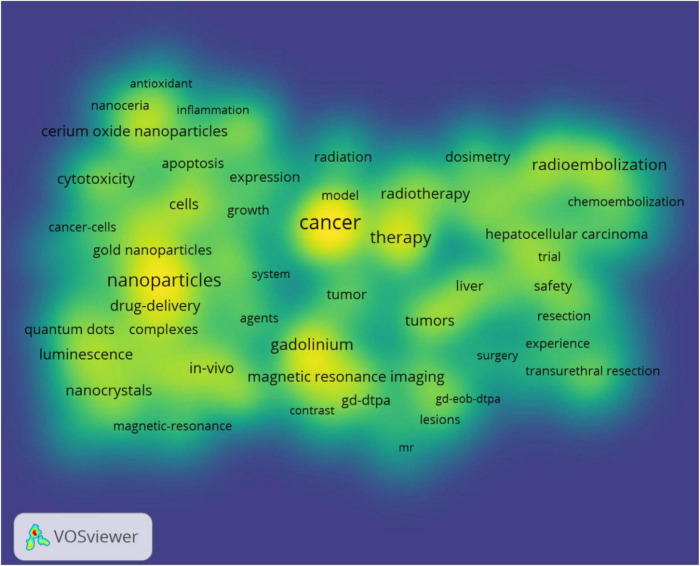
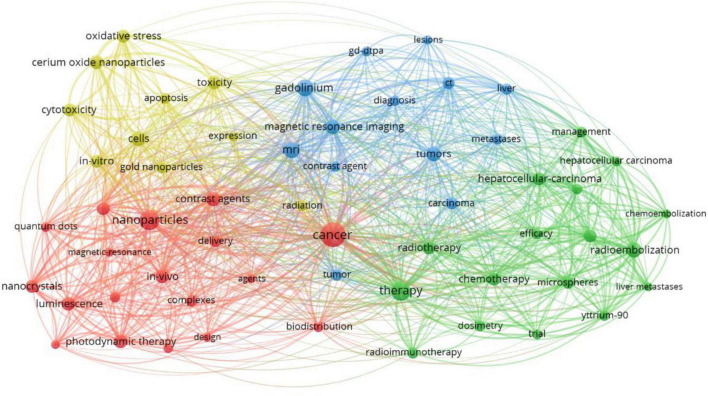
Cancer is one of the most important public health issues worldwide. Radiation therapy (XRT), chemotherapy, and targeted therapy are some of the main types of cancer therapy. Metals are used extensively in cancer diagnosis and therapy, and rare earth elements occupy an important niche in these areas. In recent years, an increasing number of studies have focused on the application of lanthanides in cancer diagnosis and therapy. However, no research has analyzed the current status and future trends of lanthanides in treating cancer. We downloaded data from publications from the Web of Science Core Collection. We used VOSviewer 1.16.16 software and Excel 2016 to analyze literature information, including publication years, journals, countries, institutes, authors, keywords, and co-cited references. A total of 7,849 publications were identified. The first study on the association of rare earth elements with cancer was published in 1945. However, before 1979, the number of publications per year was no more than 10. After 1980, the number of yearly publications increased. The United States was the most productive country (2,726, 34.73%), and the institution with the most frequent contributions was the Chinese Academy of Sciences (211, 2.69%). We observed close collaboration between countries and between institutes. The 7,839 publications were published in 1,579 journals, and Radiology was both the most productive journal (183, 2.33%) and cited journal (5,863 citations). A total of 33,987 authors investigated rare earth elements and cancer. Only 0.45% of the authors published more than 10 publications, and 79.07% of the authors published only one publication. Of the top 10 high-yield authors, seven were from developed countries and three were from China. However, among the top 10 co-cited authors, there was only one high-yield author. The main research topics in the application of lanthanide complex-doped nanomaterials in the diagnosis and treatment of cancer include magnetic resonance imaging contrast agents, photodynamic therapy, anticancer drug delivery, the efficacy and safety of yttrium-90 radioimmunotherapy and chemoembolization for the treatment of HCC, gadolinium magnetic resonance imaging (MRI) contrast agent for cancer diagnosis, and cerium oxide nanoparticles. In recent years, especially since 2016, the research frontiers are emerging in cerium oxide nanoparticles and photodynamic therapy. Studies related to the application of rare earth elements and cancer have significantly increased over the past 20 years. The United States contributed the most articles in the field, followed by China and Germany, and cooperation among countries was frequent. The Chinese Academy of Sciencess, Northwestern University, and Stanford University were the three most productive institutions, and cooperation among institutions was frequent. Many high-quality journals have published relevant research, but there are few highly productive journals.
癌症是全球最重要的公共卫生问题之一。放射治疗(XRT)、化疗和靶向治疗是癌症治疗的一些主要类型。金属广泛应用于癌症诊断和治疗,稀土元素在这些领域占据重要地位。近年来,越来越多的研究聚焦于镧系元素在癌症诊断和治疗中的应用。然而,尚无研究分析镧系元素在癌症治疗中的现状和未来趋势。我们从科学网核心合集的出版物中下载数据。我们使用VOSviewer 1.16.16软件和Excel 2016分析文献信息,包括出版年份、期刊、国家、机构、作者、关键词和共被引参考文献。共识别出7849篇出版物。关于稀土元素与癌症关联的第一项研究发表于1945年。然而,1979年之前,每年的出版物数量不超过10篇。1980年之后,每年的出版物数量增加。美国是产出最多的国家(2726篇,34.73%),贡献最频繁的机构是中国科学院(211篇,2.69%)。我们观察到国家之间和机构之间有密切合作。这7839篇出版物发表在1579种期刊上,《放射学》既是产出最多的期刊(183篇,2.33%)也是被引期刊(5863次引用)。共有33987位作者研究稀土元素与癌症。只有0.45%的作者发表超过10篇出版物,79.07%的作者仅发表1篇出版物。在高产的前10位作者中,7位来自发达国家,3位来自中国。然而,在前10位共被引作者中,只有1位高产作者。镧系元素掺杂纳米材料在癌症诊断和治疗中的应用的主要研究主题包括磁共振成像造影剂、光动力疗法、抗癌药物递送、钇-90放射免疫疗法和化疗栓塞治疗肝癌的疗效和安全性、用于癌症诊断的钆磁共振成像(MRI)造影剂以及氧化铈纳米颗粒。近年来,尤其是自2016年以来,氧化铈纳米颗粒和光动力疗法方面的研究前沿正在涌现。在过去20年里,与稀土元素和癌症应用相关的研究显著增加。美国在该领域贡献的文章最多,其次是中国和德国,国家之间合作频繁。中国科学院、西北大学和斯坦福大学是产出最多 的三个机构,机构之间合作频繁。许多高质量期刊发表了相关研究,但高产期刊较少。