Ahrari Khulood, Omolaoye Temidayo S, Goswami Nandu, Alsuwaidi Hanan, du Plessis Stefan S
College of Medicine, Mohammed Bin Rashid University of Medicine and Health Sciences, Dubai, United Arab Emirates.
Gravitational Physiology and Medicine Research Unit, Division of Physiology, Otto Loewi Research Center of Vascular Biology, Inflammation, and Immunity, Medical University of Graz, Graz, Austria.
Front Physiol. 2022 Aug 11;13:904375. doi: 10.3389/fphys.2022.904375. eCollection 2022.
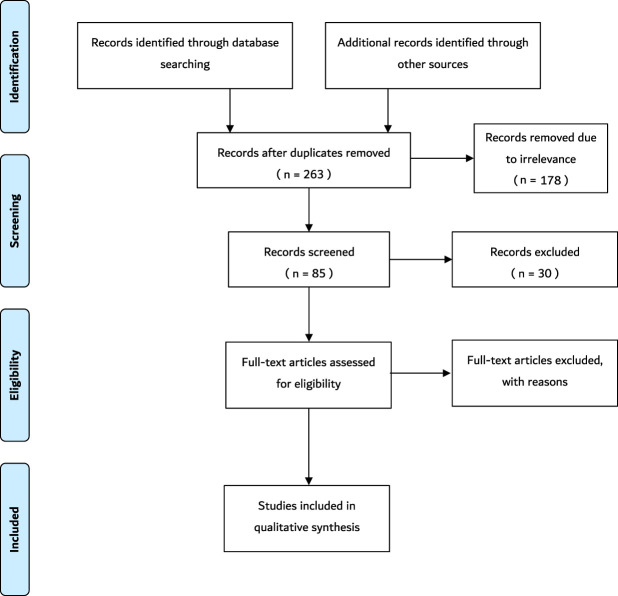
With the advancement in space exploration and the intention to establish an inhabitable human settlement on Mars, it is important to investigate the effects of exposure to space/microgravity and the associated radiations on procreation. Sperm function and integrity are fundamental to male reproduction and can potentially be affected by the environmental changes experienced in space. Therefore, this study was conducted to systematically gather, filter, and collate all the relevant information on the effects of spaceflight on male reproductive parameters and functions. A search was performed utilizing the Preferred Reporting Items for Systematic Reviews and Meta-Analyses (PRISMA) guidelines. Data were extracted from the major electronic databases including PubMed, and other credible literature sources. MeSH search terms that were employed included "spermatozoa", "microgravity", and "ionizing radiation". The literature search did not discriminate against papers published before a certain date due to the very limited number of articles available. However, there was a restriction on the male gender and language (English). The parameters included in this study are sperm motility, total sperm count, sperm DNA fragmentation hormonal levels and testicular histology. Following a comprehensive literature search, a total of 273 articles were retrieved and screened, 252 articles were excluded due to the irrelevance to the topic, duplication, and non-original articles. A total of 21 articles met the inclusion criteria and are included in the current study. Findings from these studies showed that sperm motility was decreased after exposure to microgravity and ionizing radiation. Total sperm count was also found to be reduced by microgravity only. Sperm DNA fragmentation was increased by both ionizing radiation and microgravity. Testosterone levels and testicular weight were also decreased by microgravity. Although there is a dearth in the literature regarding the effects of microgravity and ionizing radiation on male reproductive parameters, the available findings showed that exposure to microgravity poses a risk to male reproductive health. Therefore, it is essential to develop countermeasures to either manage, treat, or prevent these consequential adverse effects. Hence, this review also highlights some potential countermeasure approaches that may mitigate the harmful effects of microgravity and associated exposures on male reproductive health.
随着太空探索的推进以及在火星上建立可居住人类定居点的设想,研究暴露于太空/微重力环境及相关辐射对生殖的影响至关重要。精子功能和完整性是男性生殖的基础,并且可能会受到太空环境变化的影响。因此,本研究旨在系统地收集、筛选和整理所有关于太空飞行对男性生殖参数和功能影响的相关信息。利用系统评价和Meta分析的首选报告项目(PRISMA)指南进行了检索。数据从包括PubMed在内的主要电子数据库以及其他可靠的文献来源中提取。所使用的医学主题词(MeSH)检索词包括“精子”“微重力”和“电离辐射”。由于可用文章数量非常有限,文献检索没有对特定日期之前发表的论文进行区分。然而,研究限制为男性且语言为英语。本研究纳入的参数包括精子活力、精子总数、精子DNA碎片率、激素水平和睾丸组织学。经过全面的文献检索,共检索并筛选出273篇文章,其中252篇因与主题无关、重复以及非原创文章而被排除。共有21篇文章符合纳入标准并被纳入本研究。这些研究的结果表明,暴露于微重力和电离辐射后精子活力下降。仅微重力就会使精子总数减少。电离辐射和微重力都会使精子DNA碎片率增加。微重力还会使睾酮水平和睾丸重量下降。尽管关于微重力和电离辐射对男性生殖参数影响的文献较少,但现有研究结果表明,暴露于微重力对男性生殖健康构成风险。因此,制定应对措施以管理、治疗或预防这些相应的不良影响至关重要。因此,本综述还强调了一些潜在的应对措施方法,这些方法可能减轻微重力及相关暴露对男性生殖健康的有害影响。