He Yongpeng, Wang Shuaiqi, Sun Hao, Li Yan, Feng Jian
Chongqing Key Laboratory of Translational Research for Cancer Metastasis and Individualized Treatment, Chongqing University Cancer Hospital, Chongqing Cancer Institute, Chongqing, China.
Department of Cardiology, The Affiliated Hospital of Southwest Medical University, Luzhou, China.
Front Cardiovasc Med. 2022 Aug 10;9:946766. doi: 10.3389/fcvm.2022.946766. eCollection 2022.
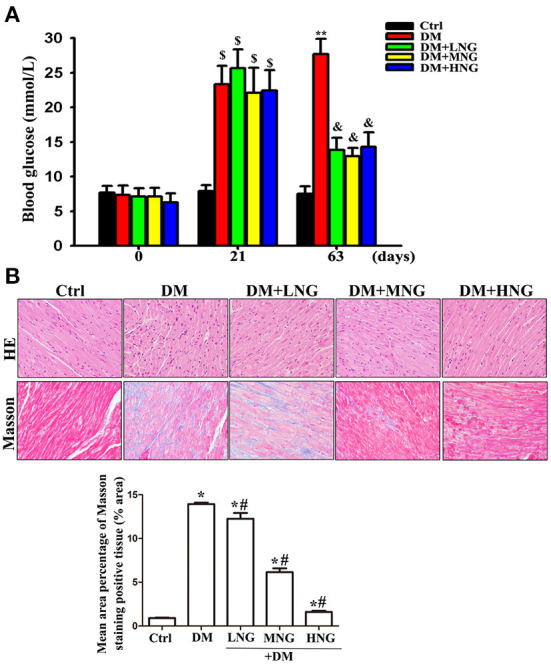
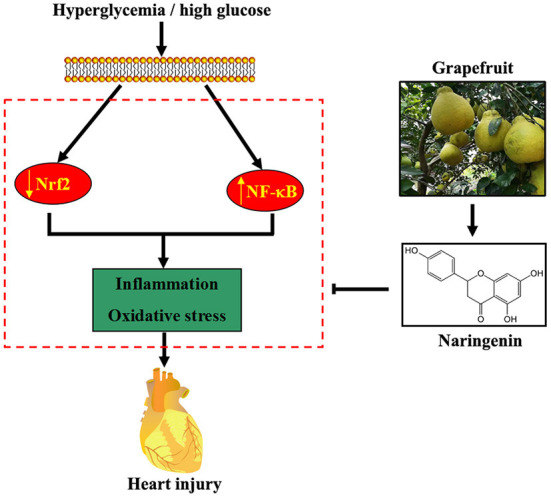
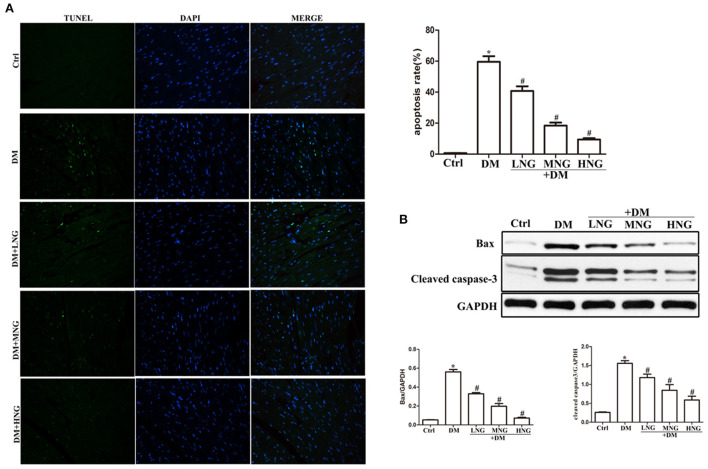
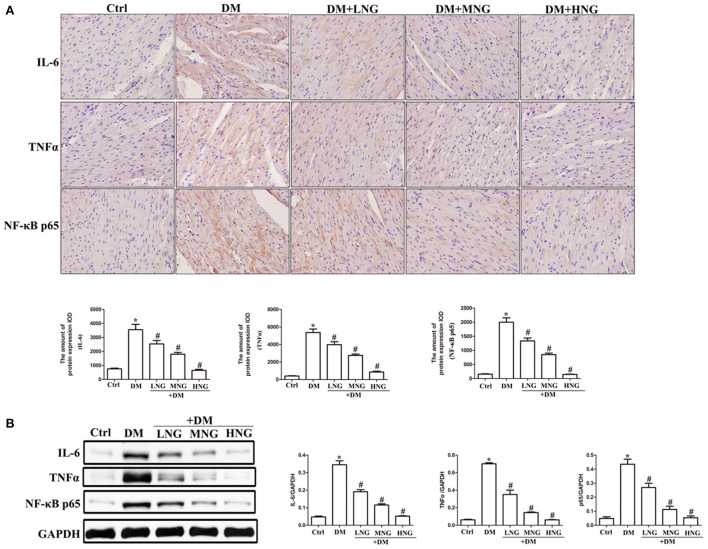
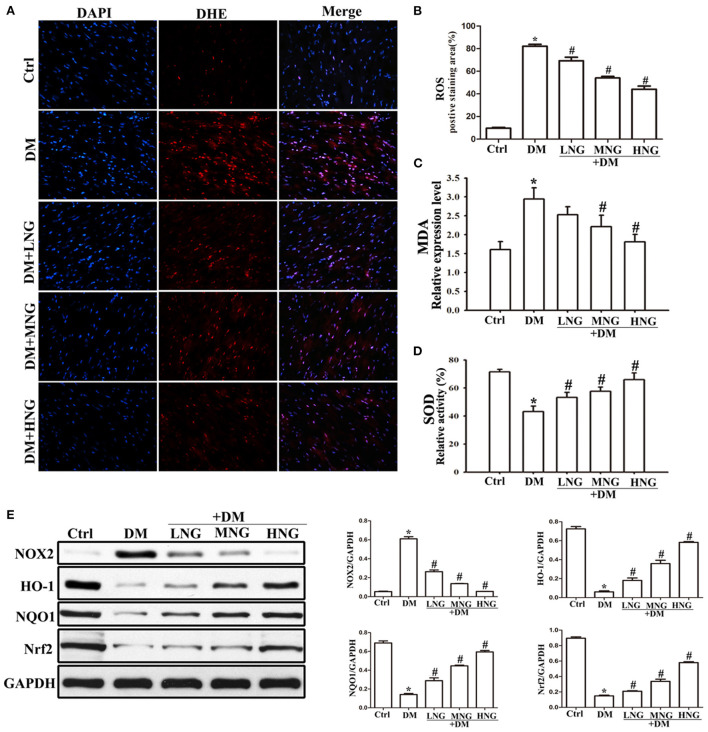
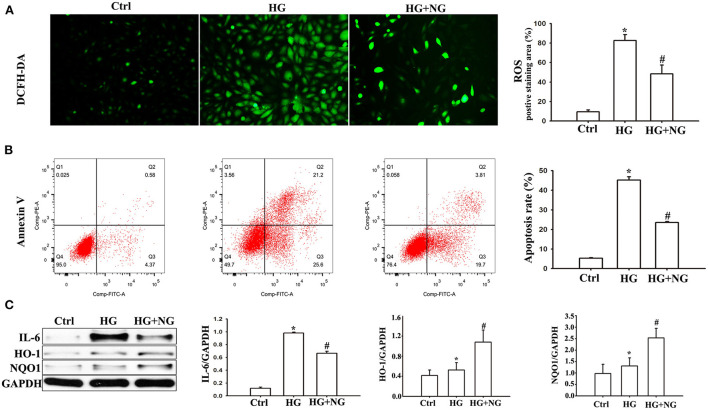
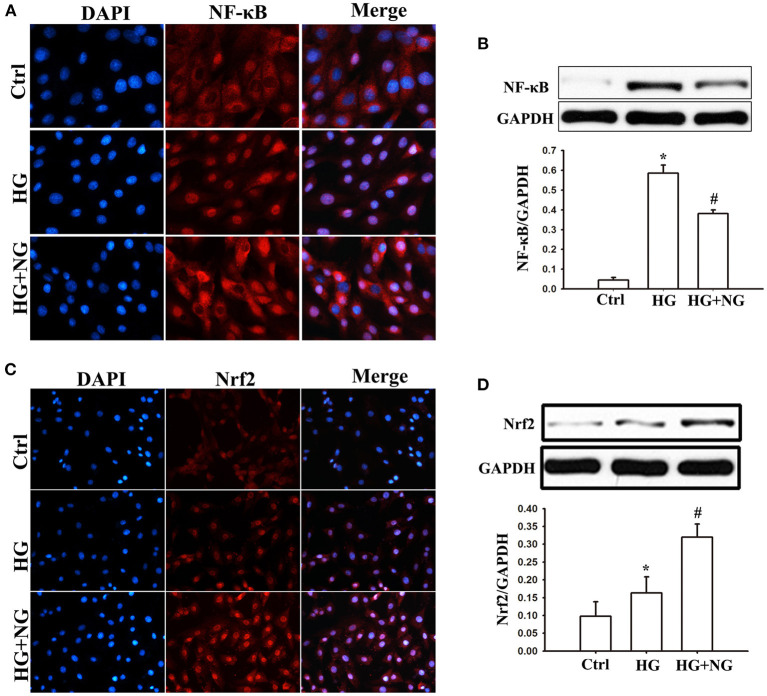
Diabetes-induced myocardial damage leads to diabetic cardiomyopathy and is closely associated with the generation of oxidative stress and inflammation. Naringenin (NG) exhibits antioxidant and anti-inflammatory effects. However, whether NG has cardioprotective effects against diabetic cardiomyopathy by regulating oxidative stress and inflammation remains unknown. This study investigated the effect of NG on diabetic cardiomyopathy based on an analysis of streptozotocin (STZ)-induced type 1 diabetic mice. The results indicated that NG reduced cardiac fibrosis and cardiomyocyte apoptosis in this diabetic model, accompanied by reduced blood glucose. NG inhibited pro-inflammatory cytokines, the level of reactive oxygen species and the expression of nuclear factor kappa-B (NF-κB), whereas the expression of antioxidant enzymes and nuclear factor erythroid 2-related factor 2 (Nrf2) were greatly enhanced by NG. Furthermore, in high glucose-treated H9C2 myocardial cells, NG effectively reduced cell apoptosis by inhibiting the formation of reactive oxygen species and pro-inflammatory cytokines. NG's antioxidant and anti-inflammatory activities were mechanistically associated with NF-κB inhibition and Nrf2 activation in animal and cell experiments. Data analysis showed that NG could regulate Nrf2 and NF-κB pathways to protect against diabetes-induced myocardial damage by reducing oxidative stress and inhibiting inflammation.
糖尿病诱导的心肌损伤会导致糖尿病性心肌病,且与氧化应激和炎症的产生密切相关。柚皮素(NG)具有抗氧化和抗炎作用。然而,NG是否通过调节氧化应激和炎症对糖尿病性心肌病具有心脏保护作用仍不清楚。本研究基于对链脲佐菌素(STZ)诱导的1型糖尿病小鼠的分析,探讨了NG对糖尿病性心肌病的影响。结果表明,在该糖尿病模型中,NG降低了心脏纤维化和心肌细胞凋亡,同时伴有血糖降低。NG抑制促炎细胞因子、活性氧水平和核因子κB(NF-κB)的表达,而NG大大增强了抗氧化酶和核因子红细胞2相关因子2(Nrf2)的表达。此外,在高糖处理的H9C2心肌细胞中,NG通过抑制活性氧和促炎细胞因子的形成有效减少了细胞凋亡。在动物和细胞实验中,NG的抗氧化和抗炎活性在机制上与NF-κB抑制和Nrf2激活相关。数据分析表明,NG可通过减少氧化应激和抑制炎症来调节Nrf2和NF-κB途径,以预防糖尿病诱导的心肌损伤。