Unité de Recherche Communication Bactérienne et Stratégies Anti-infectieuses, CBSA UR4312, Université de Rouen Normandie, Évreux, France.
Normandie Université, Fédération de Recherche SéSAD, Université de Rouen Normandie, Rouen, France.
Microbiol Spectr. 2022 Oct 26;10(5):e0154822. doi: 10.1128/spectrum.01548-22. Epub 2022 Aug 29.
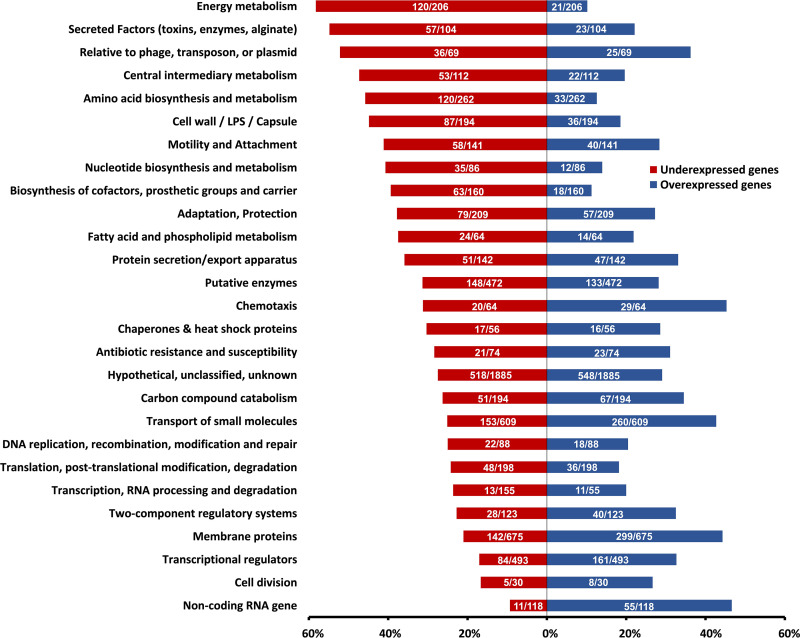
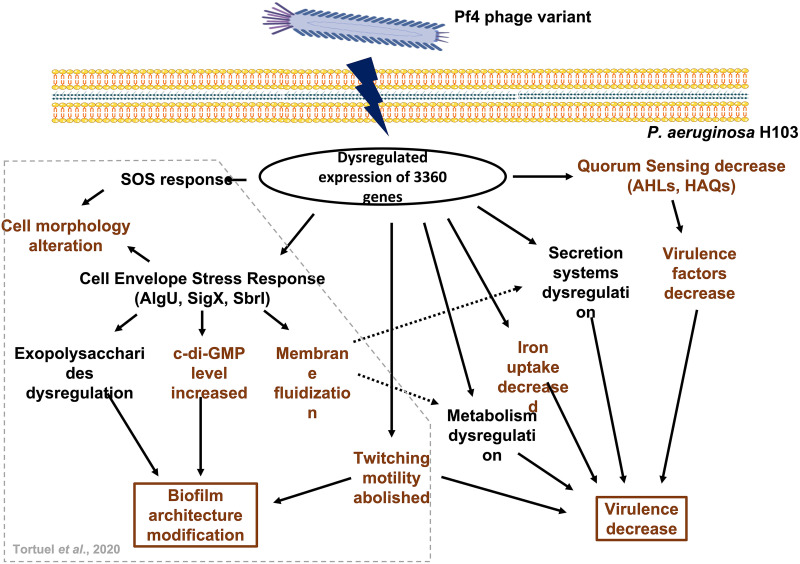
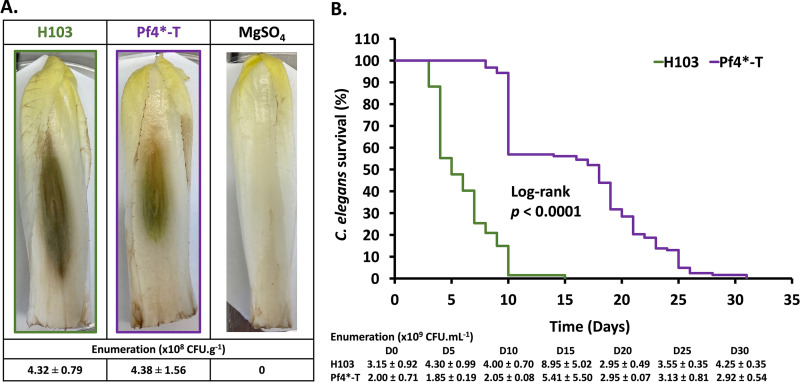
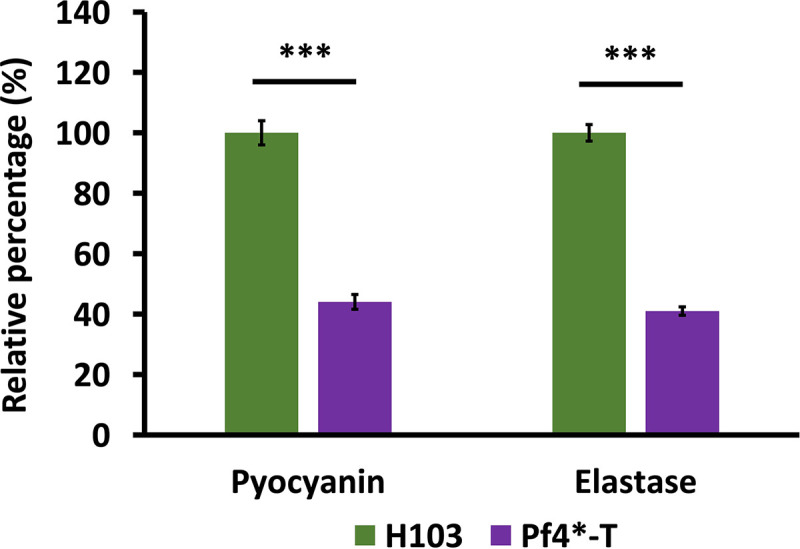
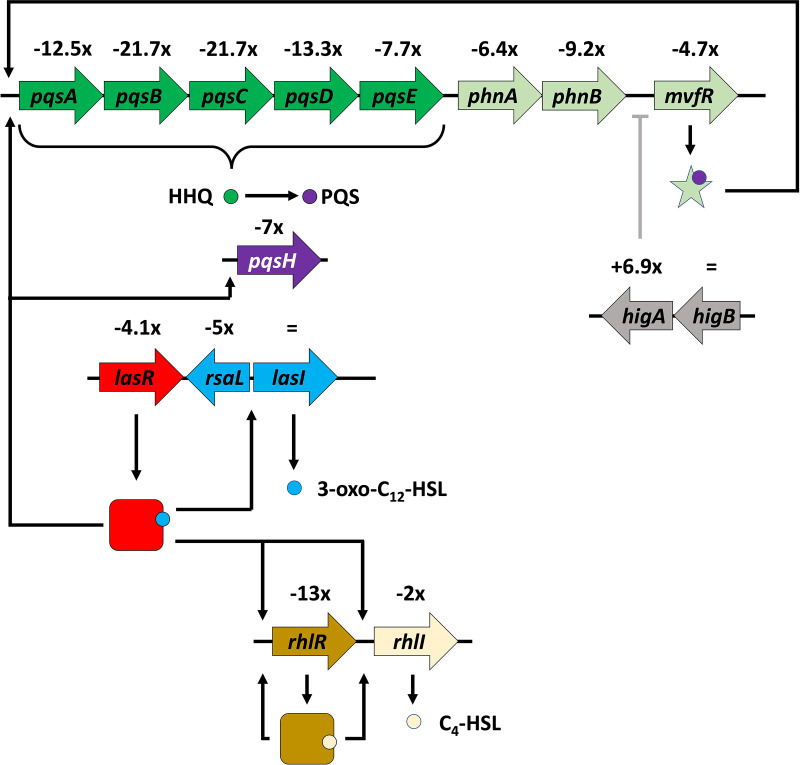
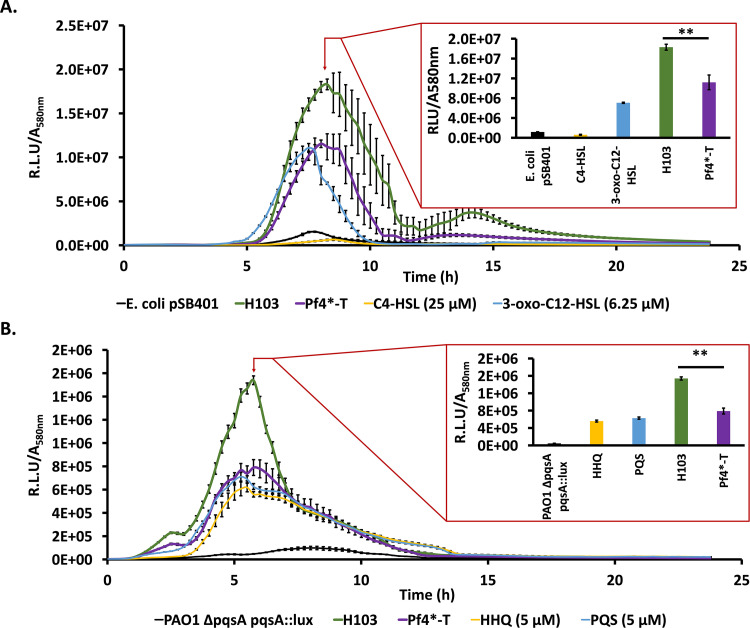
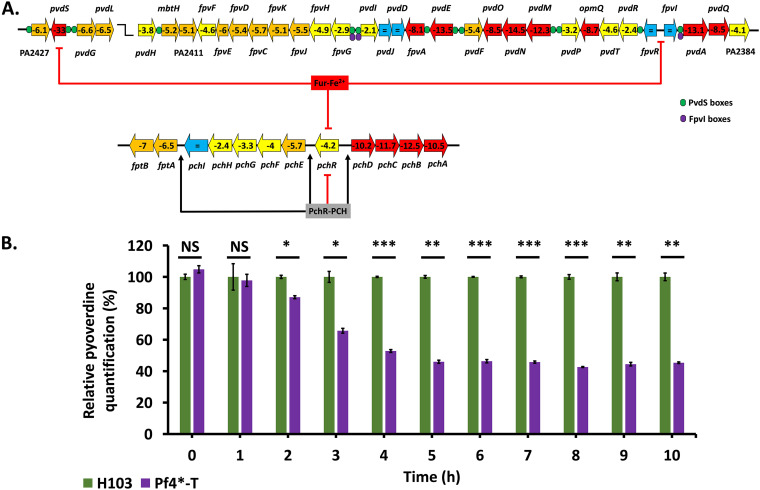
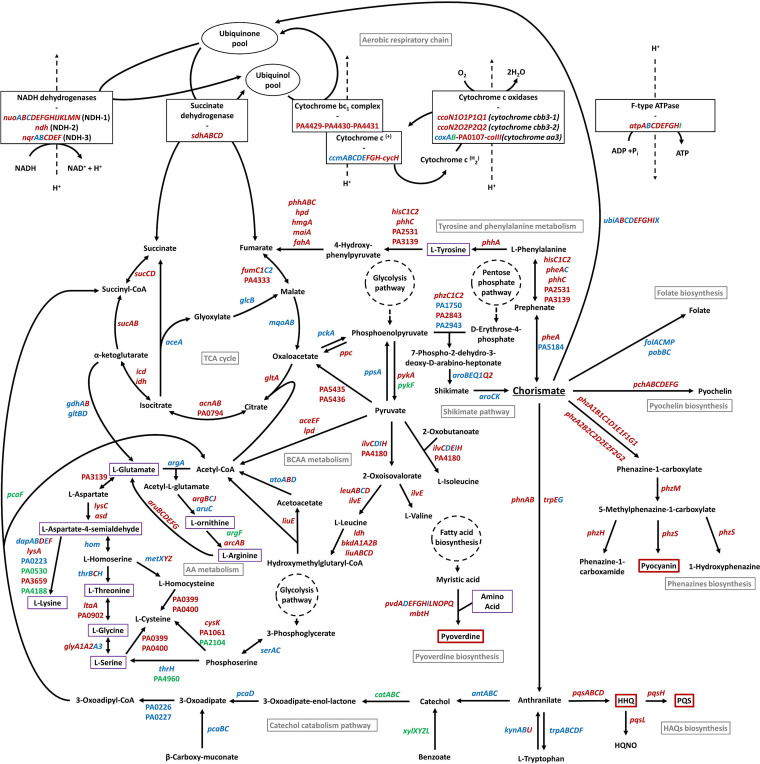
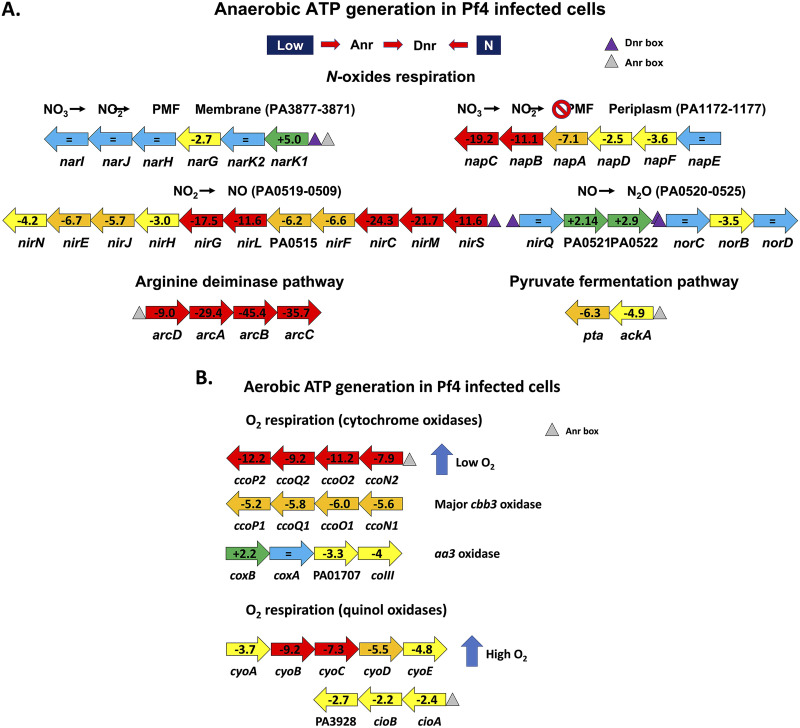
Pf4 is a filamentous bacteriophage integrated as a prophage into the genome of Pseudomonas aeruginosa PAO1. Pf4 virions can be produced without killing P. aeruginosa. However, cell lysis can occur during superinfection when Pf virions successfully infect a host lysogenized by a Pf superinfective variant. We have previously shown that infection of P. aeruginosa PAO1 with a superinfective Pf4 variant abolished twitching motility and altered biofilm architecture. More precisely, most of the cells embedded into the biofilm were showing a filamentous morphology, suggesting the activation of the cell envelope stress response involving both AlgU and SigX extracytoplasmic function sigma factors. Here, we show that Pf4 variant infection results in a drastic dysregulation of 3,360 genes representing about 58% of P. aeruginosa genome; of these, 70% of the virulence factors encoding genes show a dysregulation. Accordingly, Pf4 variant infection (termed Pf4*) causes reduction of P. aeruginosa virulence and decreased production of -acyl-homoserine lactones and 2-alkyl-4-quinolones quorum-sensing molecules and related virulence factors, such as pyocyanin, elastase, and pyoverdine. In addition, the expression of genes involved in metabolism, including energy generation and iron homeostasis, was affected, suggesting further relationships between virulence and central metabolism. Altogether, these data show that Pf4 phage variant infection results in complex network dysregulation, leading to reducing acute virulence in P. aeruginosa. This study contributes to the comprehension of the bacterial response to filamentous phage infection. Filamentous bacteriophages can become superinfective and infect P. aeruginosa, even though they are inserted in the genome as lysogens. Despite this productive infection, growth of the host is only mildly affected, allowing the study of the interaction between the phage and the host, which is not possible in the case of lytic phages killing rapidly their host. Here, we demonstrate by transcriptome and phenotypic analysis that the infection by a superinfective filamentous phage variant causes a massive disruption in gene expression, including those coding for virulence factors and metabolic pathways.
Pf4 是一种丝状噬菌体,作为前噬菌体整合到铜绿假单胞菌 PAO1 的基因组中。Pf4 病毒粒子可以在不杀死铜绿假单胞菌的情况下产生。然而,当 Pf 病毒粒子成功感染被 Pf 超感染变体感染的溶源菌时,细胞裂解可能会发生。我们之前已经表明,感染超感染性 Pf4 变体的铜绿假单胞菌 PAO1 会取消菌毛运动并改变生物膜结构。更准确地说,大多数嵌入生物膜的细胞呈现丝状形态,表明激活了涉及 AlgU 和 SigX 细胞外功能 σ 因子的细胞包膜应激反应。在这里,我们表明 Pf4 变体感染导致大约 58%的铜绿假单胞菌基因组中的 3360 个基因严重失调;其中,70%的毒力因子编码基因出现失调。因此,Pf4 变体感染(称为 Pf4*)导致铜绿假单胞菌毒力降低,减少了酰基高丝氨酸内酯和 2-烷基-4-喹诺酮类群体感应分子以及相关毒力因子的产生,如绿脓菌素、弹性蛋白酶和 pyoverdine。此外,参与代谢的基因的表达,包括能量产生和铁稳态,受到影响,表明毒力与中心代谢之间存在进一步的关系。总之,这些数据表明 Pf4 噬菌体变体感染导致复杂的网络失调,导致铜绿假单胞菌的急性毒力降低。这项研究有助于理解细菌对丝状噬菌体感染的反应。丝状噬菌体可以成为超感染性的,并感染铜绿假单胞菌,尽管它们作为溶源菌插入基因组中。尽管这种有性感染,宿主的生长仅受到轻微影响,允许研究噬菌体和宿主之间的相互作用,这在杀死宿主的裂解性噬菌体的情况下是不可能的。在这里,我们通过转录组和表型分析表明,感染超感染性丝状噬菌体变体会导致基因表达的大规模破坏,包括那些编码毒力因子和代谢途径的基因。