Department of Surgery, University of Colorado Denver, Aurora, CO 80045.
Department of Medicine, University of Colorado Denver, Aurora, CO 80045.
Proc Natl Acad Sci U S A. 2022 Sep 6;119(36):e2202577119. doi: 10.1073/pnas.2202577119. Epub 2022 Aug 29.
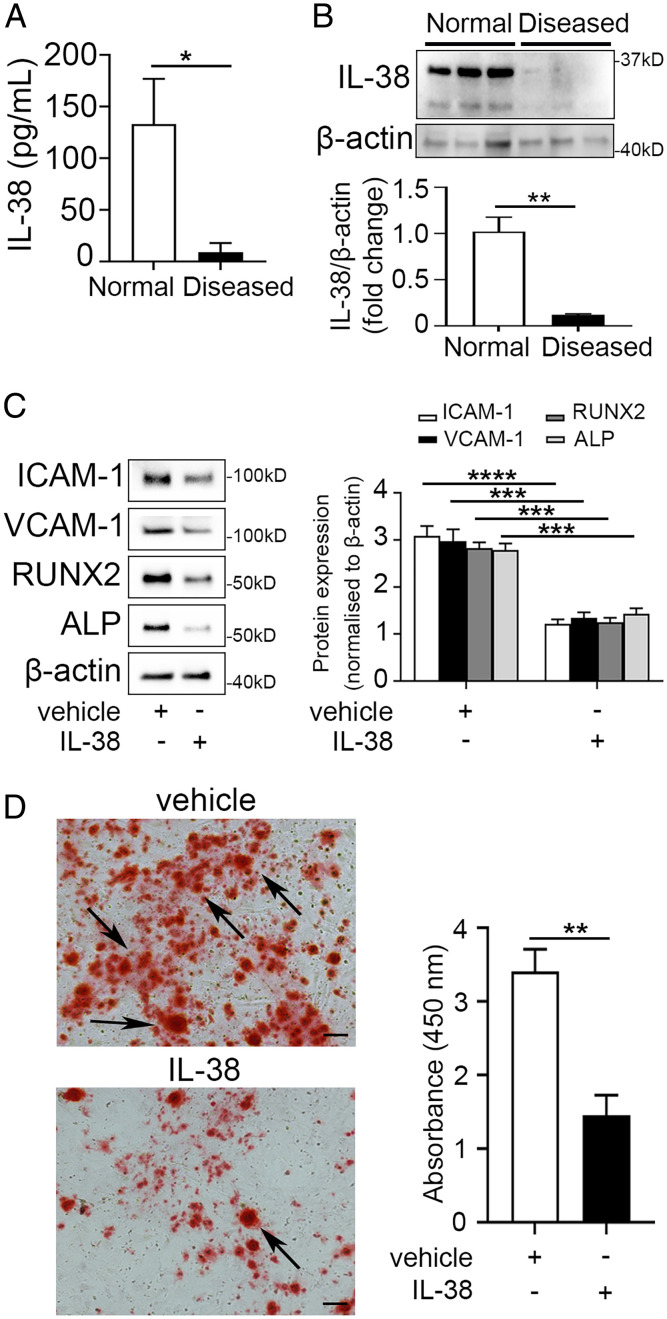
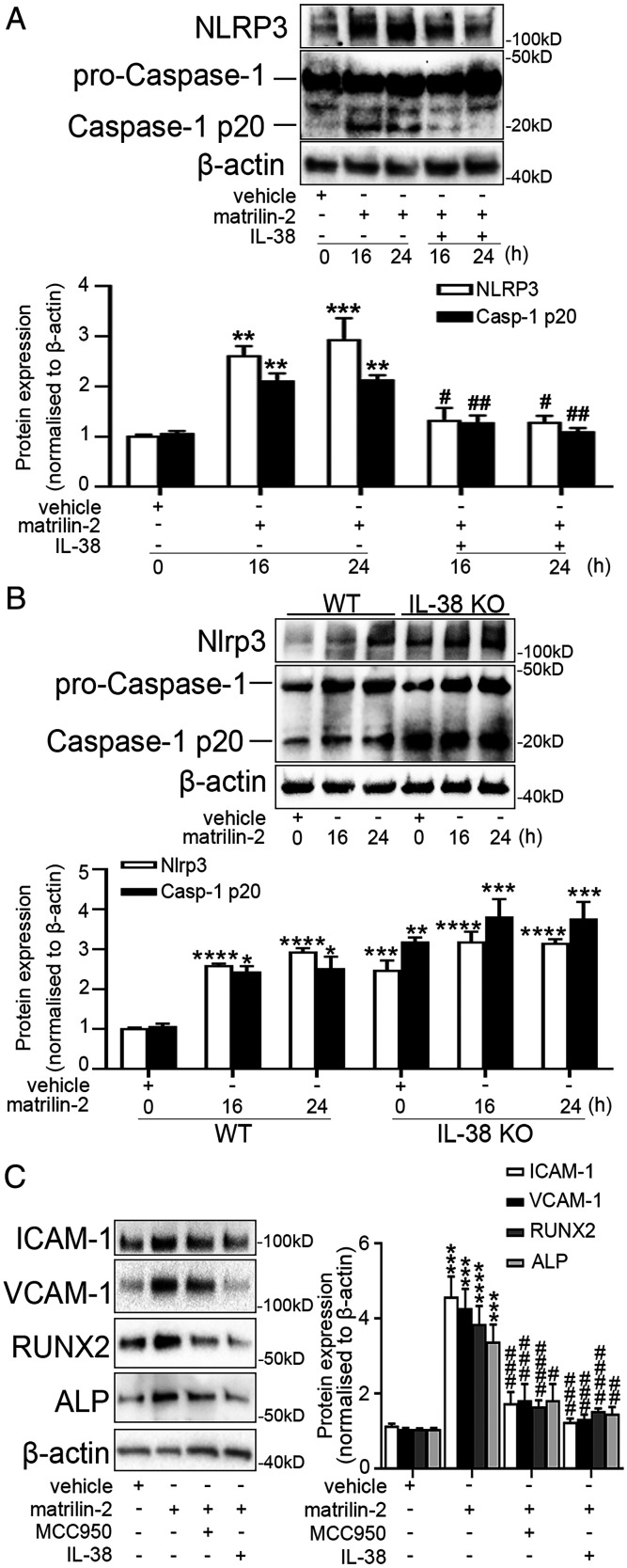
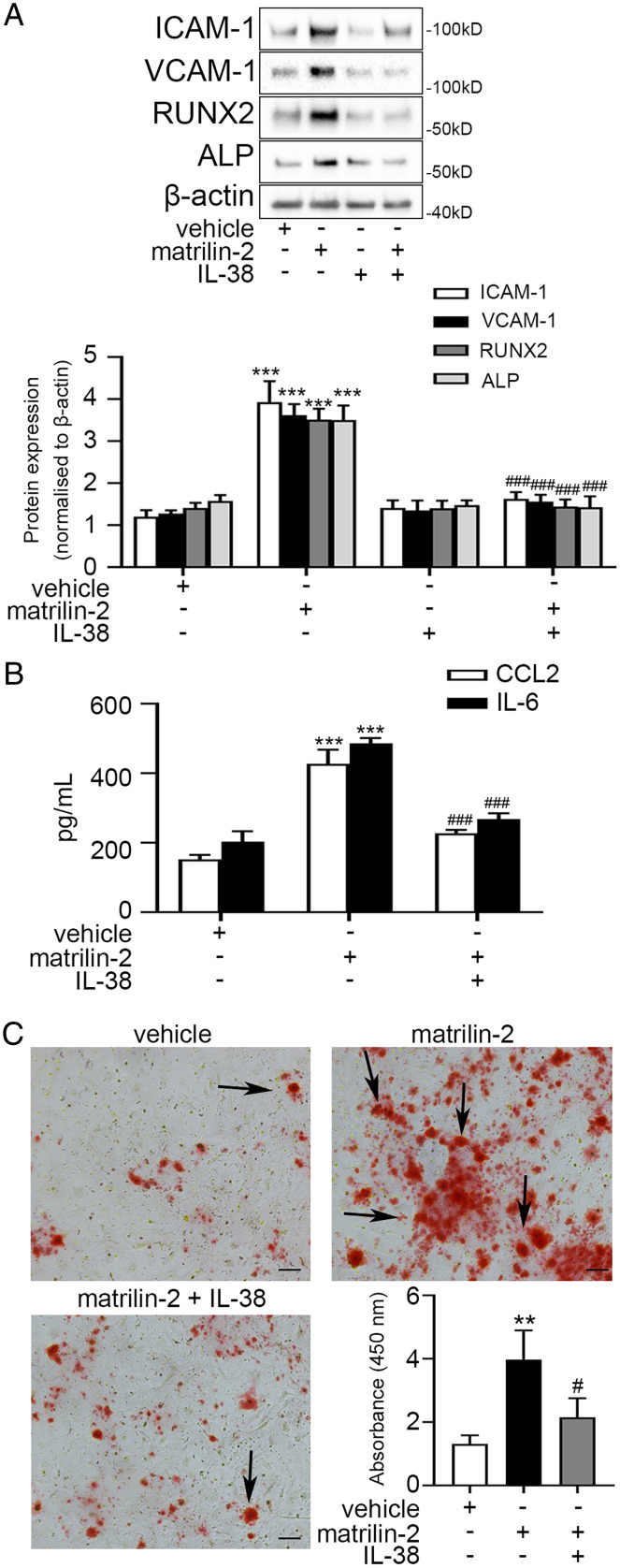
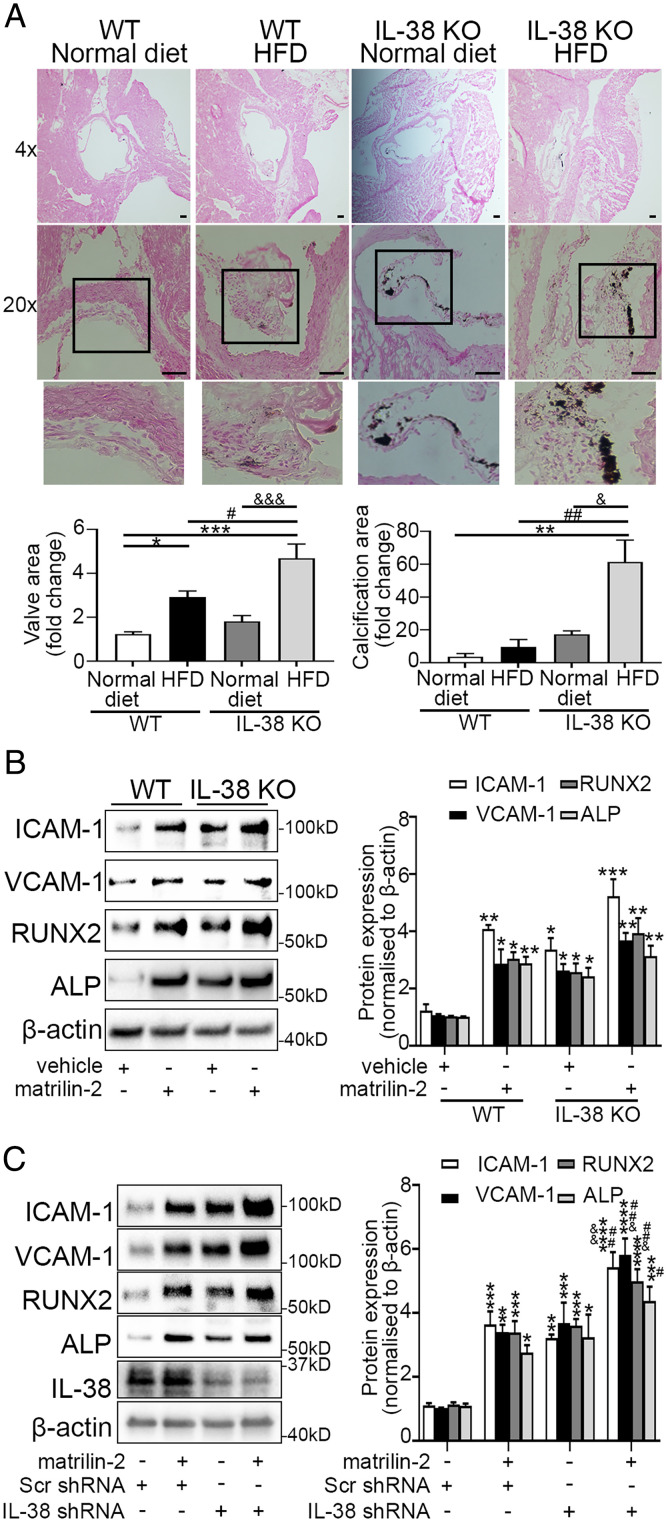
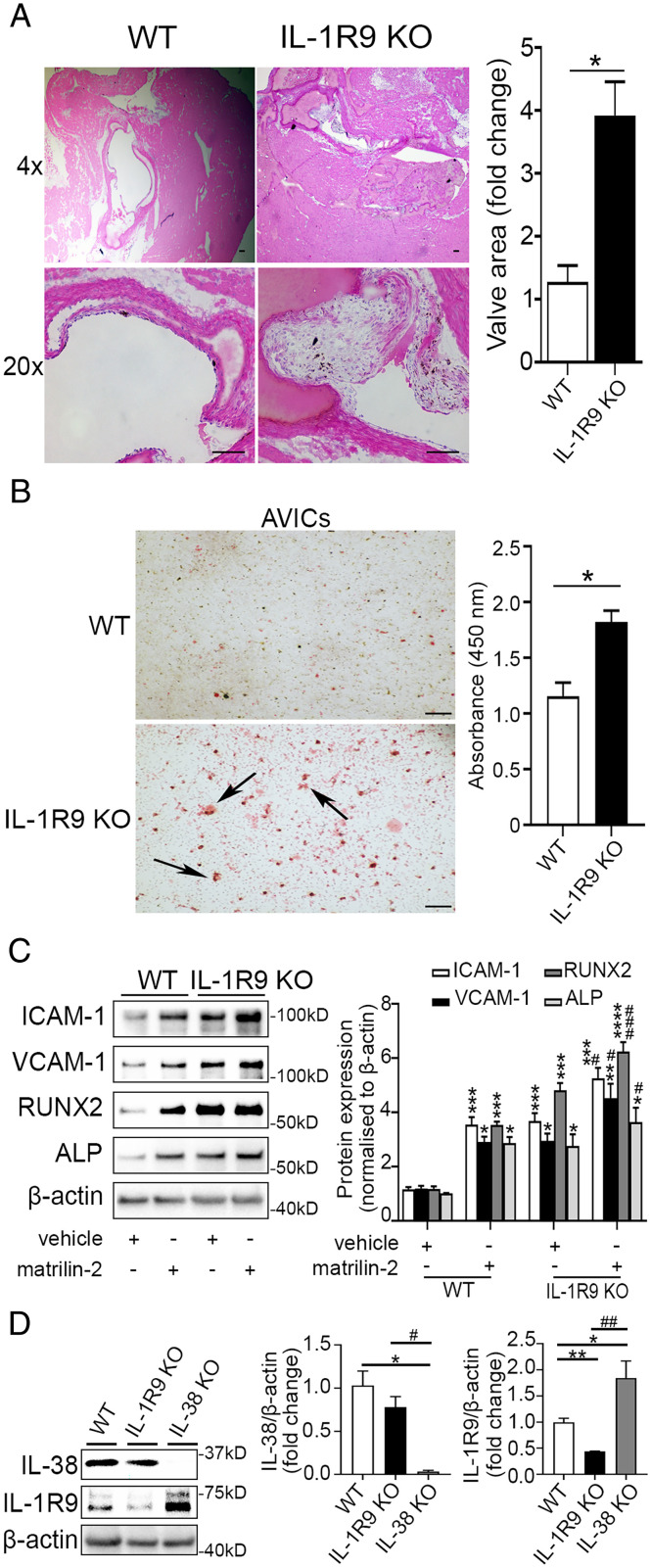
Calcific aortic valve disease (CAVD) is common in people over the age of 65. Progressive valvular calcification is a characteristic of CAVD and due to chronic inflammation in aortic valve interstitial cells (AVICs) resulting in CAVD progression. IL-38 is a naturally occurring anti-inflammatory cytokine; here, we report lower levels of endogenous IL-38 in AVICs isolated from patients' CAVD valves compared to AVICs from non-CAVD valves. Recombinant IL-38 suppressed spontaneous inflammatory activity and calcium deposition in cultured AVICs. In mice, knockdown of IL-38 enhanced the production of inflammatory mediators in murine AVICs exposed to the proinflammatory stimulant matrilin-2. We also observed that in cultured AVICs matrilin-2 stimulation activated the NOD-, LRR-, and pyrin domain-containing protein 3 (NLRP3) inflammasome with procaspase-1 cleavage into active caspase-1. The addition of IL-38 to matrilin-2-treated AVICs suppressed caspase-1 activation and reduced the expression of intercellular adhesion molecule-1, vascular cell adhesion molecule-1, runt-related transcription factor 2, and alkaline phosphatase. Aged IL-38-deficient mice fed a high-fat diet exhibited aortic valve lesions compared to aged wild-type mice fed the same diet. The interleukin-1 receptor 9 (IL-1R9) is the putative receptor mediating the anti-inflammatory properties of IL-38; we observed that IL-1R9-deficient mice exhibited spontaneous aortic valve thickening and greater calcium deposition in AVICs compared to wild-type mice. These data demonstrate that IL-38 suppresses spontaneous and stimulated osteogenic activity in aortic valve via inhibition of the NLRP3 inflammasome and caspase-1. The findings of this study suggest that IL-38 has therapeutic potential for prevention of CAVD progression.
钙化性主动脉瓣疾病(CAVD)在 65 岁以上人群中很常见。进行性瓣叶钙化是 CAVD 的特征,由于主动脉瓣间质细胞(AVICs)的慢性炎症导致 CAVD 进展。IL-38 是一种天然存在的抗炎细胞因子;在这里,我们报告从患有 CAVD 瓣膜的患者的 AVICs 中分离出的内源性 IL-38 水平低于从非 CAVD 瓣膜中分离出的 AVICs。重组 IL-38 抑制了培养的 AVICs 中的自发性炎症活性和钙沉积。在小鼠中,IL-38 的敲低增强了暴露于促炎刺激物 matrilin-2 的鼠 AVICs 中炎性介质的产生。我们还观察到,在培养的 AVICs 中,matrilin-2 刺激激活了 NOD、LRR 和 pyrin 结构域包含蛋白 3(NLRP3)炎症小体,导致前半胱天冬酶-1 切割成活性半胱天冬酶-1。将 IL-38 添加到用 matrilin-2 处理的 AVICs 中可抑制半胱天冬酶-1 的激活并降低细胞间黏附分子-1、血管细胞黏附分子-1、 runt 相关转录因子 2 和碱性磷酸酶的表达。与用相同饮食喂养的老年野生型小鼠相比,用高脂肪饮食喂养的老年 IL-38 缺陷型小鼠表现出主动脉瓣病变。白细胞介素-1 受体 9(IL-1R9)是介导 IL-38 抗炎特性的假定受体;我们观察到,与野生型小鼠相比,IL-1R9 缺陷型小鼠表现出自发性主动脉瓣增厚和 AVICs 中钙沉积增加。这些数据表明,IL-38 通过抑制 NLRP3 炎症小体和半胱天冬酶-1 抑制主动脉瓣中的自发性和刺激诱导的成骨活性。这项研究的结果表明,IL-38 具有预防 CAVD 进展的治疗潜力。