State Key Laboratory of Emerging Infectious Diseases, Carol Yu Centre for Infection, Department of Microbiology, School of Clinical Medicine, Li Ka Shing Faculty of Medicine, The University of Hong Kong, Pokfulam, Hong Kong Special Administrative Region, People's Republic of China.
Department of Infectious Disease and Microbiology, The University of Hong Kong-Shenzhen Hospital, Shenzhen, People's Republic of China.
Emerg Microbes Infect. 2022 Dec;11(1):2275-2287. doi: 10.1080/22221751.2022.2117098.
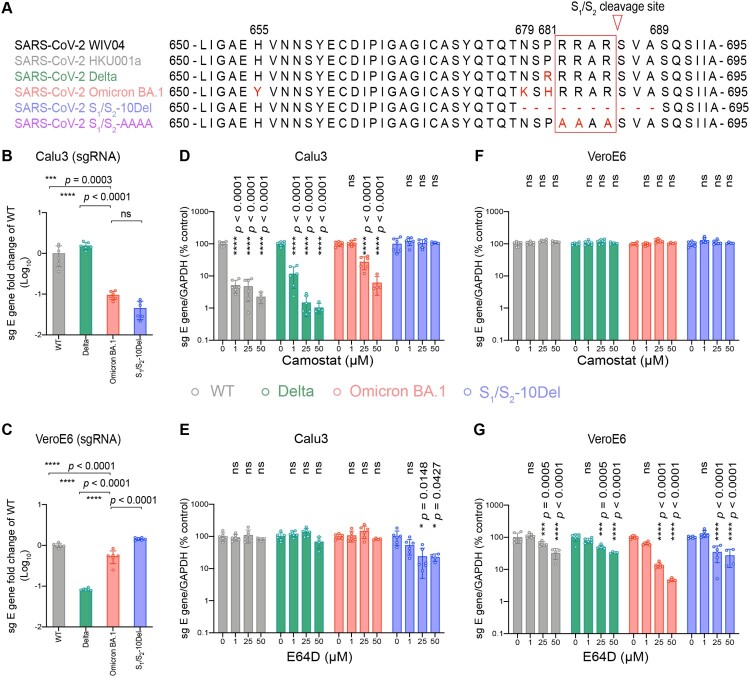
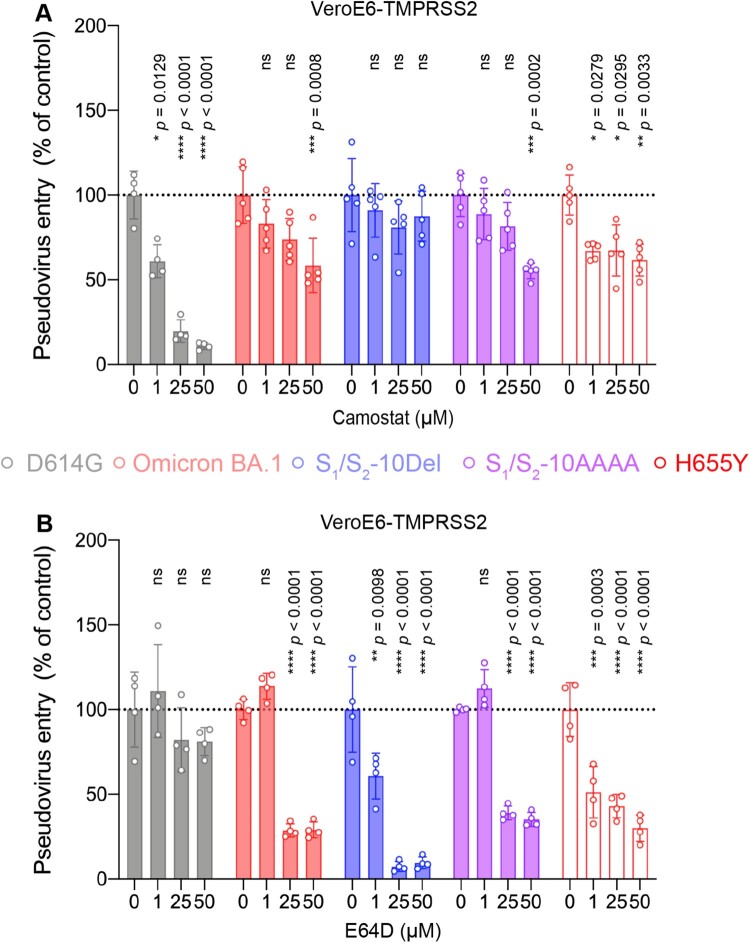
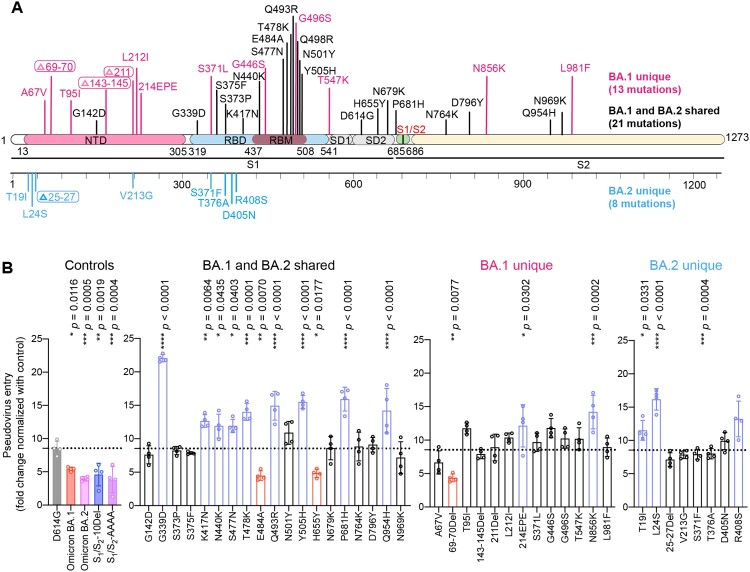
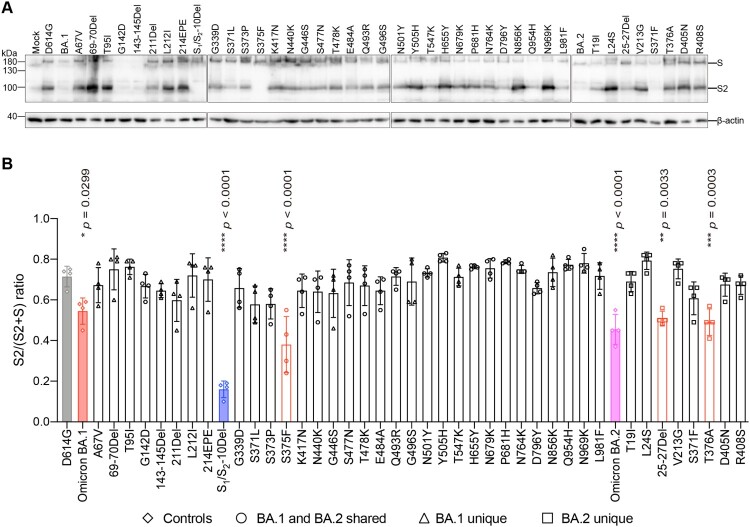
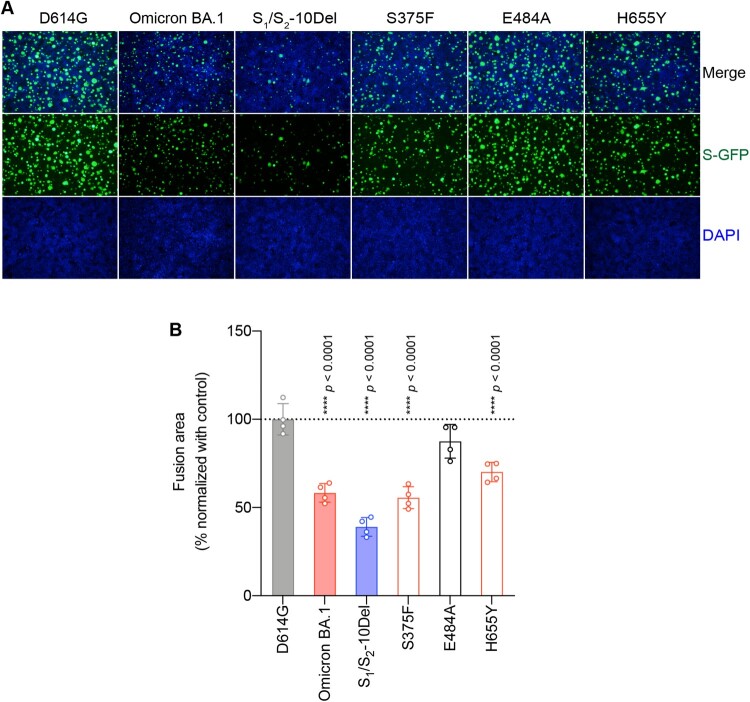
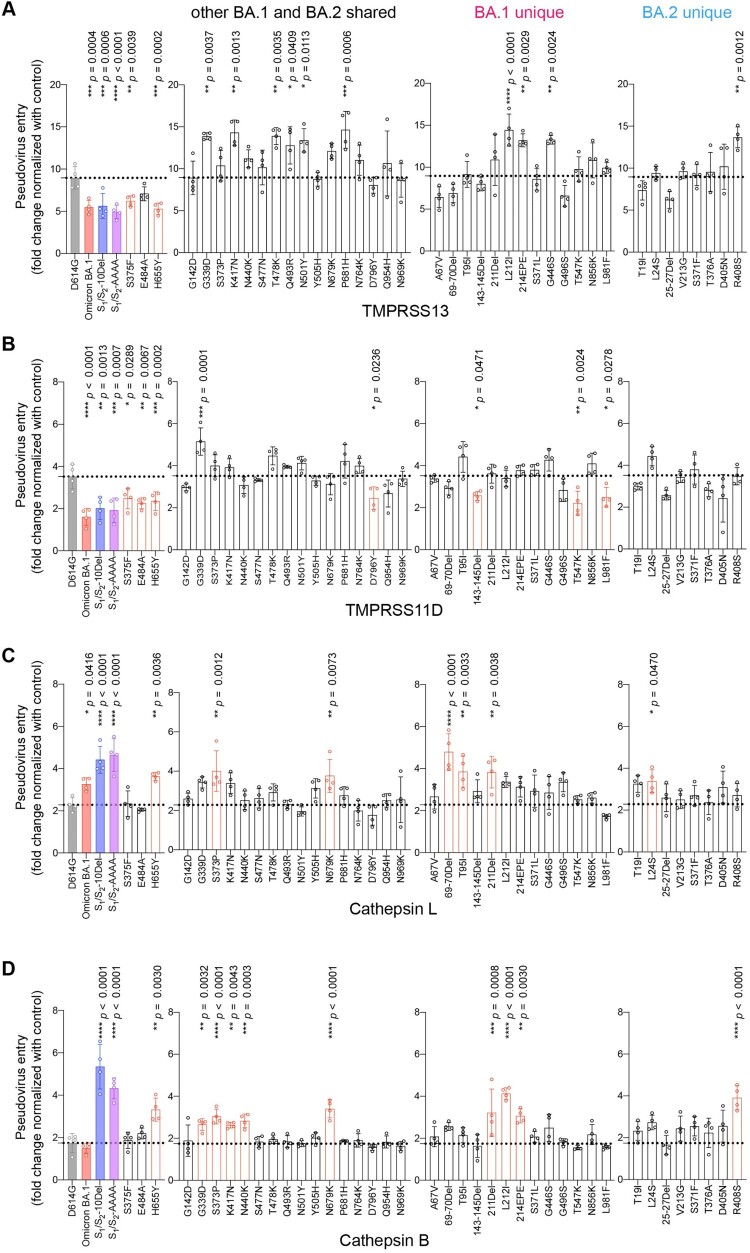
SARS-CoV-2 B.1.1.529.1 (Omicron BA.1) emerged in November 2021 and quickly became the predominant circulating SARS-CoV-2 variant globally. Omicron BA.1 contains more than 30 mutations in the spike protein, which contribute to its altered virological features when compared to the ancestral SARS-CoV-2 or previous SARS-CoV-2 variants. Recent studies by us and others demonstrated that Omicron BA.1 is less dependent on transmembrane serine protease 2 (TMPRSS2), less efficient in spike cleavage, less fusogenic, and adopts an altered propensity to utilize the plasma membrane and endosomal pathways for virus entry. Ongoing studies suggest that these virological features of Omicron BA.1 are in part retained by the subsequent Omicron sublineages. However, the exact spike determinants that contribute to these altered features of Omicron remain incompletely understood. In this study, we investigated the spike determinants for the observed virological characteristics of Omicron. By screening for the individual changes on Omicron BA.1 and BA.2 spike, we identify that 69-70 deletion, E484A, and H655Y contribute to the reduced TMPRSS2 usage while 25-27 deletion, S375F, and T376A result in less efficient spike cleavage. Among the shared spike mutations of BA.1 and BA.2, S375F and H655Y reduce spike-mediated fusogenicity. Interestingly, the H655Y change consistently reduces serine protease usage while increases the use of endosomal proteases. In keeping with these findings, the H655Y substitution alone reduces plasma membrane entry and facilitates endosomal entry when compared to SARS-CoV-2 WT. Overall, our study identifies key changes in Omicron spike that contributes to our understanding on the virological determinant and pathogenicity of Omicron.
SARS-CoV-2 B.1.1.529.1(Omicron BA.1)于 2021 年 11 月出现,迅速成为全球主要传播的 SARS-CoV-2 变体。Omicron BA.1 的刺突蛋白中含有 30 多个突变,与原始 SARS-CoV-2 或之前的 SARS-CoV-2 变体相比,这些突变导致其病毒学特征发生改变。我们和其他研究人员最近的研究表明,Omicron BA.1 对跨膜丝氨酸蛋白酶 2(TMPRSS2)的依赖性较低,刺突切割效率较低,融合能力较弱,并且改变了利用质膜和内体途径进入病毒的倾向。正在进行的研究表明,Omicron BA.1 的这些病毒学特征部分被随后的 Omicron 亚系保留。然而,导致 Omicron 这些改变特征的确切刺突决定因素仍不完全清楚。在这项研究中,我们研究了 Omicron 观察到的病毒学特征的刺突决定因素。通过筛选 Omicron BA.1 和 BA.2 刺突上的个体变化,我们确定 69-70 缺失、E484A 和 H655Y 有助于降低 TMPRSS2 的使用,而 25-27 缺失、S375F 和 T376A 导致刺突切割效率降低。在 BA.1 和 BA.2 的共享刺突突变中,S375F 和 H655Y 降低了刺突介导的融合能力。有趣的是,H655Y 变化一致降低丝氨酸蛋白酶的使用,同时增加内体蛋白酶的使用。与这些发现一致,与 SARS-CoV-2 WT 相比,H655Y 单独取代会降低质膜进入并促进内体进入。总的来说,我们的研究确定了 Omicron 刺突中的关键变化,有助于我们理解 Omicron 的病毒学决定因素和致病性。