School of Medicine, University of Aberdeen, Aberdeen, UK.
Syrian American Medical Society, Washington, District of Columbia, USA.
BMJ Glob Health. 2022 Aug;7(8). doi: 10.1136/bmjgh-2021-008001.
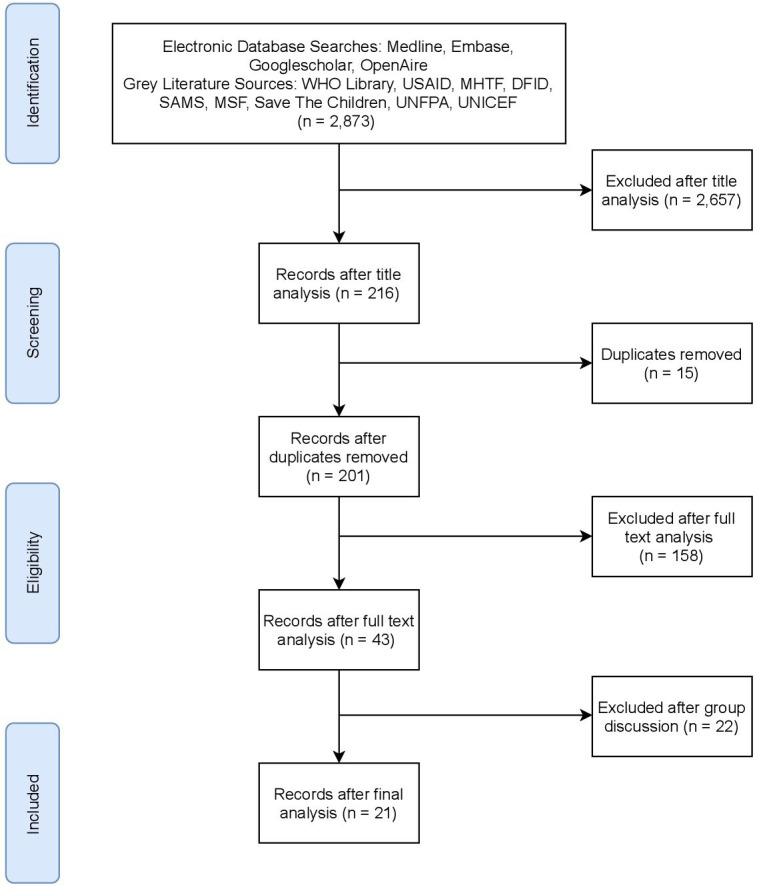
Syria's protracted conflict has devastated the health system reversing progress made on maternal health preconflict. Our aim is to understand the state of maternal health in Syria focused on underage pregnancy and caesarean sections using a scoping review and quantitative analysis; the latter draws on data from the Syrian American Medical Society's (SAMS) maternal health facilities in northwest Syria.
We performed a scoping review of academic and grey literature on the state of maternal health across Syria since the onset of conflict (taken as March 2011). Identified articles were screened using pre-established criteria and themes identified. We also performed a retrospective quantitative analysis of maternal health data from SAMS' facilities in a microcontext in north-west Syria between March 2017 and July 2020, analysing the trends in the proportion of births by caesarean section and age at pregnancy.
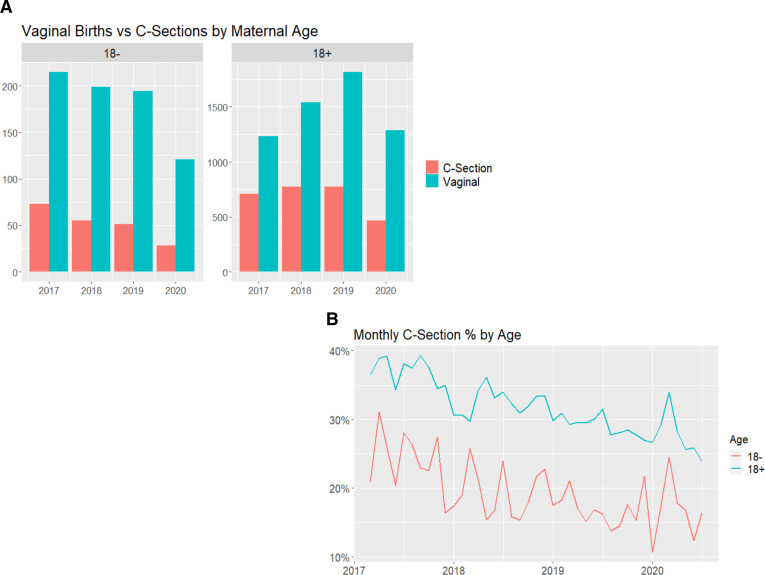
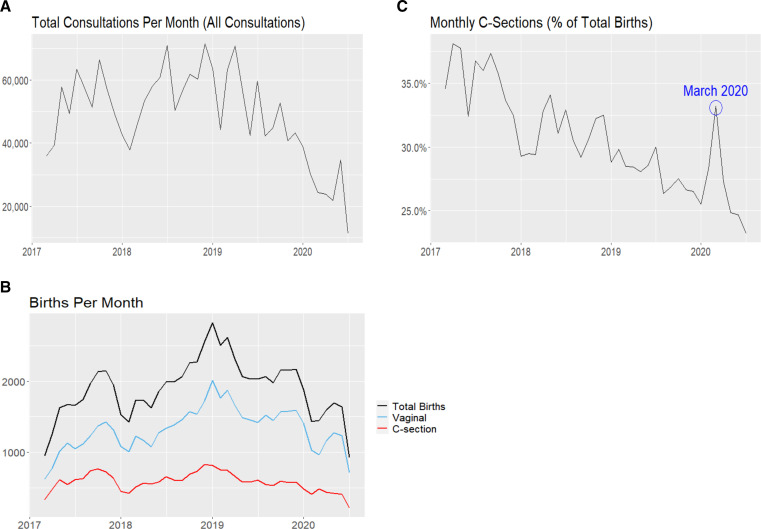
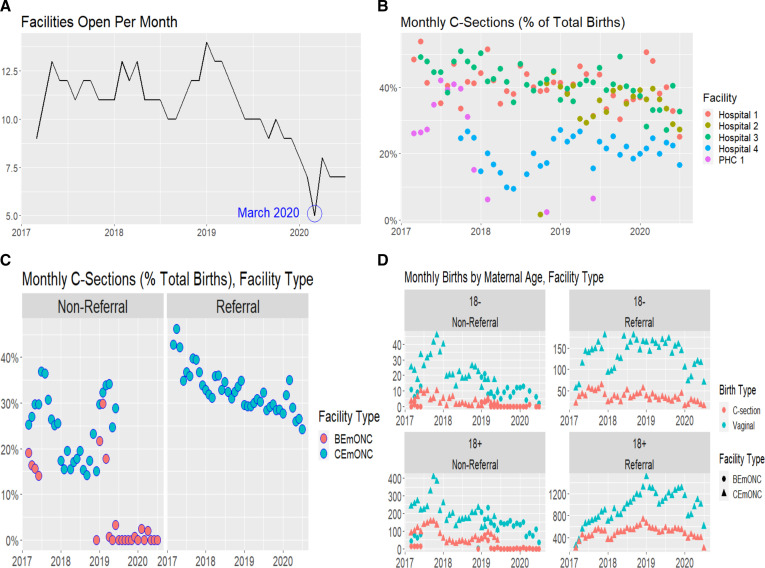
Scoping review: of 2824 articles, 21 remained after screening. Main themes related to maternal mortality rates, caesarean sections, maternal age and perinatal care. 12 studies reported caesarean section rates; these varied from 16% to 64% of all births: northern Syria (19%-45%,) Damascus (16%-54%,) Lattakia (64%) and Tartous (59%.) Quantitative analysis: Of 77 746 births across 17 facilities, trend data for caesarean sections showed a decrease from 35% in March 2017 to 23% in July 2020 across SAMS facilities. Girls under 18 years accounted for 10% of births and had a lower proportion of caesarean section births. There was notable geographical and interfacility variation in the findings.
The quality of available literature was poor with country-level generalisations. Research which explores microcontexts in Syria is important given the different effects of conflict across the country and the fragmented health system. Our quantitative analysis provides some evidence around the changes to caesarean section rates in northwest Syria. Despite limitations, this study adds to sparse literature on this important topic.
叙利亚旷日持久的冲突摧毁了医疗体系,使战前在产妇保健方面取得的进展化为乌有。我们的目标是通过范围界定审查和定量分析来了解叙利亚的产妇健康状况,重点是未成年怀孕和剖腹产;后者的数据来自叙利亚美国医学协会(SAMS)在叙利亚西北部的产妇保健机构。
我们对自冲突开始以来(即 2011 年 3 月)叙利亚各地产妇健康状况的学术和灰色文献进行了范围界定审查。使用预先确定的标准对已识别的文章进行筛选,并确定主题。我们还对 2017 年 3 月至 2020 年 7 月期间 SAMS 在叙利亚西北部的设施中获取的产妇健康数据进行了回顾性定量分析,分析了剖腹产比例和怀孕年龄的变化趋势。
范围界定审查:在 2824 篇文章中,经过筛选后保留了 21 篇。主要主题与产妇死亡率、剖腹产、产妇年龄和围产期护理有关。有 12 项研究报告了剖腹产率;这些研究的剖腹产率在所有分娩中的比例从 16%到 64%不等:北部叙利亚(19%-45%)、大马士革(16%-54%)、拉塔基亚(64%)和塔尔图斯(59%)。定量分析:在 17 个设施中,有 77746 名产妇的数据,剖腹产的趋势数据显示,SAMS 设施的剖腹产率从 2017 年 3 月的 35%下降到 2020 年 7 月的 23%。18 岁以下的女孩占分娩人数的 10%,剖腹产的比例较低。这些发现存在明显的地域和设施间差异。
现有文献的质量较差,难以进行国家级的概括。鉴于冲突在叙利亚各地的不同影响以及支离破碎的医疗体系,研究叙利亚的微观环境非常重要。我们的定量分析为叙利亚西北部剖腹产率的变化提供了一些证据。尽管存在局限性,但这项研究增加了关于这一重要主题的稀缺文献。