Zhang Nan, Xu Li, Song Hao, Bu Chunqing, Kang Jie, Zhang Chuanchen, Yang Xiaofei, Han Fabin
The Institute for Tissue Engineering and Regenerative Medicine, Liaocheng People's Hospital, Liaocheng, China.
Department of MRI, Liaocheng People's Hospital, Liaocheng, China.
Int J Stem Cells. 2023 Feb 28;16(1):93-107. doi: 10.15283/ijsc21204. Epub 2022 Aug 31.
Chronic periodontitis can lead to alveolar bone resorption and eventually tooth loss. Stem cells from exfoliated deciduous teeth (SHED) are appropriate bone regeneration seed cells. To track the survival, migration, and differentiation of the transplanted SHED, we used super paramagnetic iron oxide particles (SPIO) Molday ION Rhodamine-B (MIRB) to label and monitor the transplanted cells while repairing periodontal bone defects.
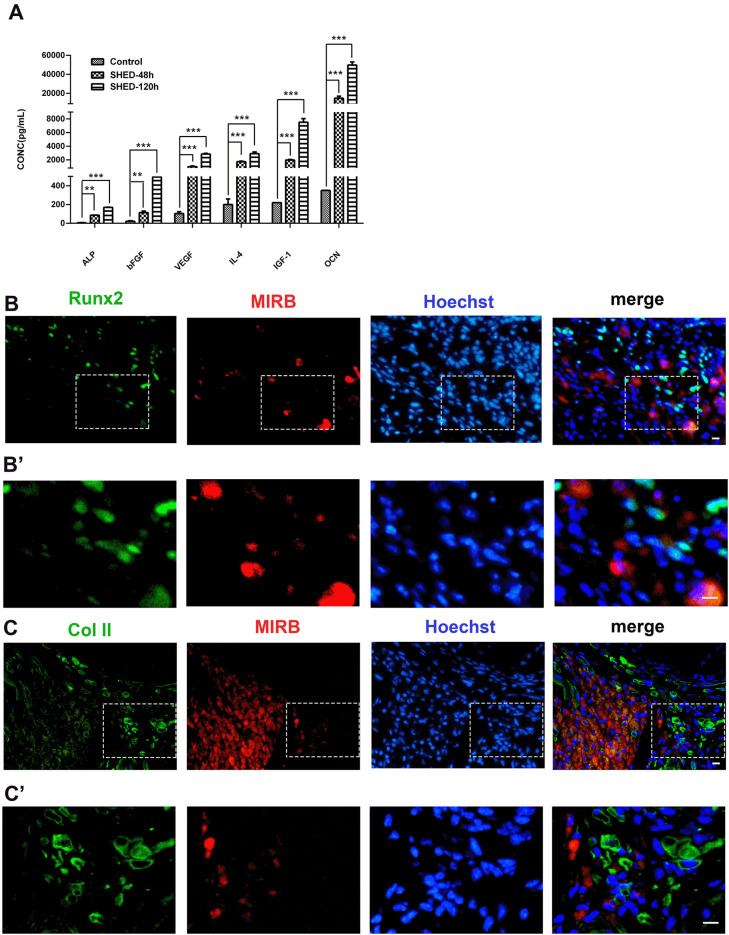
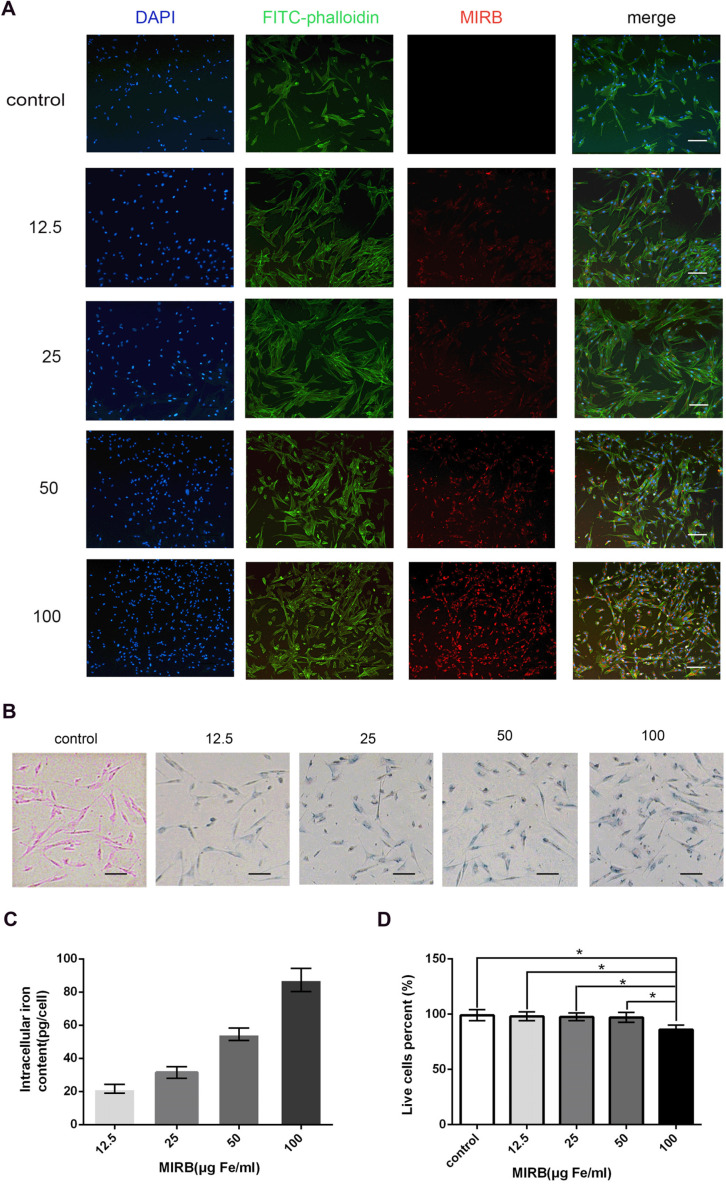
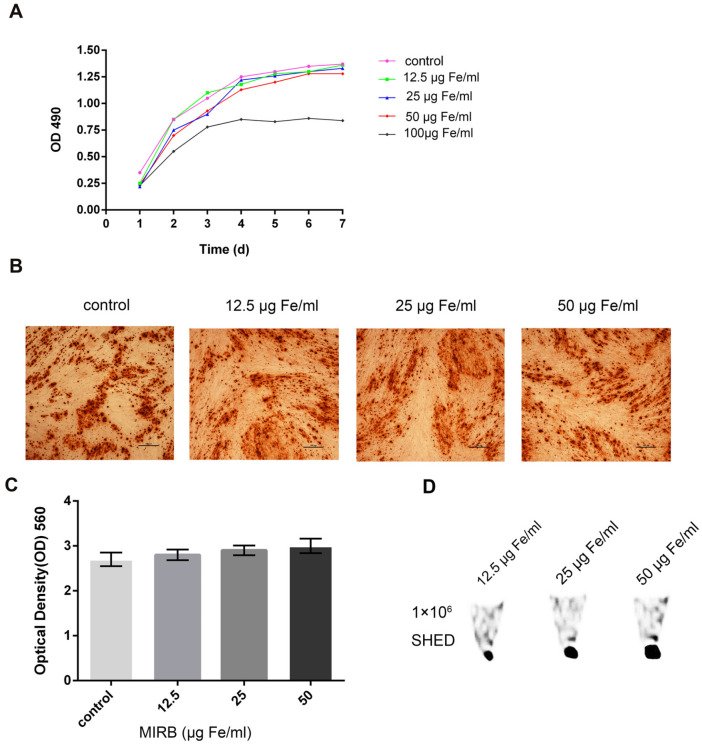
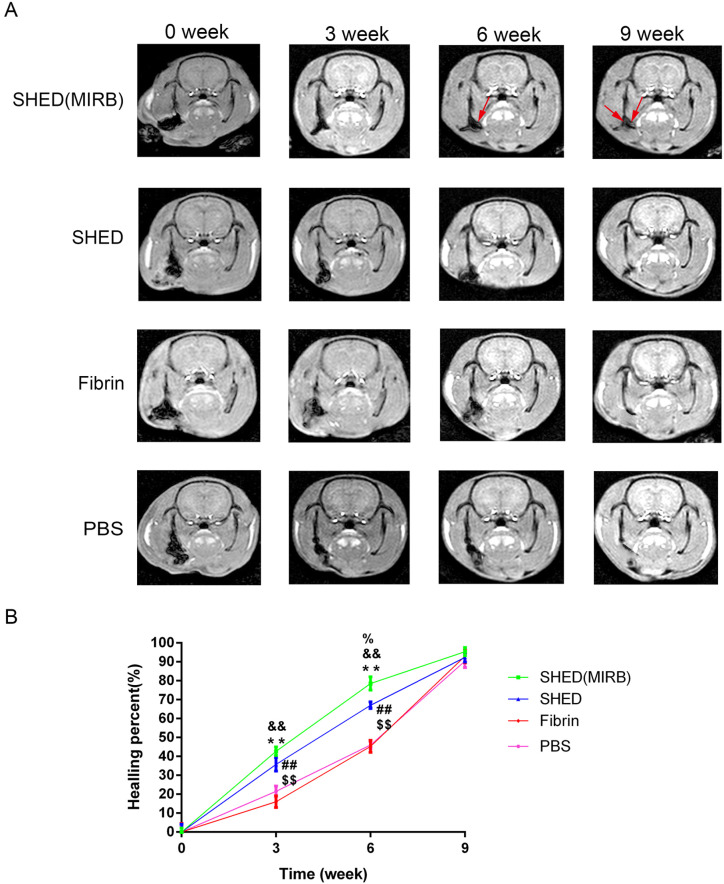
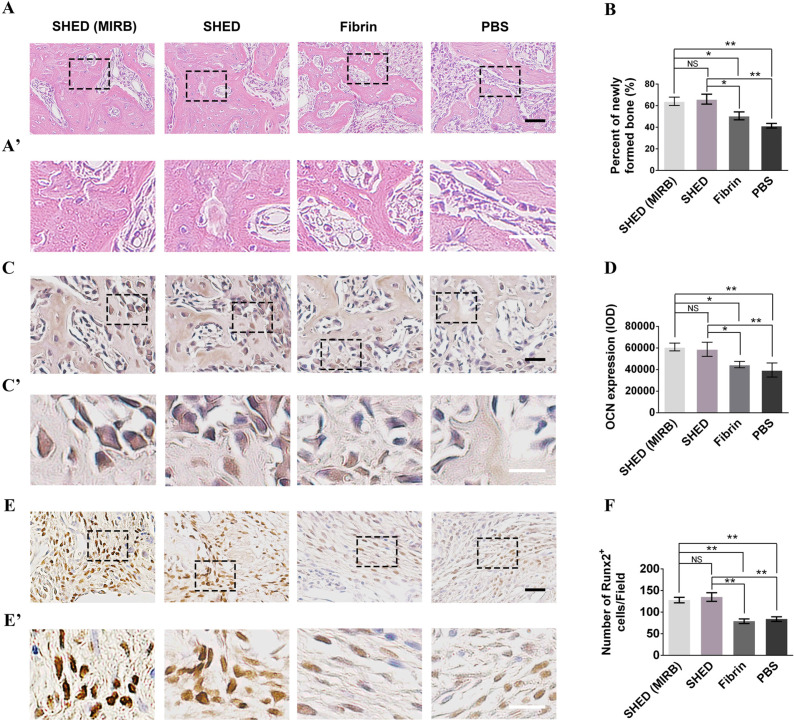
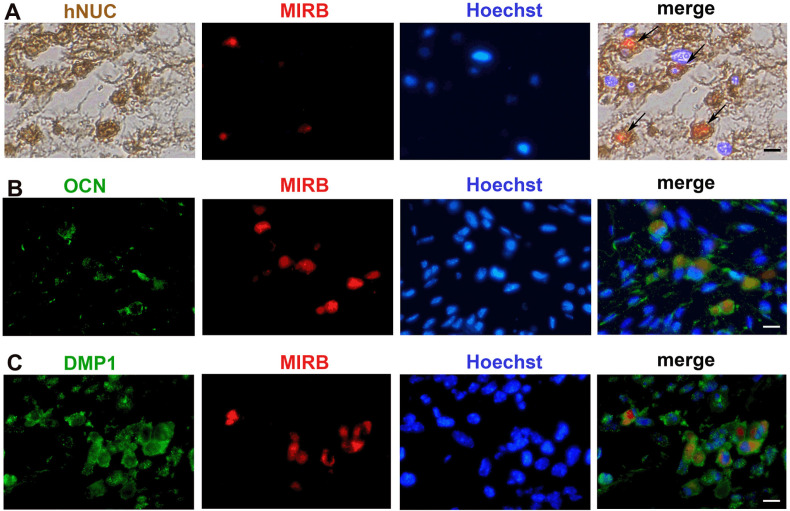
We determined an appropriate dose of MIRB for labeling SHED by examining the growth and osteogenic differentiation of labeled SHED. Finally, SHED was labeled with 25 μg Fe/ml MIRB before being transplanted into rats. Magnetic resonance imaging was used to track SHED survival and migration due to a low-intensity signal artifact caused by MIRB. HE and immunohistochemical analyses revealed that both MIRB-labeled and unlabeled SHED could promote periodontal bone regeneration. The colocalization of hNUC and MIRB demonstrated that SHED transplanted into rats could survive . Furthermore, some MIRB-positive cells expressed the osteoblast and osteocyte markers OCN and DMP1, respectively. Enzyme-linked immunosorbent assay revealed that SHED could secrete protein factors, such as IGF-1, OCN, ALP, IL-4, VEGF, and bFGF, which promote bone regeneration. Immunofluorescence staining revealed that the transplanted SHED was surrounded by a large number of host-derived Runx2- and Col II-positive cells that played important roles in the bone healing process.
SHED could promote periodontal bone regeneration in rats, and the survival of SHED could be tracked by labeling them with MIRB. SHED are likely to promote bone healing through both direct differentiation and paracrine mechanisms.
慢性牙周炎可导致牙槽骨吸收,最终导致牙齿脱落。脱落乳牙干细胞(SHED)是合适的骨再生种子细胞。为追踪移植的SHED的存活、迁移和分化情况,我们使用超顺磁性氧化铁颗粒(SPIO)罗丹明-B标记的莫尔戴离子(MIRB)对移植细胞进行标记和监测,同时修复牙周骨缺损。
通过检测标记的SHED的生长和成骨分化情况,确定了用于标记SHED的合适剂量的MIRB。最后,在将SHED移植到大鼠体内之前,用25μg Fe/ml的MIRB对其进行标记。由于MIRB引起的低强度信号伪影,采用磁共振成像追踪SHED的存活和迁移情况。苏木精-伊红(HE)染色和免疫组织化学分析显示,MIRB标记和未标记的SHED均能促进牙周骨再生。人细胞核(hNUC)与MIRB的共定位表明,移植到大鼠体内的SHED能够存活。此外,一些MIRB阳性细胞分别表达成骨细胞和骨细胞标志物骨钙素(OCN)和牙本质基质蛋白1(DMP1)。酶联免疫吸附测定显示,SHED可分泌促进骨再生的蛋白质因子,如胰岛素样生长因子-1(IGF-1)、OCN、碱性磷酸酶(ALP)、白细胞介素-4(IL-4)、血管内皮生长因子(VEGF)和碱性成纤维细胞生长因子(bFGF)。免疫荧光染色显示,移植的SHED被大量宿主来源的Runx2和Ⅱ型胶原(Col II)阳性细胞包围,这些细胞在骨愈合过程中起重要作用。
SHED可促进大鼠牙周骨再生,用MIRB标记SHED可追踪其存活情况。SHED可能通过直接分化和旁分泌机制促进骨愈合。