Khajavi Azadeh, Mohseni Shabnam, Peymani Amir, Amjadi Mehrak
Department of Prosthodontics, School of Dentistry, Qazvin University of Medical Sciences, Qazvin, Iran.
Student Research Committee, Qazvin University of Medical Sciences, Qazvin, Iran.
Front Dent. 2020 Dec 8;17:32. doi: 10.18502/fid.v17i32.5196. eCollection 2020.
Bacterial leakage at the implant-abutment interface is one of the main causes of peri-implant inflammation. One of the factors that influences bacterial leakage is the structural design of the interface. Considering the limited studies that have examined slip-joint connections, a comparative study of bacterial leakage was performed on two different systems namely Zimmer (Tapered Screw-Vent, Zimmer Dental) with slip-joint connection and Argon (Konus K3pro, Argon Implants) with conical connection.
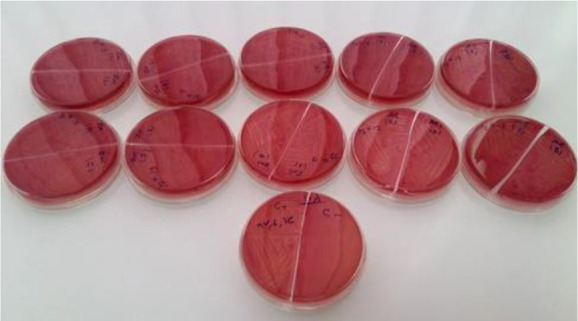
Twenty-two implants were selected in 2 groups (11 Zimmer with slip-joint connection, and 11 Argon with conical connection) with similar platforms. Escherichia coli (E. coli) suspension (2 μL) was pipetted into the internal lumen of implants. The abutments were screwed onto the implants with a closing torque of 30 Ncm. The assemblies were placed in culture broth for 6, 24, 48 and 72 h, and 7 and 14 days. The colonies were counted and analyzed by the Mann-Whitney test (a=0.05).
Microleakage was observed in 20% of the samples of conical connection group after 6 h to 2 days, and in 50% of the samples in slip-joint connection group after 3 to 7 days. There was a significant difference in bacterial leakage rate between the two implant groups (P<0.001) but no significant difference was seen in bacterial leakage over time (P>0.05).
Type of connection had a significant effect on bacterial leakage, but the rate of bacterial leakage did not significantly change over time.
种植体-基台界面处的细菌渗漏是种植体周围炎的主要原因之一。影响细菌渗漏的因素之一是界面的结构设计。鉴于对滑动连接的研究有限,对两种不同系统进行了细菌渗漏的对比研究,即采用滑动连接的zimmer(锥形螺纹排气式,zimmer牙科)系统和采用锥形连接的氩气(Konus K3pro,氩气种植体)系统。
选择2组共22颗种植体(11颗采用滑动连接的zimmer种植体和11颗采用锥形连接的氩气种植体),平台相似。将大肠杆菌(E. coli)悬液(2μL)用移液器注入种植体的内部管腔。以30Ncm的拧紧扭矩将基台拧到种植体上。将组件置于培养液中6、24、48和72小时,以及7天和14天。通过Mann-Whitney检验(α=0.05)对菌落进行计数和分析。
锥形连接组20%的样本在6小时至2天出现微渗漏,滑动连接组50%的样本在3至7天出现微渗漏。两组种植体的细菌渗漏率存在显著差异(P<0.001),但细菌渗漏随时间无显著差异(P>0.05)。
连接类型对细菌渗漏有显著影响,但细菌渗漏率随时间无显著变化。