Abolhassani Ali, Prates Marcos O, Mahmoodi Safieh
Department of Applied Mathematics, Azarbaijan Shahid Madani University, Tabriz, Iran.
Departamento de Estatística, Universidade Federal de Minas Gerais, Belo Horizonte, MG Brazil.
Stat Biosci. 2023;15(1):141-162. doi: 10.1007/s12561-022-09353-7. Epub 2022 Aug 26.
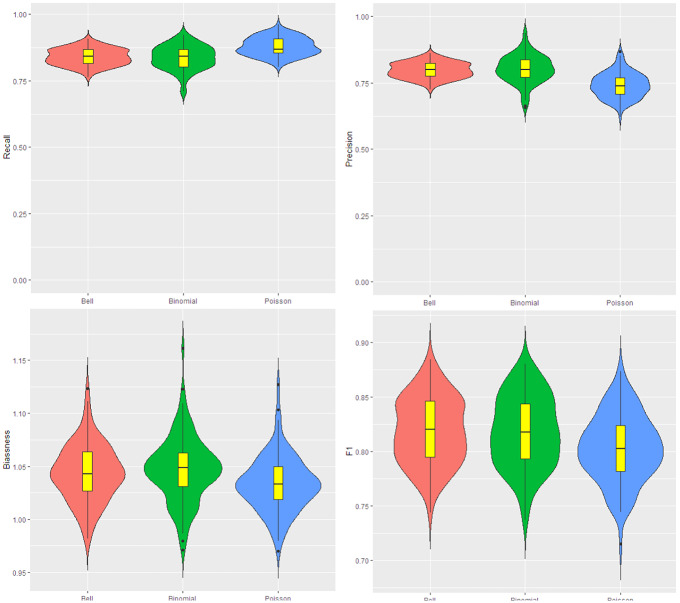
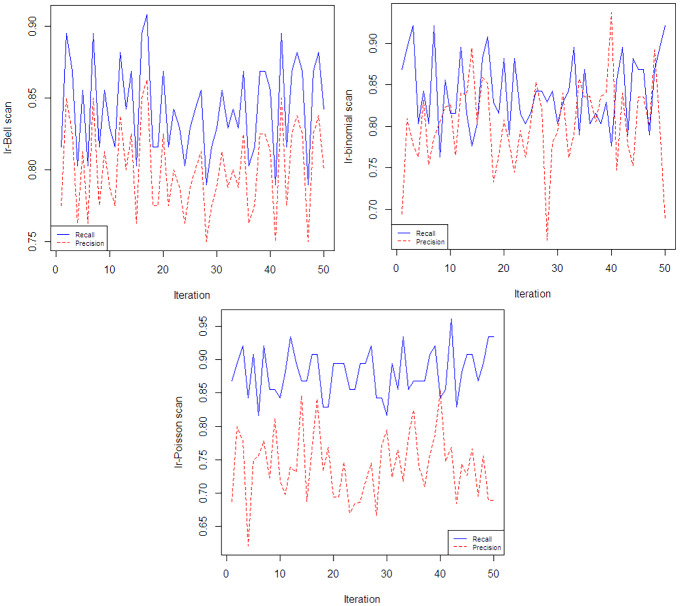
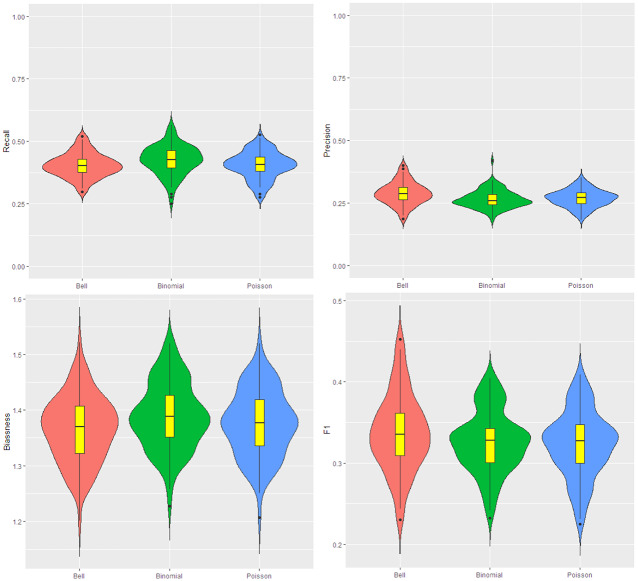
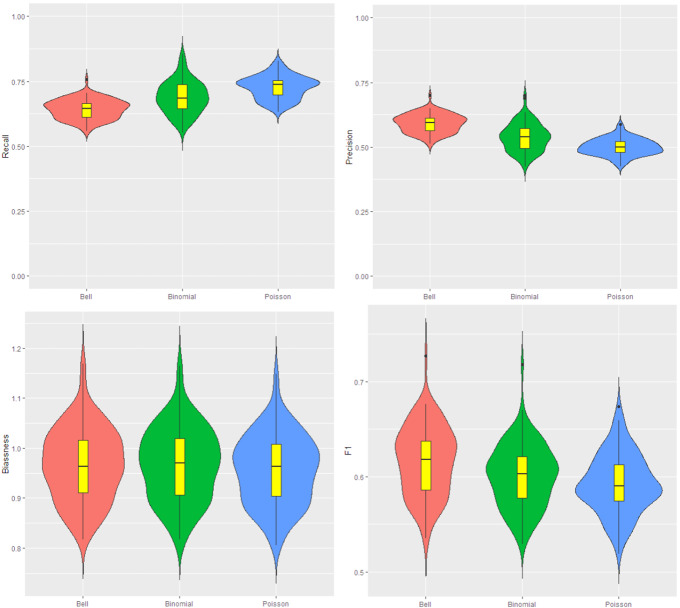
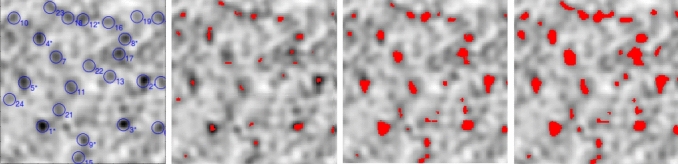
The spatial scan statistics based on the Poisson and binomial models are the most common methods to detect spatial clusters in disease surveillance. These models rely on Monte-Carlo simulation which are time consuming. Moreover, frequently, datasets present over-dispersion which cannot be handled by them. Thus, we have the following goals. First, we propose irregularly shaped spatial scan for the Bell, Poisson, and binomial. The Bell distribution has just one parameter but it is capable of handling over-dispersed datasets. Second, we apply these scan statistics to big maps. A fast version, without Monte-Carlo simulation, for the proposed Poisson and binomial scans is introduced. Intensive simulation studies are carried out to assess the quality of the proposals. In addition, we show the time improvement of the fast scan versions over their traditional ones. Finally, we end the paper with an application on the detection of irregular shape small nodules in a medical image.
The online version contains supplementary material available at 10.1007/s12561-022-09353-7.
基于泊松模型和二项式模型的空间扫描统计是疾病监测中检测空间聚集的最常用方法。这些模型依赖于耗时的蒙特卡洛模拟。此外,数据集经常呈现过度离散的情况,而它们无法处理这种情况。因此,我们有以下目标。首先,我们为贝尔分布、泊松分布和二项式分布提出不规则形状的空间扫描。贝尔分布只有一个参数,但它能够处理过度离散的数据集。其次,我们将这些扫描统计应用于大地图。我们引入了一种快速版本,无需蒙特卡洛模拟,用于所提出的泊松扫描和二项式扫描。我们进行了大量的模拟研究来评估这些提议的质量。此外,我们展示了快速扫描版本相对于传统版本在时间上的改进。最后,我们以在医学图像中检测不规则形状小结节的应用结束本文。
在线版本包含可在10.1007/s12561-022-09353-7获取的补充材料。