Faculdade de Medicina, Universidade de São Paulo, São Paulo, SP, Brazil.
Einstein (Sao Paulo). 2022 Aug 29;20:eMD6705. doi: 10.31744/einstein_journal/2022MD6705. eCollection 2022.
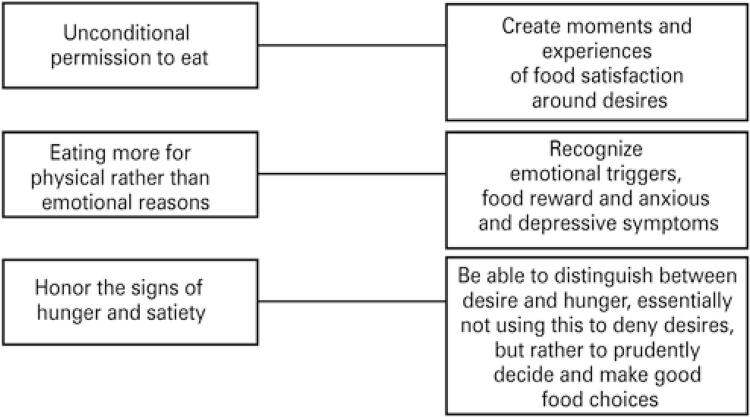
Food desires are defined as motivations that drive the search for and consumption of food. However, when domains of intensity and urgency are activated, these desires can become intense (i.e. food craving), being then characterized by episodes or cognitive events loaded with affectivity, in which food is associated with obtaining pleasure or relief, which is the only attentional focus. Specificity and urgency mark the differentiation between food desires and cravings. The process of elaboration with vivid images, the retention in working memory, the emergence of a negative affect state (awareness of the lack), and a committed attentional focus to seek food are characterized as stages of an episode of food craving. Individuals with eating disorders have the lowest levels of food craving when it comes to anorexia nervosa and the subsequent increase to bulimia nervosa and binge eating disorder. Some environmental and cultural triggers and internal factors of cognition and emotions play a crucial role in the emergence of food craving episodes. The external factors include positive/negative events, food environment, advertisements, cultural beliefs about food, specific locations, and food itself. The internal factors comprise dietary restriction, food reward, impulsivity/inflexibility, emotions, thoughts and feelings about food, hunger/satiety/appetite, and anxious/depressive symptoms. Treatment involves the association of flexibility, awareness, and questioning strategies about dietary practices based on three principles: unconditional permission to eat, eating more for physical than emotional reasons, and tuning in with the body's signs of hunger and satiety (intuitive eating).
食物欲望被定义为驱动人们寻找和消费食物的动机。然而,当强度和紧迫性的领域被激活时,这些欲望可能会变得强烈(即食物渴求),此时它们的特征是充满情感的发作或认知事件,其中食物与获得快乐或缓解有关,这是唯一的注意力焦点。特异性和紧迫性标志着食物欲望和渴求之间的区别。用生动的图像进行精心构思、保留在工作记忆中、出现消极情绪状态(意识到缺乏)以及专注于寻找食物的注意力集中,这些都是食物渴求发作的特征。在神经性厌食症中,患有进食障碍的个体的食物渴求程度最低,随后在神经性贪食症和暴食障碍中逐渐增加。一些环境和文化触发因素以及认知和情绪的内部因素在食物渴求发作中起着至关重要的作用。外部因素包括积极/消极事件、食物环境、广告、关于食物的文化信仰、特定地点和食物本身。内部因素包括饮食限制、食物奖励、冲动/不灵活性、情绪、对食物的想法和感受、饥饿/饱腹感/食欲以及焦虑/抑郁症状。治疗包括灵活性、对饮食实践的意识和质疑策略的结合,这些策略基于三个原则:无条件允许进食、出于身体原因而不是情感原因进食更多、以及与身体的饥饿和饱腹感信号协调(直觉饮食)。