a:1:{s:5:"en_US";s:25:"Ortopedia e Traumatologia";}.
.
Acta Biomed. 2022 Aug 31;93(4):e2022099. doi: 10.23750/abm.v93i4.11740.
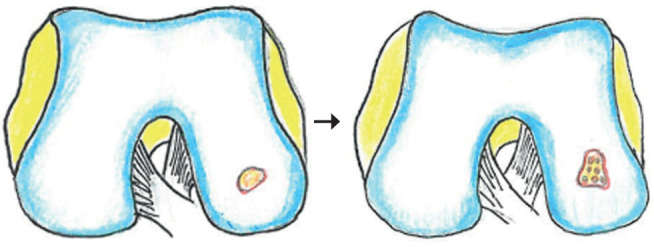
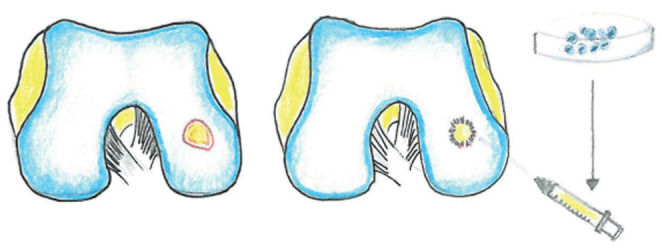
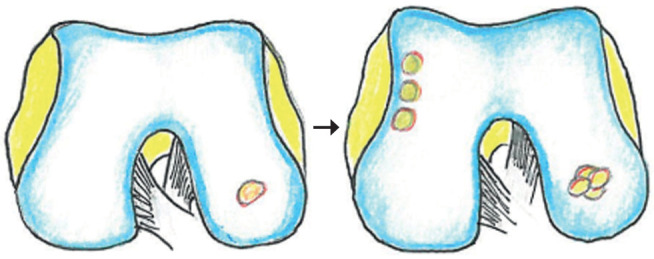
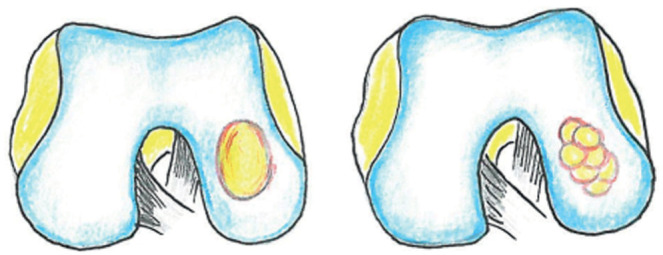
The management and repair of knee cartilage lesions currently represents a challenge for the orthopaedic surgeon. Identifiable causes are the characteristics of the involved tissues themselves and the presence of poor vascularization, which is responsible for overall reduced repair capacity. The literature reports three types of cartilage lesions' treatment modalities: chondroprotection, chondroreparation and chondrogeneration. The preference for one or the other therapeutic option depends on the pattern of the lesion and the clinical conditions of the patient. Each treatment technique is distinguished by the quality of the restorative tissue that is generated. In particular, the chondrorigeneration represents the last frontier of regenerative medicine, as it aims at the complete restoration of natural cartilage. However, the most recent literature documents good results only in the short and medium terms. In recent years the optimization of chondroregeneration outcomes is based on the modification of the scaffolds and the search for new chondrocyte sources, in order to guarantee satisfactory long-term results.
目前,膝关节软骨病变的治疗和修复是骨科医生面临的一项挑战。可识别的病因是病变组织本身的特点和较差的血管化程度,这导致了整体修复能力的降低。文献报道了三种类型的软骨病变治疗方法:软骨保护、软骨修复和软骨再生。对一种或另一种治疗选择的偏好取决于病变的模式和患者的临床状况。每种治疗技术的特点在于所产生的修复组织的质量。特别是,软骨再生代表了再生医学的最后一个前沿领域,因为它旨在完全恢复天然软骨。然而,最近的文献仅在短期和中期内记录了良好的结果。近年来,为了保证令人满意的长期效果,软骨再生结果的优化是基于支架的修饰和寻找新的软骨细胞来源。