Department of Medicine and Biosystemic Sciences, Kyushu University Graduate School of Medicine, Fukuoka, Japan.
Center for Cellular and Molecular Medicine, Kyushu University Hospital, Fukuoka, Japan.
Blood Adv. 2023 Jul 25;7(14):3592-3603. doi: 10.1182/bloodadvances.2022008242.
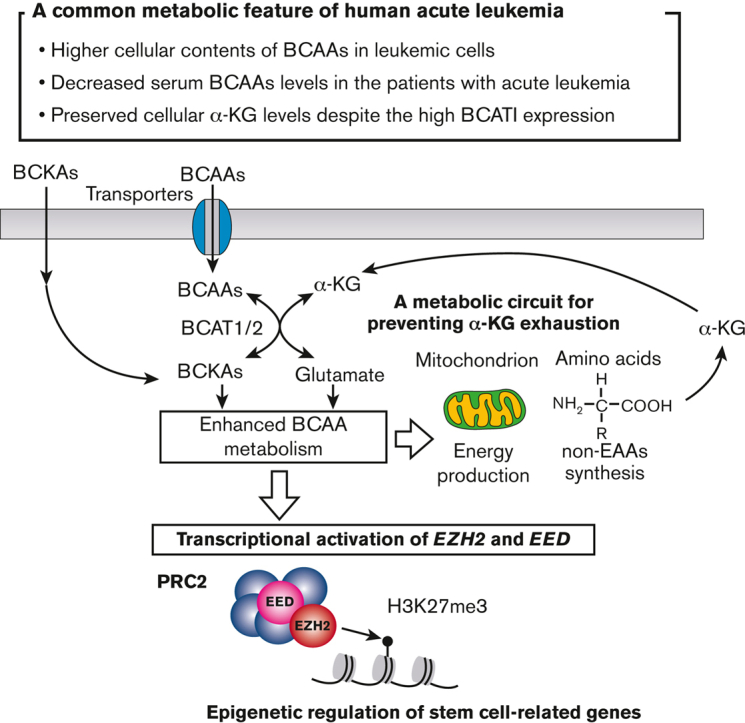
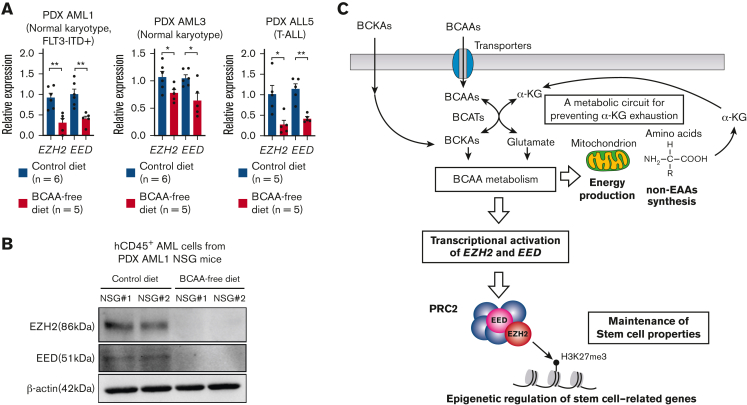
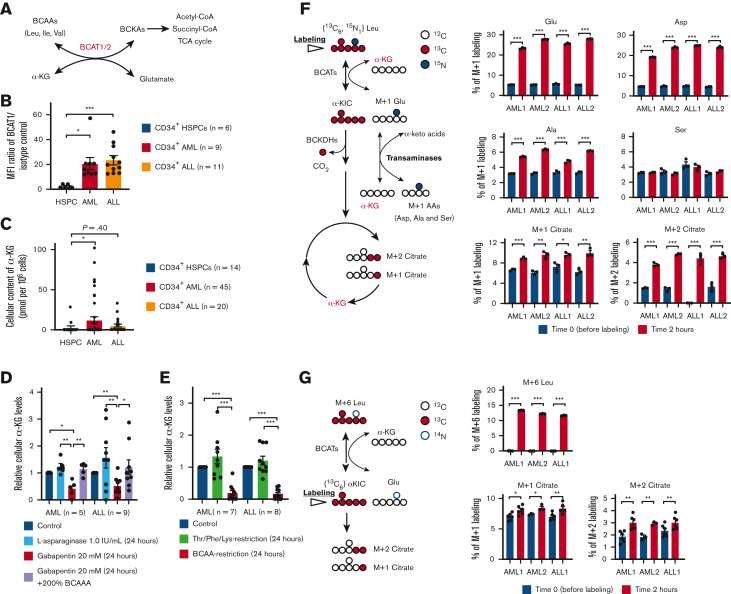
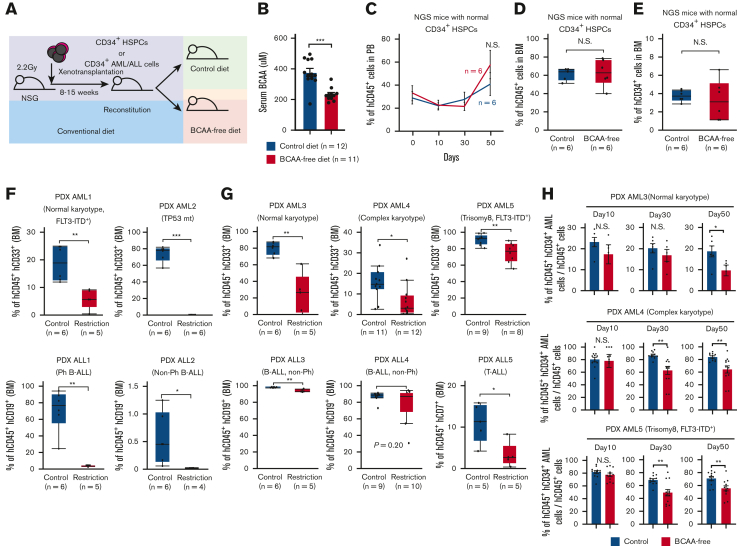
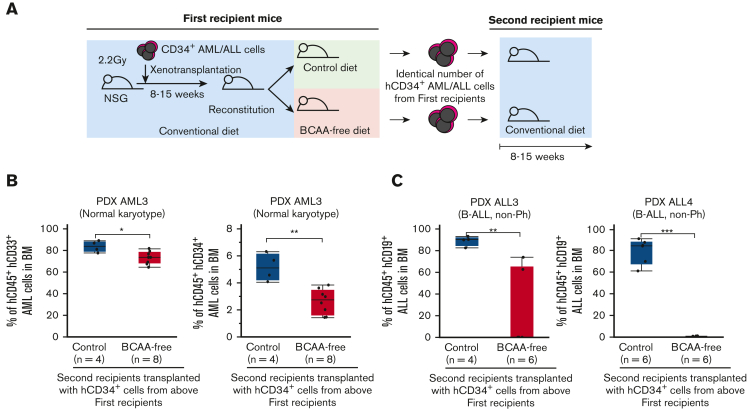
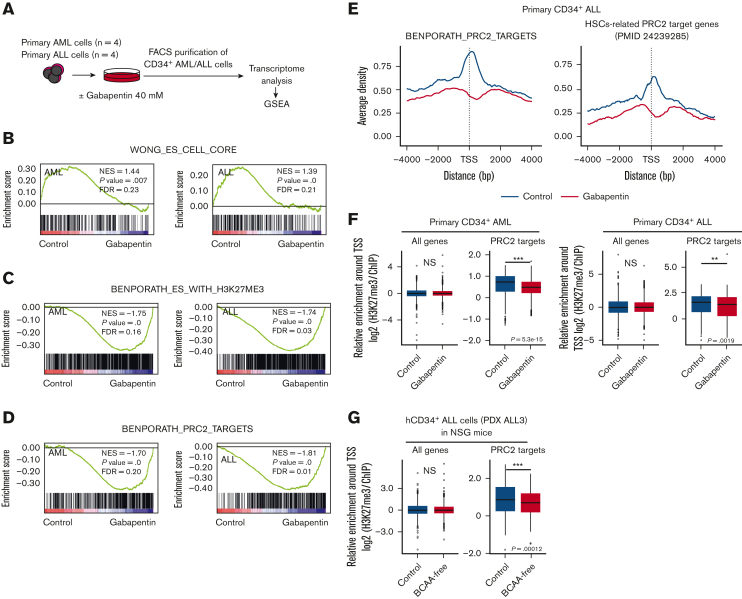
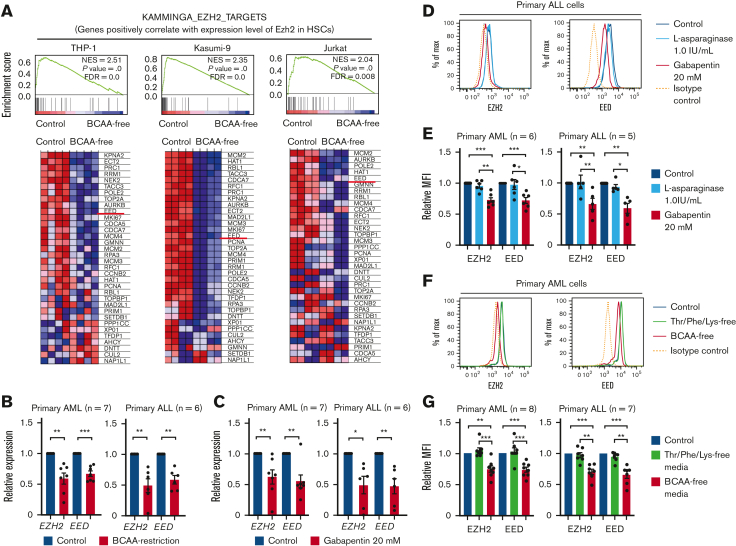
Cancer-specific metabolic activities play a crucial role in the pathogenesis of human malignancies. To investigate human acute leukemia-specific metabolic properties, we comprehensively measured the cellular metabolites within the CD34+ fraction of normal hematopoietic stem progenitor cells (HSPCs), primary human acute myelogenous leukemia (AML), and acute lymphoblastic leukemia (ALL) cells. Here, we show that human leukemia cells are addicted to the branched-chain amino acid (BCAA) metabolism to maintain their stemness, irrespective of myeloid or lymphoid types. Human primary acute leukemias had BCAA transporters for BCAA uptake, cellular BCAA, α-ketoglutarate (α-KG), and cytoplasmic BCAA transaminase-1 (BCAT1) at significantly higher levels than control HSPCs. Isotope-tracing experiments showed that in primary leukemia cells, BCAT1 actively catabolizes BCAA using α-KG into branched-chain α-ketoacids, whose metabolic processes provide leukemia cells with critical substrates for the trichloroacetic acid cycle and the synthesis of nonessential amino acids, both of which reproduce α-KG to maintain its cellular level. In xenogeneic transplantation experiments, deprivation of BCAA from daily diet strongly inhibited expansion, engraftment and self-renewal of human acute leukemia cells. Inhibition of BCAA catabolism in primary AML or ALL cells specifically inactivates the function of the polycomb repressive complex 2, an epigenetic regulator for stem cell signatures, by inhibiting the transcription of PRC components, such as zeste homolog 2 and embryonic ectoderm development. Accordingly, BCAA catabolism plays an important role in the maintenance of stemness in primary human AML and ALL, and molecules related to the BCAA metabolism pathway should be critical targets for acute leukemia treatment.
癌症特异性代谢活动在人类恶性肿瘤的发病机制中起着至关重要的作用。为了研究人类急性白血病的特异性代谢特性,我们全面测量了正常造血干祖细胞(HSPC)、人原发性急性髓系白血病(AML)和急性淋巴细胞白血病(ALL)细胞中 CD34+ 亚群的细胞代谢物。在这里,我们表明,人类白血病细胞依赖支链氨基酸(BCAA)代谢来维持其干性,而与髓系或淋系类型无关。人原发性急性白血病具有 BCAA 转运蛋白,用于摄取 BCAA、细胞内 BCAA、α-酮戊二酸(α-KG)和细胞质 BCAA 转氨酶-1(BCAT1),水平明显高于对照 HSPC。同位素示踪实验表明,在原发性白血病细胞中,BCAT1 利用 α-KG 积极地将 BCAA 分解为支链α-酮酸,其代谢过程为白血病细胞提供了三羧酸循环和非必需氨基酸合成的关键底物,这些过程都可以再生α-KG 以维持其细胞水平。在异种移植实验中,从日常饮食中去除 BCAA 强烈抑制了人急性白血病细胞的扩增、植入和自我更新。在原发性 AML 或 ALL 细胞中抑制 BCAA 分解代谢,特异性地抑制多梳抑制复合物 2 的功能,多梳抑制复合物 2 是干细胞特征的表观遗传调节剂,通过抑制 PRC 成分(如 zeste 同源物 2 和胚胎外胚层发育)的转录。因此,BCAA 分解代谢在原发性人 AML 和 ALL 中的干性维持中起着重要作用,与 BCAA 代谢途径相关的分子应该是急性白血病治疗的关键靶点。