Leidos Biomedical Research, Inc., Frederick National Laboratory for Cancer Research, Frederick, Maryland, United States of America.
Vaccine Research Center, National Institute of Allergy and Infectious Diseases, Bethesda Maryland, United States of America.
PLoS Pathog. 2022 Aug 31;18(8):e1010726. doi: 10.1371/journal.ppat.1010726. eCollection 2022 Aug.
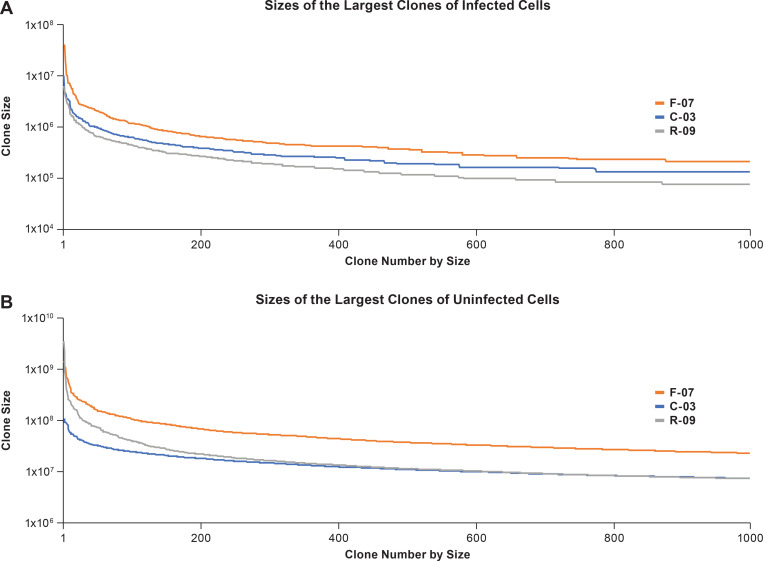
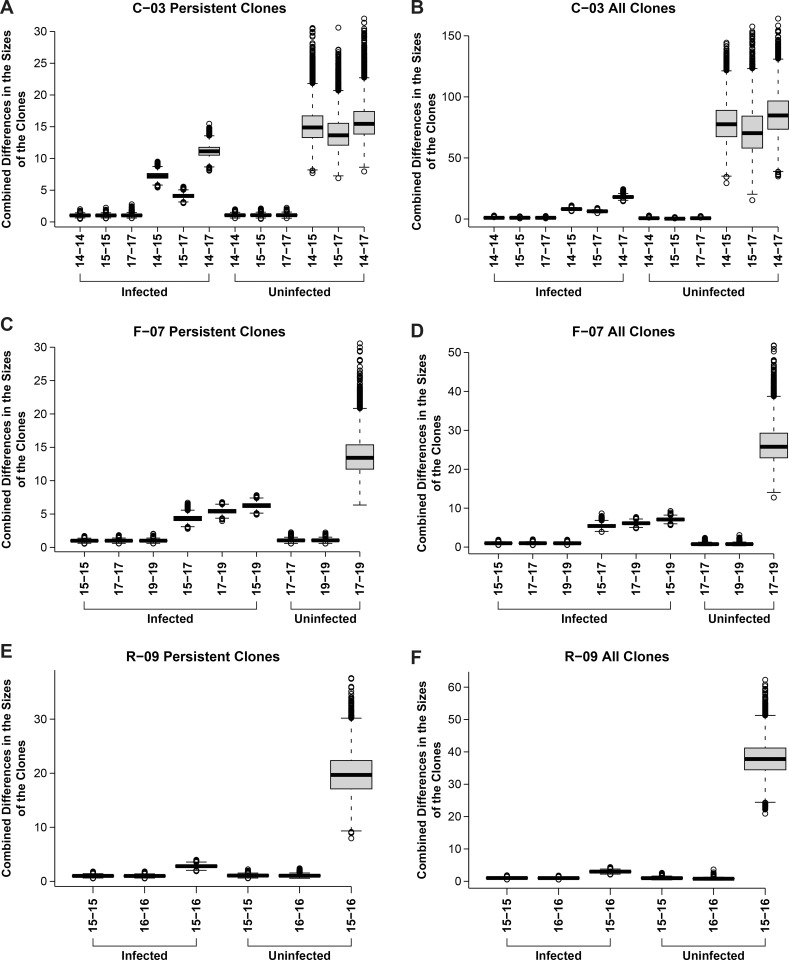
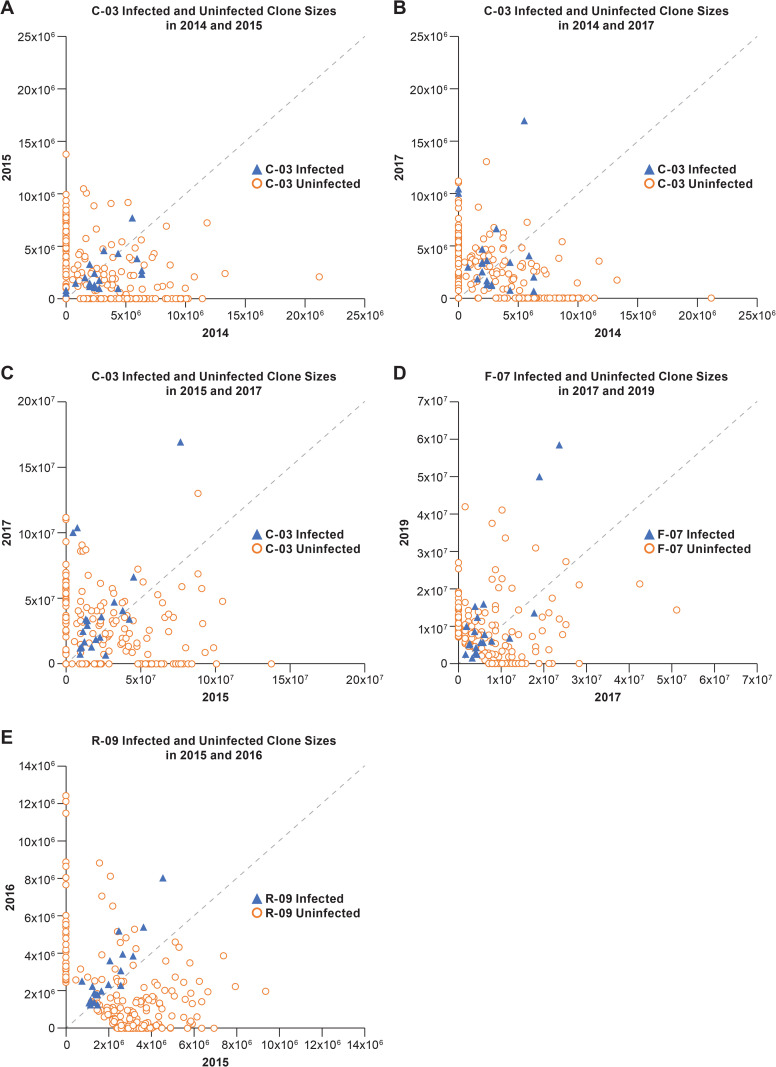
Although combination antiretroviral therapy (ART) blocks HIV replication, it is not curative because infected CD4+ T cells that carry intact, infectious proviruses persist. Understanding the behavior of clones of infected T cells is important for understanding the stability of the reservoir; however, the stabilities of clones of infected T cells in persons on long-term ART are not well defined. We determined the relative stabilities of clones of infected and uninfected CD4+ T cells over time intervals of one to four years in three individuals who had been on ART for 9-19 years. The largest clones of uninfected T cells were larger than the largest clones of infected T cells. Clones of infected CD4+ T cells were more stable than clones of uninfected CD4+ T cells of a similar size. Individual clones of CD4+ T cells carrying intact, infectious proviruses can expand, contract, or remain stable over time.
尽管联合抗逆转录病毒疗法(ART)可以阻止 HIV 复制,但它并不能治愈疾病,因为携带完整、具有感染性前病毒的感染 CD4+T 细胞仍然存在。了解感染 T 细胞克隆的行为对于理解储库的稳定性很重要;然而,长期接受 ART 的个体中感染 T 细胞克隆的稳定性尚未得到很好的定义。我们在接受 ART 治疗 9-19 年的 3 个人中,确定了感染和未感染 CD4+T 细胞克隆在 1 至 4 年时间间隔内的相对稳定性。最大的未感染 T 细胞克隆大于最大的感染 T 细胞克隆。大小相似的感染 CD4+T 细胞克隆比未感染 CD4+T 细胞克隆更稳定。携带完整、具有感染性前病毒的 CD4+T 细胞的个体克隆可以随着时间的推移而扩张、收缩或保持稳定。