National Experimental Teaching Demonstration Center of Plant Science, Agricultural College, Guangxi University, Nanning, 530004, Guangxi, P.R. China.
BMC Microbiol. 2022 Aug 31;22(1):210. doi: 10.1186/s12866-022-02620-z.
To explore and utilize abundant soil microbes and their beneficial functions, the bacterial and fungal compositions in rhizospheres between red- and yellow-fruited tomato varieties were analyzed using high-throughput sequencing technique.
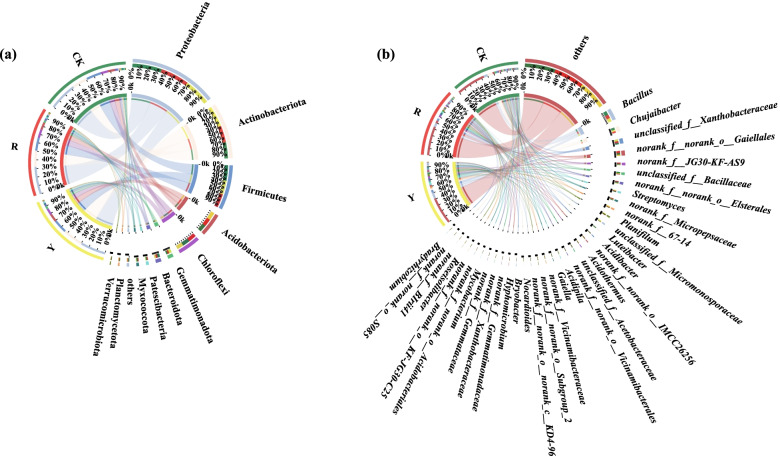
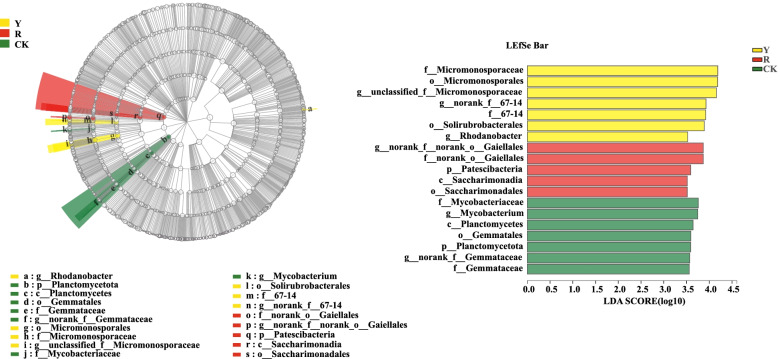
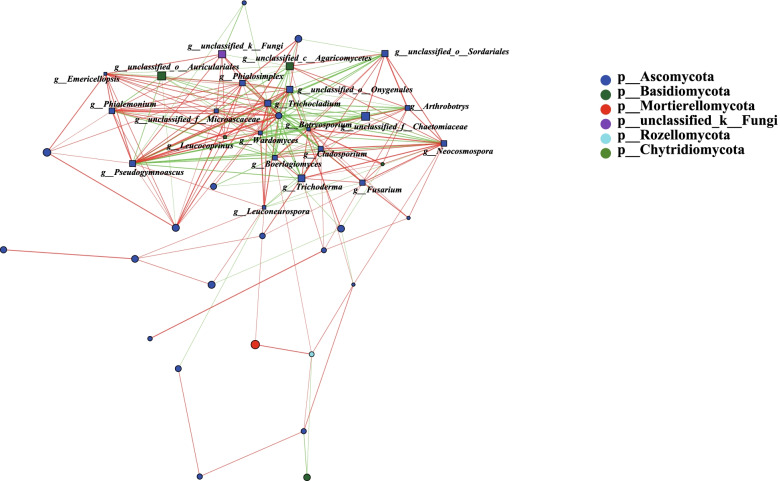
Our results indicated that different soil microbes in rhizospheres of tomatoes were exactly recruited by different color fruit tomatoes. For the reasons as not only soil bacterial community, but also soil fungal compositions were all different between red and yellow fruit tomatoes. For example, Nocardioides, norank_f_norank_o_Vicinamibacterales, norank_f_norank_o_norank_c_KD4-96, norank_f_Birii41, norank_f_norank_o_S085 and Bradyrhizobium were the specific dominant soil bacterial genera, and Lecythophora, Derxomyces and unclassified_f_Pyronemataceae were the dominant soil fungal genera in the rhizospheres of red tomato varieties. By contrast, unclassified_f__Micromonsporaceae, Acidipila, Roseisolibacter, Gaiella and norank_f_Xanthobacteraceae were the unique dominant soil bacterial genera in the rhizospheres of yellow tomato varieties. And unclassified_o__Onygenales, Trichocladium, unclassified_c__Sordariomycetes, Pseudogymnoascus, Acremonium, Oidiodendron, Phialemonium, Penicillium, Phialosimplex were the unique dominant soil fungal genera in rhizospheres of yellow tomato varieties. Moreover, a higher abundance of specific soil bacterial and fungal genera in the rhizosphere was found in rhizospheres of the yellow than those of the red tomato varieties.
Soil bacterial and fungal compositions in rhizospheres between red- and yellow-fruited tomato varieties were found significantly different which growing in the same environment under the identical managements. It suggested that different soil microbes in rhizospheres exactly were recruited by different phenotypes tomato varieties related to fruit color formation.
为了探索和利用丰富的土壤微生物及其有益功能,采用高通量测序技术分析了红果和黄果番茄品种根际的细菌和真菌组成。
我们的研究结果表明,不同颜色果实番茄的确会招募不同的根际土壤微生物。这不仅是由于土壤细菌群落,还由于红果和黄果番茄的土壤真菌组成存在差异。例如,土壤细菌群落中,土壤真菌群落中,诺卡氏菌属、未分类_f_ norank_o_Vicinamibacterales、未分类_f_norank_o_norank_c_KD4-96、未分类_f_Birii41、未分类_f_norank_o_S085 和 Bradyrhizobium 是特定的优势土壤细菌属,而 Lecythophora、Derxomyces 和未分类_f_Pyronemataceae 是红番茄品种根际的优势土壤真菌属。相比之下,未分类_f__Micromonsporaceae、Acidipila、Roseisolibacter、Gaiella 和未分类_f_Xanthobacteraceae 是黄番茄品种根际的特有优势土壤细菌属。而未分类_o__Onygenales、Trichocladium、未分类_c__Sordariomycetes、Pseudogymnoascus、Acremonium、Oidiodendron、Phialemonium、Penicillium、Phialosimplex 是黄番茄品种根际的特有优势土壤真菌属。此外,在相同管理下生长于同一环境中的黄番茄品种根际中,特有土壤细菌和真菌属的丰度高于红番茄品种。
在相同管理下生长于同一环境中的红果和黄果番茄品种的根际土壤细菌和真菌组成存在显著差异。这表明不同颜色果实番茄的确会招募不同的根际土壤微生物,这与果实颜色的形成有关。