Montalvo Steven K, Meng Boyu, Lin Mu-Han, Park Chunjoo, Desai Neil B, Hannan Raquibul, Garant Aurelie
Department of Radiation Oncology, Harold C. Simmons Cancer Center, University of Texas Southwestern, Dallas, TX, United States.
Front Oncol. 2022 Aug 15;12:898822. doi: 10.3389/fonc.2022.898822. eCollection 2022.
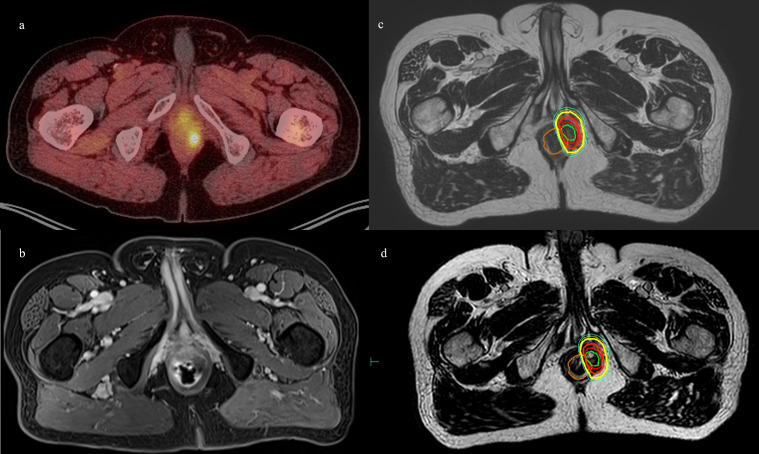
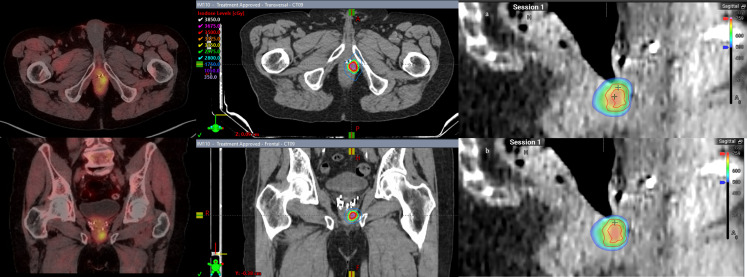
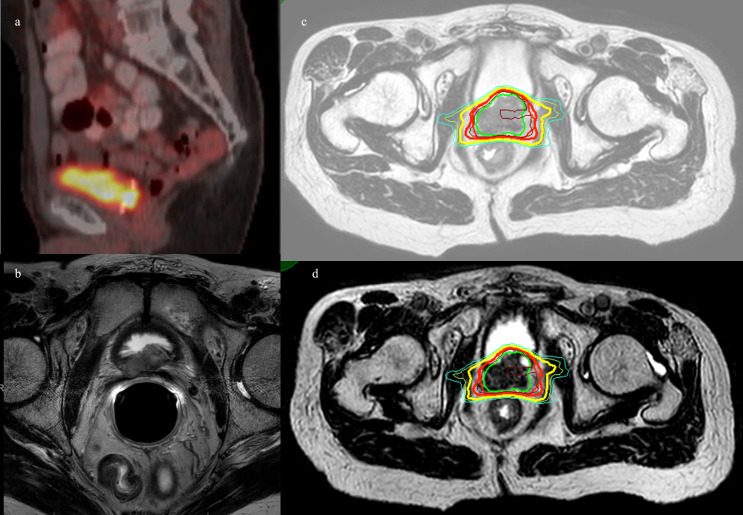
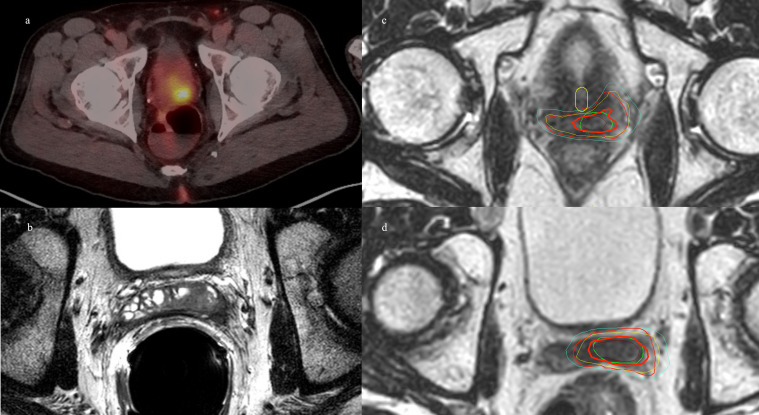
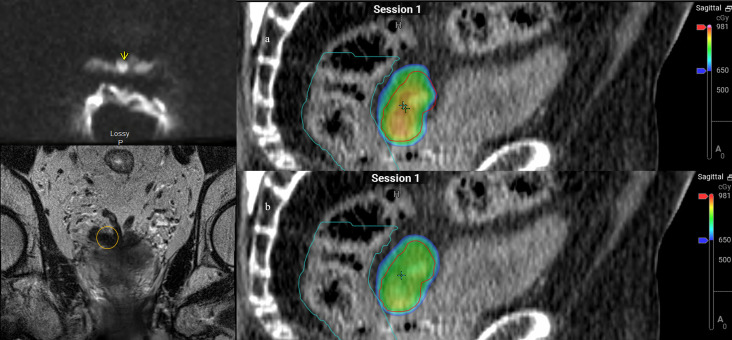
Adaptive radiotherapy has the potential to reduce margins, improve target coverage, and decrease toxicity to organs at risk (OARs) by optimizing radiation delivery to daily anatomic changes. Salvage for locally recurrent prostate cancer after definitive radiation remains a challenging clinical scenario given the risks to normal tissue in a setting of re-irradiation. Here, we present a case series of five patients with locally recurrent prostate cancer treated with an adaptive online linear accelerator or a 3-T MR-based linear accelerator to demonstrate excellent target coverage. All patients completed the planned treatment course with acceptable acute toxicities but a short follow-up time does not inform subacute/late toxicities.
自适应放疗有潜力通过优化针对每日解剖学变化的放疗投送,来减少边界、改善靶区覆盖,并降低对危及器官(OARs)的毒性。鉴于再照射情况下对正常组织的风险,根治性放疗后局部复发性前列腺癌的挽救性治疗仍然是一个具有挑战性的临床情况。在此,我们展示了一组5例局部复发性前列腺癌患者的病例系列,这些患者接受了自适应在线直线加速器或基于3-T磁共振成像的直线加速器治疗,以证明出色的靶区覆盖。所有患者均完成了计划的治疗疗程,急性毒性可接受,但随访时间短无法告知亚急性/晚期毒性情况。