State Key Laboratory of Medicinal Chemical Biology and College of Pharmacy, Nankai University, Tianjin, China.
Department of Clinical Laboratory, Tianjin Medical University Cancer Institute and Hospital, China.
FEBS J. 2023 Feb;290(3):763-779. doi: 10.1111/febs.16614. Epub 2022 Sep 11.
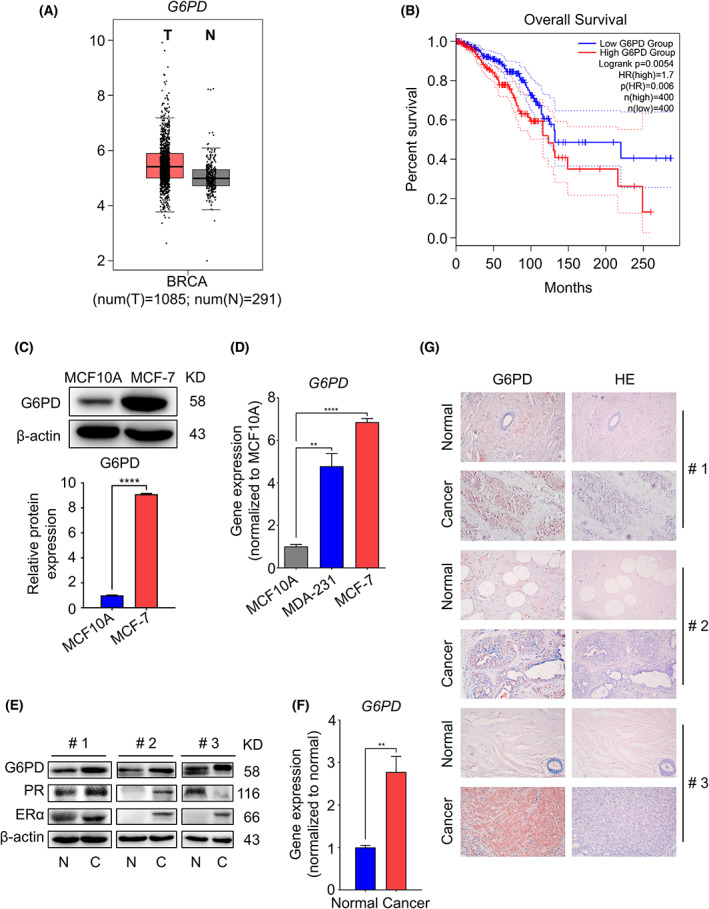
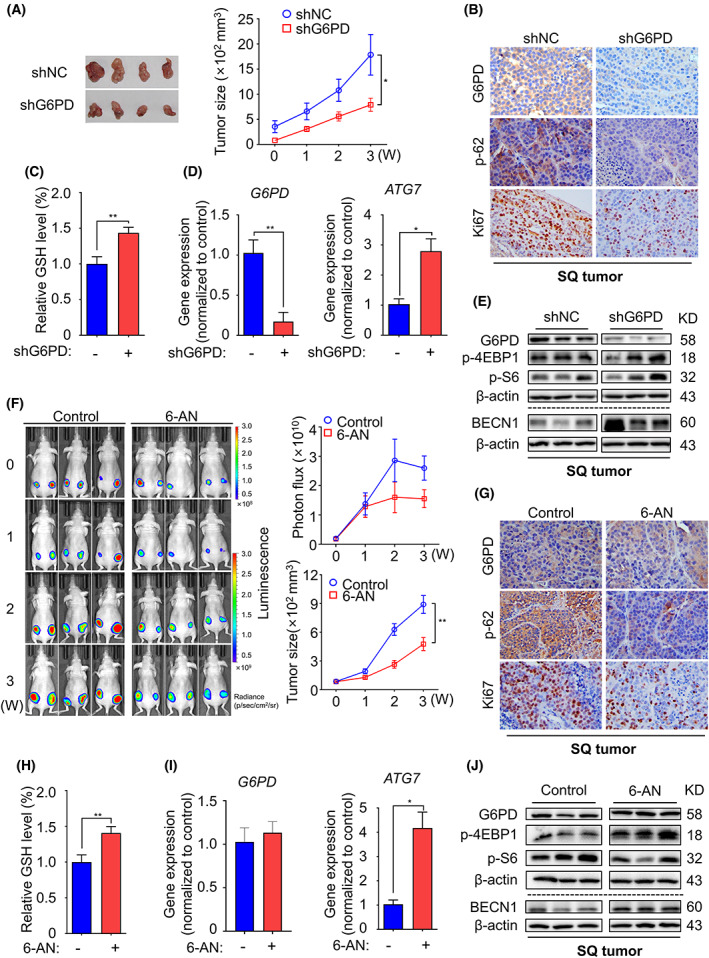
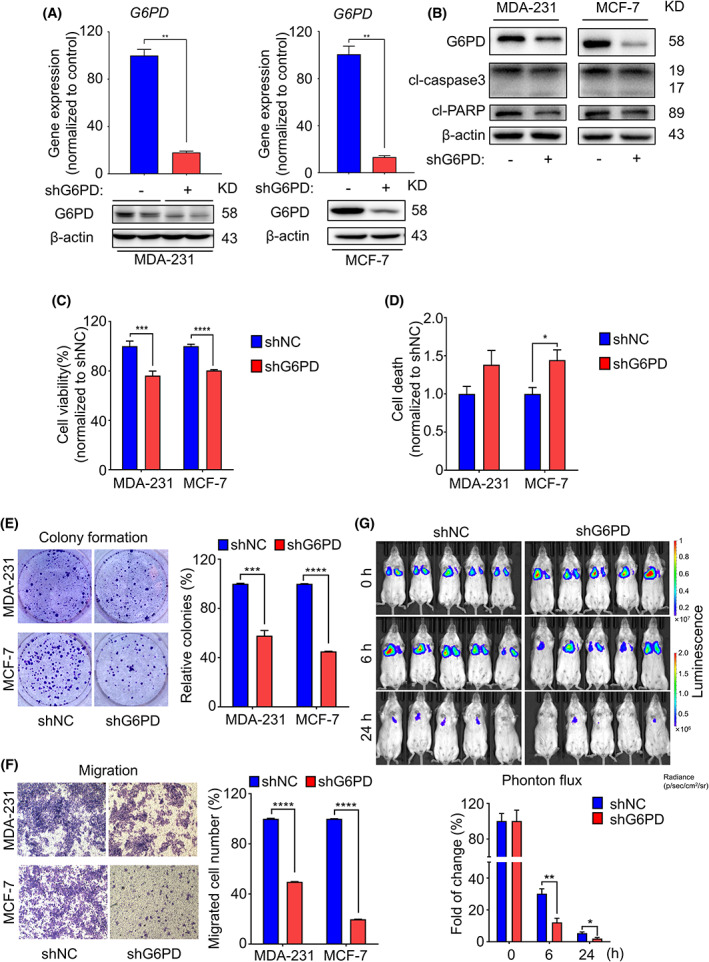
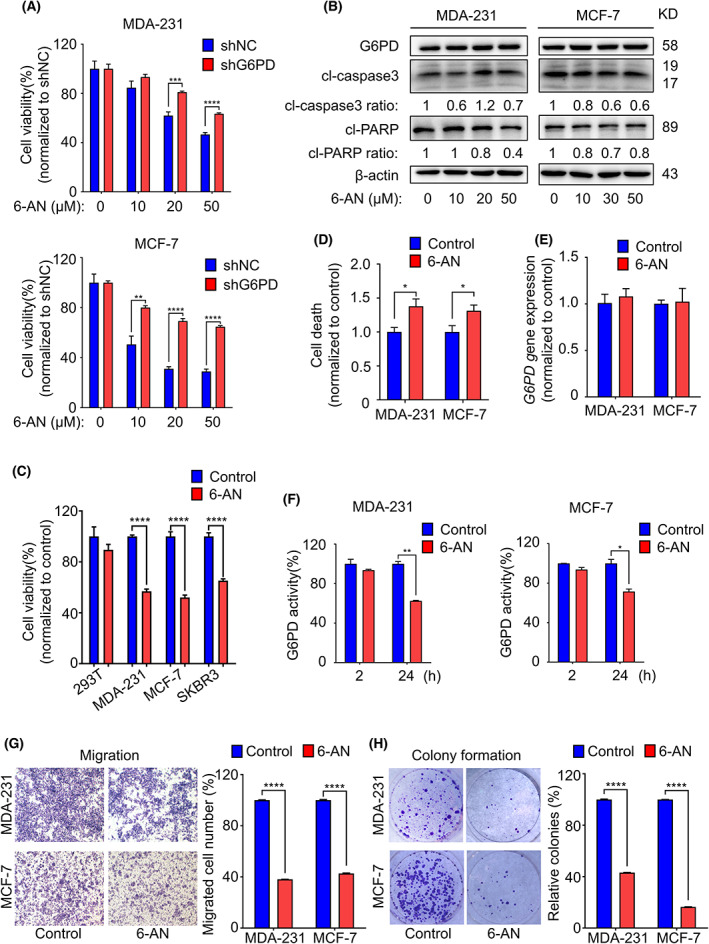
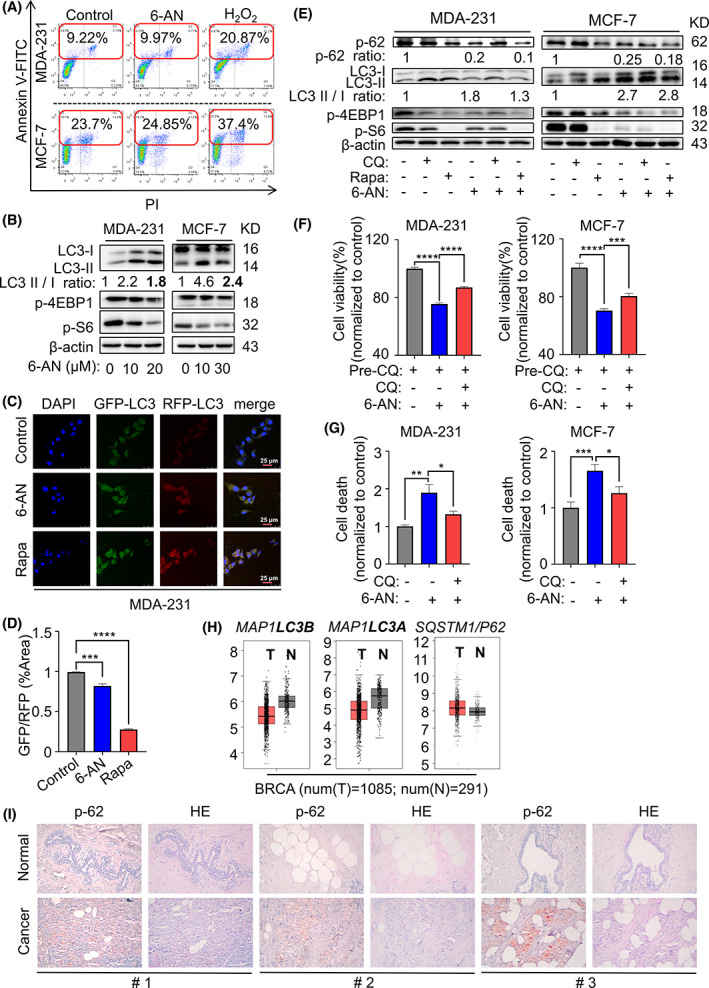
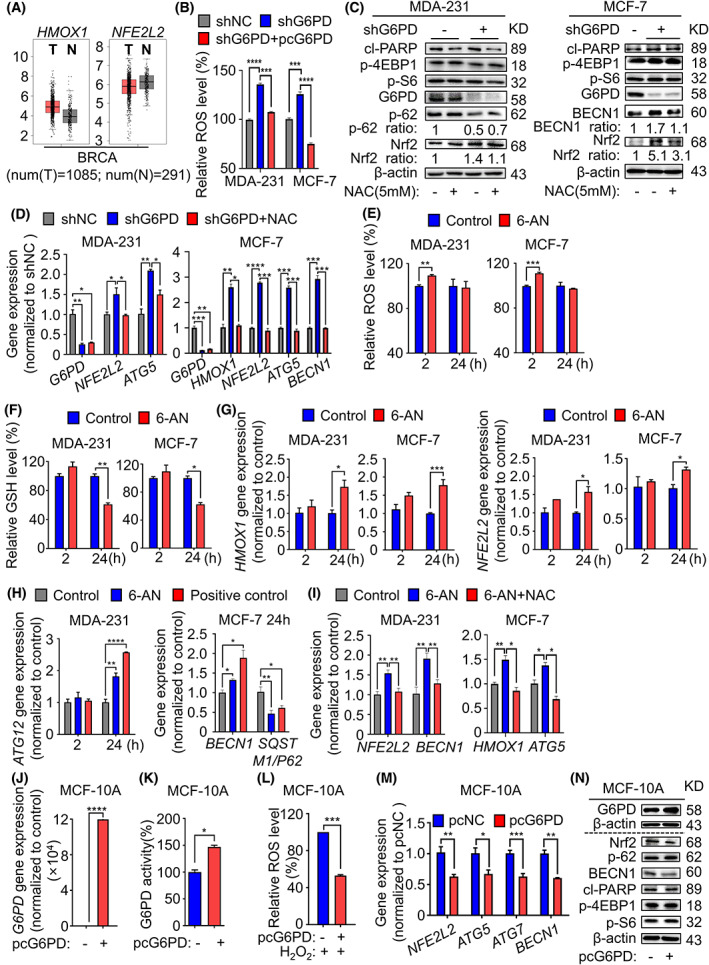
Dysregulation of G6PD involved in the pentose phosphate pathway (PPP) is known to promote tumorigenesis. The PPP plays a pivotal role in meeting the anabolic demands of cancer cells. However, the detailed underlying molecular mechanisms of targeting the G6PD-regulated PPP in breast cancer remain unclear. In this study, we aimed to elucidate the molecular pathways mediating the effects of G6PD on cancer progression. Clinical sample analysis found that the expression of G6PD in breast cancer patients was higher than that in normal controls, and patients with higher G6PD expression had poor survival. Gene knockdown or inhibition of G6PD by 6-AN in MCF-7 and MDA-MB-231 cells significantly decreased cell viability, migration, and colony formation ability. G6PD enzyme activity was inhibited by 6-AN treatment, which caused a transient upregulation of ROS. The elevated ROS was independent of cell apoptosis and thus associated with abnormal activated autophagy. Accumulated ROS levels induced autophagic cell death in breast cancer. Inhibition of G6PD suppresses tumour growth in preclinical models of breast cancer. Our results indicate that targeting the G6PD-regulated PPP could restrain tumours in vitro and in vivo, inhibiting G6PD caused cell death by over-activating autophagy, therefore leading to inhibited proliferation and tumour formation.
葡萄糖-6-磷酸脱氢酶(G6PD)失调参与戊糖磷酸途径(PPP),已知其可促进肿瘤发生。PPP 在满足癌细胞合成代谢需求方面起着关键作用。然而,针对乳腺癌中 G6PD 调节的 PPP 的详细潜在分子机制仍不清楚。在这项研究中,我们旨在阐明介导 G6PD 对癌症进展影响的分子途径。临床样本分析发现,乳腺癌患者的 G6PD 表达高于正常对照,G6PD 表达较高的患者生存不良。在 MCF-7 和 MDA-MB-231 细胞中,通过基因敲低或 6-AN 抑制 G6PD 显著降低了细胞活力、迁移和集落形成能力。6-AN 处理抑制 G6PD 酶活性,导致 ROS 短暂上调。升高的 ROS 不依赖于细胞凋亡,因此与异常激活的自噬有关。ROS 水平升高诱导乳腺癌细胞发生自噬性细胞死亡。抑制 G6PD 可抑制乳腺癌临床前模型中的肿瘤生长。我们的结果表明,靶向 G6PD 调节的 PPP 可以在体外和体内抑制肿瘤,抑制 G6PD 通过过度激活自噬导致细胞死亡,从而抑制增殖和肿瘤形成。