Centre for Psychiatry Research, Department of Clinical Neuroscience, Karolinska Institutet, & Stockholm HealthCare Services, Region Stockholm, Huddinge, Sweden.
Department of Psychology, Faculty of Health and Life Sciences, Linnaeus University, Växjö, Sweden.
Transl Psychiatry. 2022 Sep 1;12(1):357. doi: 10.1038/s41398-022-02133-3.
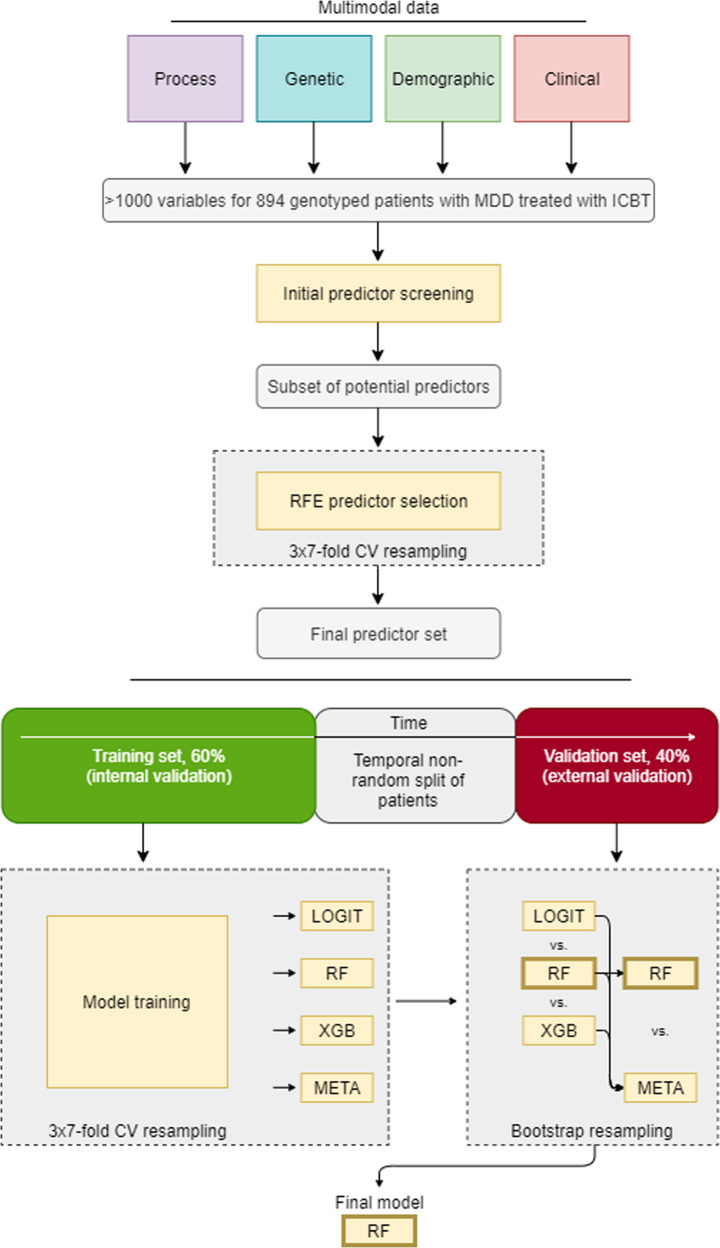
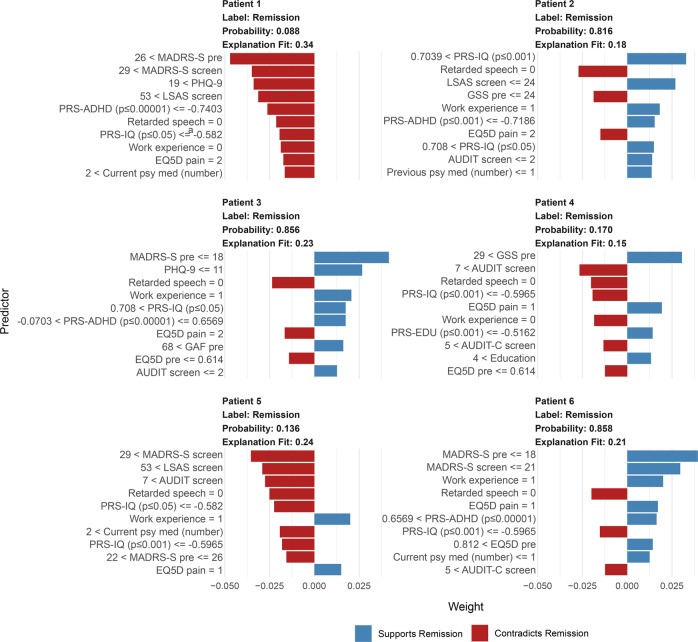
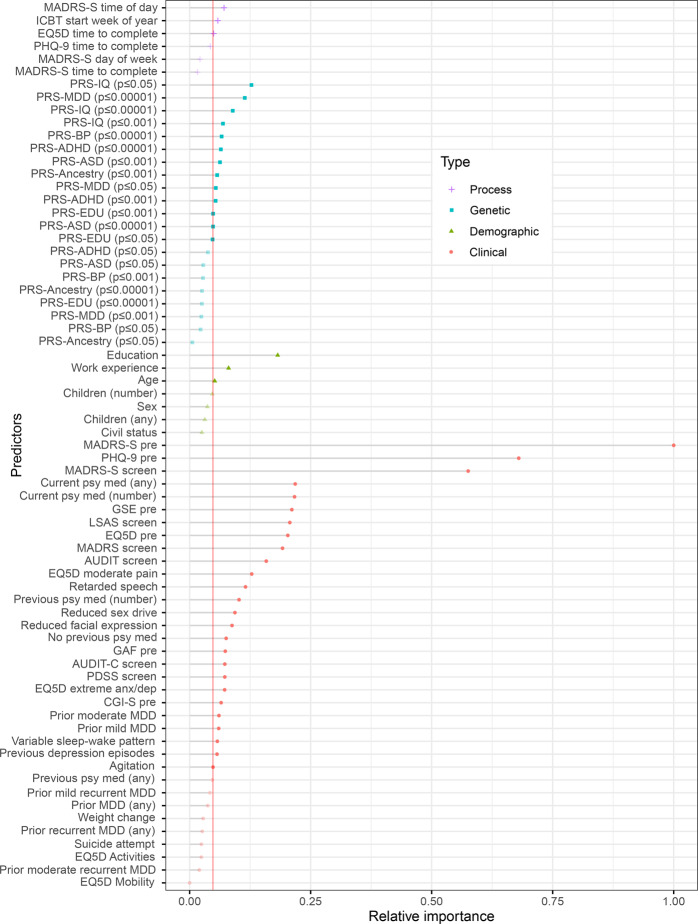
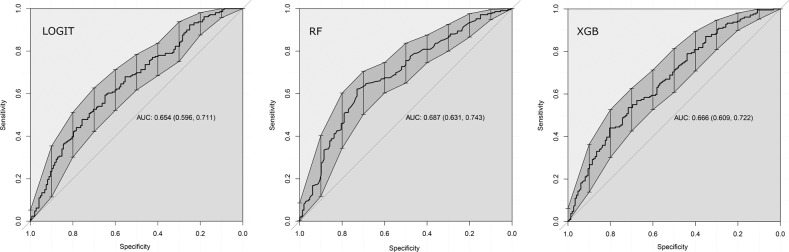
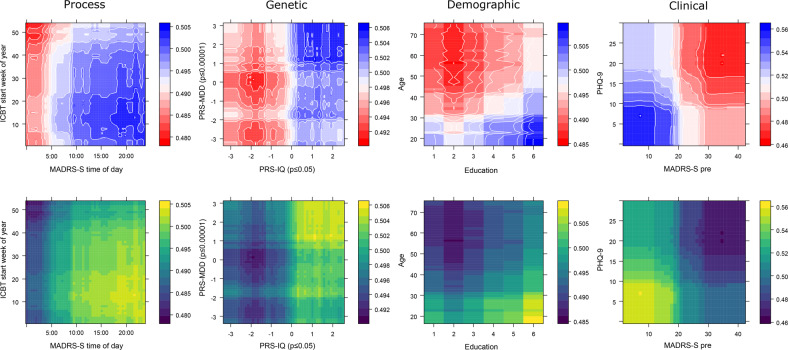
This study applied supervised machine learning with multi-modal data to predict remission of major depressive disorder (MDD) after psychotherapy. Genotyped adult patients (n = 894, 65.5% women, age 18-75 years) diagnosed with mild-to-moderate MDD and treated with guided Internet-based Cognitive Behaviour Therapy (ICBT) at the Internet Psychiatry Clinic in Stockholm were included (2008-2016). Predictor types were demographic, clinical, process (e.g., time to complete online questionnaires), and genetic (polygenic risk scores). Outcome was remission status post ICBT (cut-off ≤10 on MADRS-S). Data were split into train (60%) and validation (40%) given ICBT start date. Predictor selection employed human expertise followed by recursive feature elimination. Model derivation was internally validated through cross-validation. The final random forest model was externally validated against a (i) null, (ii) logit, (iii) XGBoost, and (iv) blended meta-ensemble model on the hold-out validation set. Feature selection retained 45 predictors representing all four predictor types. With unseen validation data, the final random forest model proved reasonably accurate at classifying post ICBT remission (Accuracy 0.656 [0.604, 0.705], P vs null model = 0.004; AUC 0.687 [0.631, 0.743]), slightly better vs logit (bootstrap D = 1.730, P = 0.084) but not vs XGBoost (D = 0.463, P = 0.643). Transparency analysis showed model usage of all predictor types at both the group and individual patient level. A new, multi-modal classifier for predicting MDD remission status after ICBT treatment in routine psychiatric care was derived and empirically validated. The multi-modal approach to predicting remission may inform tailored treatment, and deserves further investigation to attain clinical usefulness.
这项研究应用了监督机器学习和多模态数据来预测心理治疗后重度抑郁症(MDD)的缓解情况。研究纳入了在斯德哥尔摩互联网精神病学诊所接受指导的基于互联网的认知行为疗法(ICBT)治疗的成年患者(n=894,65.5%为女性,年龄 18-75 岁),这些患者被诊断为轻度至中度 MDD(2008-2016 年)。预测因子类型包括人口统计学、临床、过程(例如,完成在线问卷的时间)和遗传(多基因风险评分)。结局是 ICBT 后的缓解状态(MADRS-S 评分≤10)。根据 ICBT 开始日期,数据分为训练集(60%)和验证集(40%)。预测因子选择采用了人类专业知识,然后是递归特征消除。通过交叉验证对模型推导进行了内部验证。最终的随机森林模型在保留验证集中针对(i)无效、(ii)逻辑、(iii)XGBoost 和(iv)混合元集成模型进行了外部验证。特征选择保留了代表所有四种预测因子类型的 45 个预测因子。使用未见的验证数据,最终的随机森林模型在对 ICBT 后缓解情况进行分类时表现出相当高的准确性(准确性 0.656 [0.604, 0.705],与无效模型相比 P=0.004;AUC 0.687 [0.631, 0.743]),略优于逻辑(bootstrap D=1.730,P=0.084),但不如 XGBoost(D=0.463,P=0.643)。透明度分析显示,模型在组和个体患者层面均使用了所有预测因子类型。在常规精神科护理中,为预测 ICBT 治疗后 MDD 缓解状态,我们开发并验证了一种新的多模态分类器。该多模态方法预测缓解情况可为量身定制的治疗提供信息,值得进一步研究以达到临床实用性。