University of Kisangani, Kisangani, Democratic Republic of the Congo.
Sanru Asbl, Kinshasa, Democratic Republic of the Congo.
Malar J. 2022 Sep 1;21(1):253. doi: 10.1186/s12936-022-04258-8.
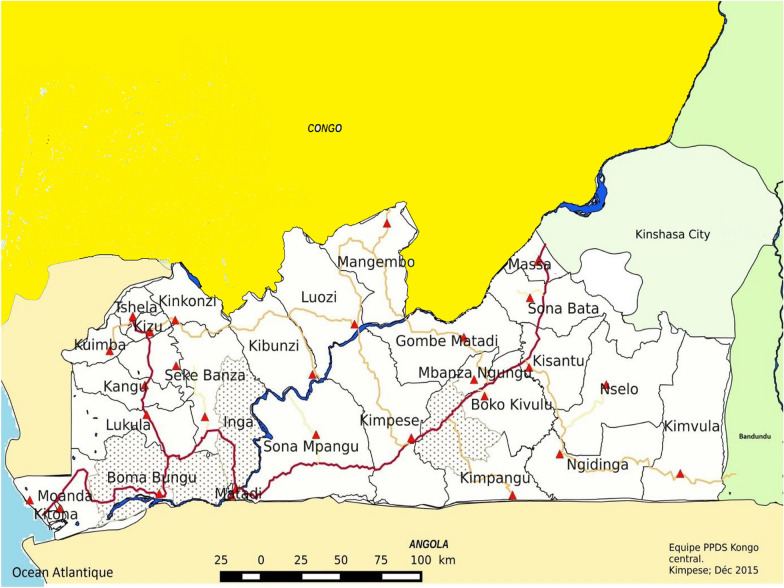
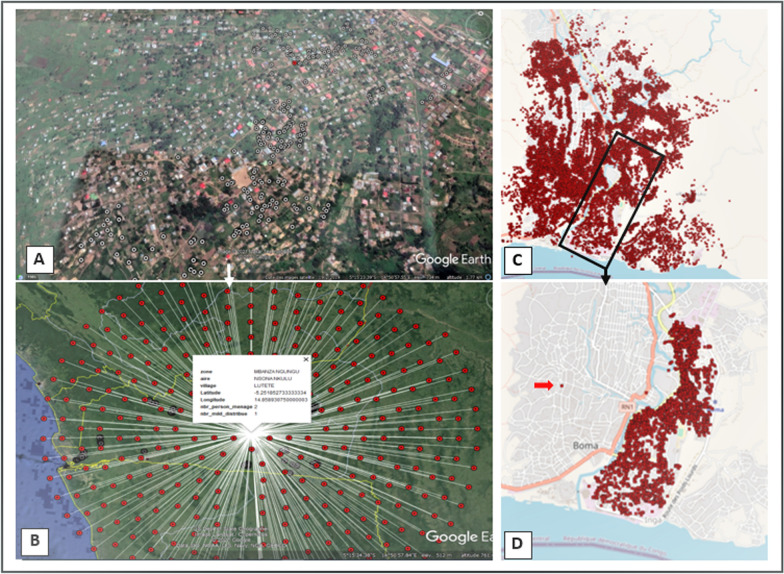
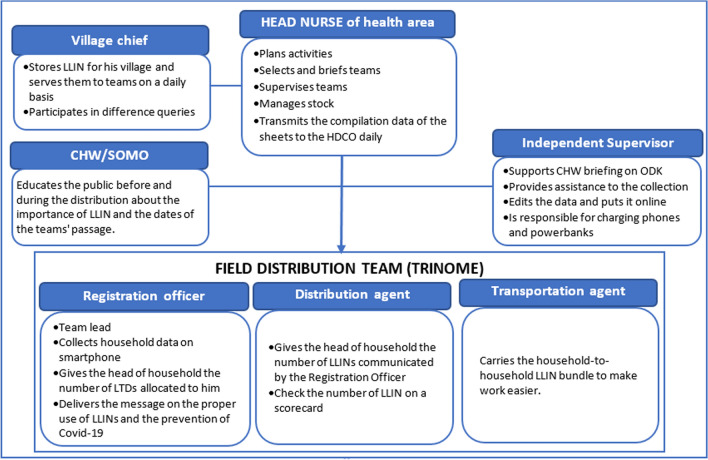
The Democratic Republic of the Congo (DRC) organized a first mass distribution campaign of long-lasting insecticidal nets (LLINs) with digitalized data management with coordinated support from the Ministry of Health (MOH) and Santé Pour Tous En Milieu Rural-an 'Association sans but lucratif' (SANRU Asbl), in the context of the Covid-19 pandemic in Kongo Central province. This article describes the planning and implementation process of this campaign as well as the challenges and lessons learned.
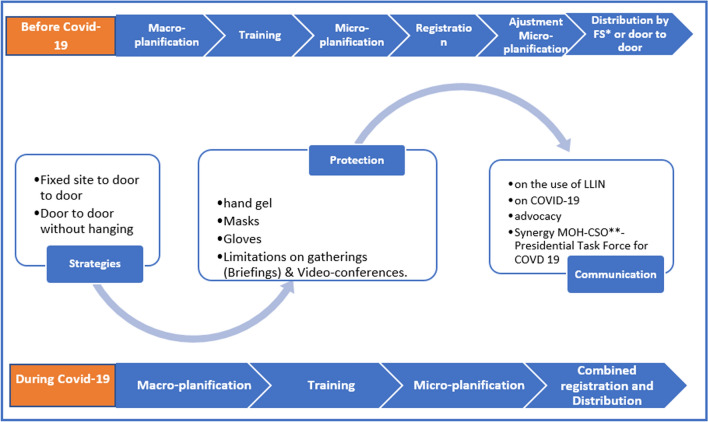
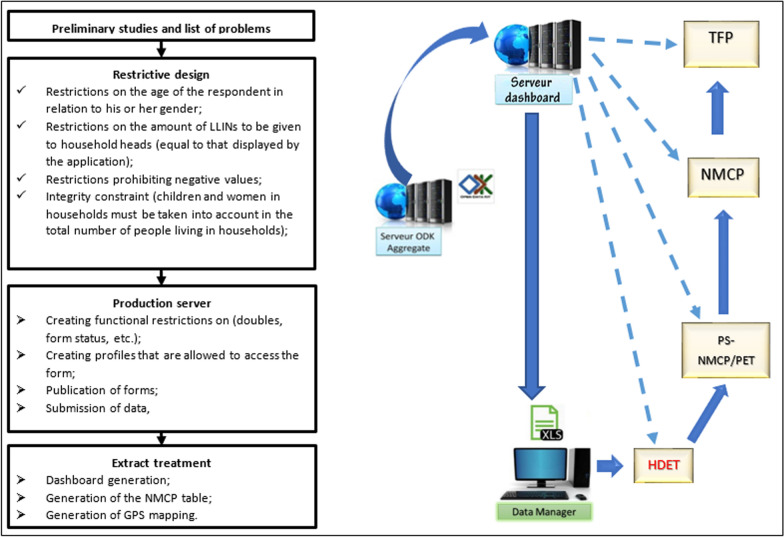
The planning and implementation process was performed in line with the standard guidance issued by the National Malaria Control Programme (NMCP) following the start of Covid-19. The changes and adaptations put in place as well as the challenges encountered are described.
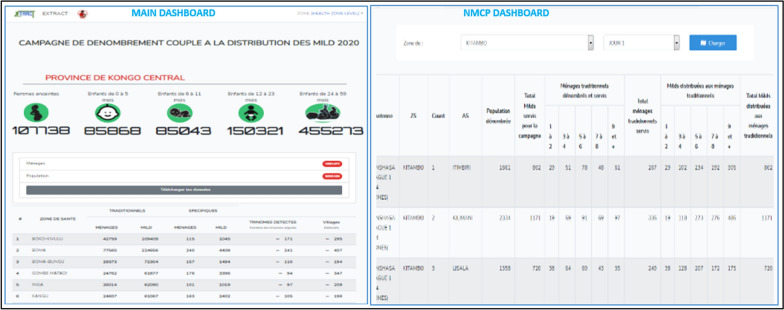
A total of 5,629,211 people were registered (7.7% above projection) in 1,065,537 households (6.2% below projection) giving an average of 5.3 people per household. Of a total of 3,062,850 LLINs ordered, 2,886,096 were distributed to households (94%). Out of 11,070 villages and 3,947 teams planned, 91.7% of villages were reached and 93% of teams were established.
The revision of standards of campaign implementation during Covid-19, as well as effective coordination supported by real-time decision-making through digital data management, have been factors in the success of this campaign. Maintaining this momentum is essential to ensure the continuity of malaria prevention services for the population.
刚果民主共和国(DRC)在科中省新冠疫情背景下,协调卫生部门(MOH)和 Santé Pour Tous En Milieu Rural-an 'Association sans but lucratif'(SANRU Asbl),首次开展了使用数字化数据管理的长效驱虫蚊帐(LLIN)大规模分发活动。本文描述了该活动的规划和实施过程,以及遇到的挑战和吸取的经验教训。
规划和实施过程遵循国家疟疾控制规划(NMCP)在新冠疫情开始后发布的标准指南。描述了所做的更改和调整以及遇到的挑战。
共有 1065537 户家庭的 5629211 人(比预期多 7.7%)进行了登记,平均每户 5.3 人。总共订购了 3062850 顶 LLIN,其中 2886096 顶分发到了家庭(94%)。在计划的 11070 个村庄和 3947 个小组中,有 91.7%的村庄和 93%的小组得到了覆盖。
在新冠疫情期间修改实施活动标准,并通过数字数据管理实时决策进行有效协调,是该活动成功的因素。保持这一势头对于确保向民众持续提供疟疾预防服务至关重要。