Institute of Bioprocess and Biosystems Engineering, Hamburg University of Technology, Denickestraße 15, 21073, Hamburg, Germany.
Center of Synthetic Biology and Integrated Bioengineering, School of Engineering, Westlake University, Hangzhou, 310024, Zhejiang, China.
Microb Cell Fact. 2022 Sep 1;21(1):178. doi: 10.1186/s12934-022-01902-5.
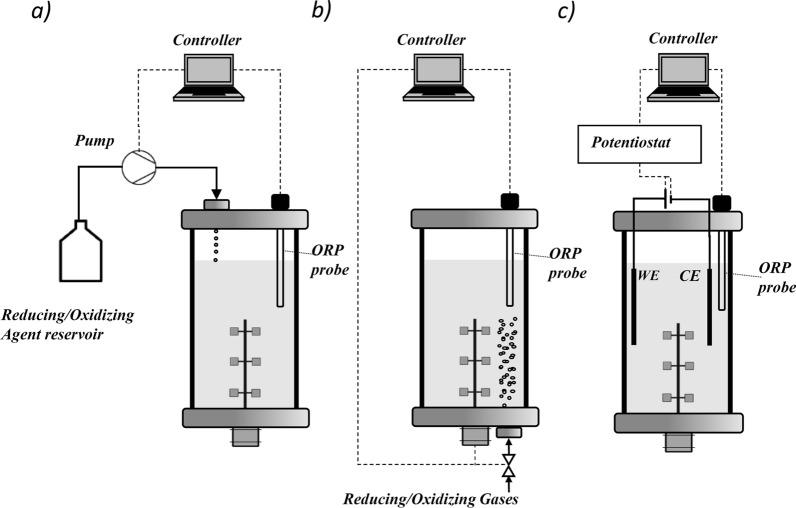
Electro-fermentation (EF) is an emerging tool for bioprocess intensification. Benefits are especially expected for bioprocesses in which the cells are enabled to exchange electrons with electrode surfaces directly. It has also been demonstrated that the use of electrical energy in BES can increase bioprocess performance by indirect secondary effects. In this case, the electricity is used to alter process parameters and indirectly activate desired pathways. In many bioprocesses, oxidation-reduction potential (ORP) is a crucial process parameter. While C. pasteurianum fermentation of glycerol has been shown to be significantly influenced electrochemically, the underlying mechanisms are not clear. To this end, we developed a system for the electrochemical control of ORP in continuous culture to quantitatively study the effects of ORP alteration on C. pasteurianum by metabolic flux analysis (MFA), targeted metabolomics, sensitivity and regulation analysis.
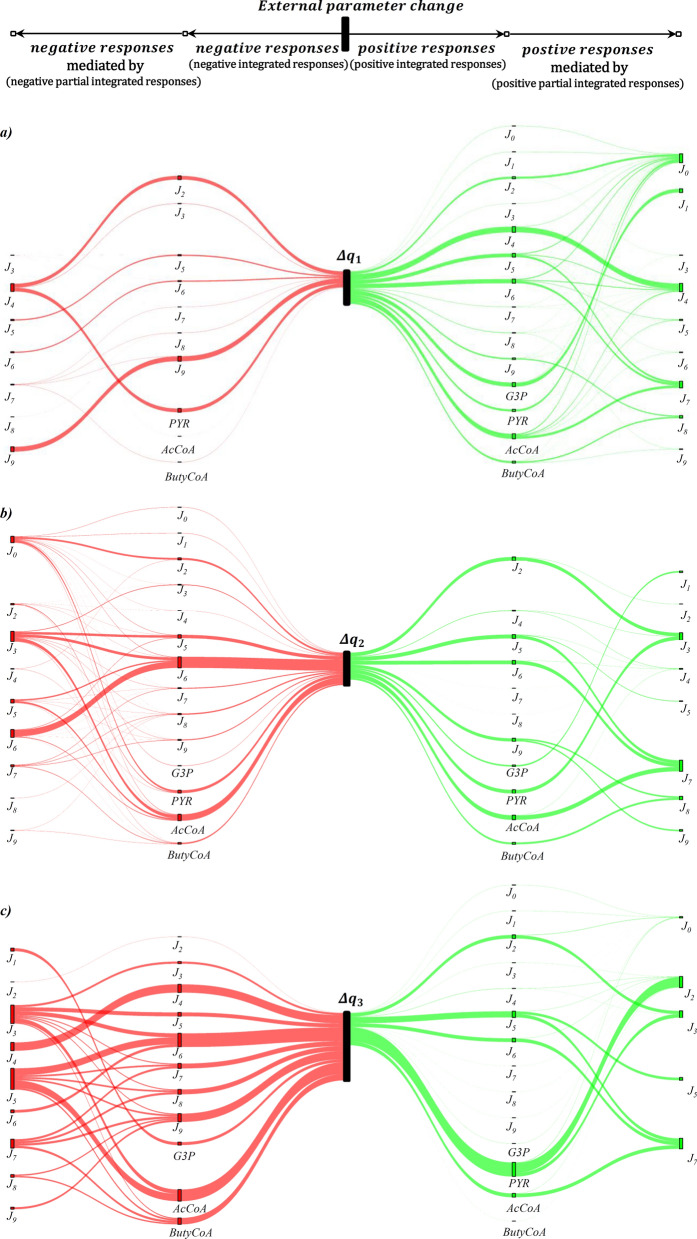
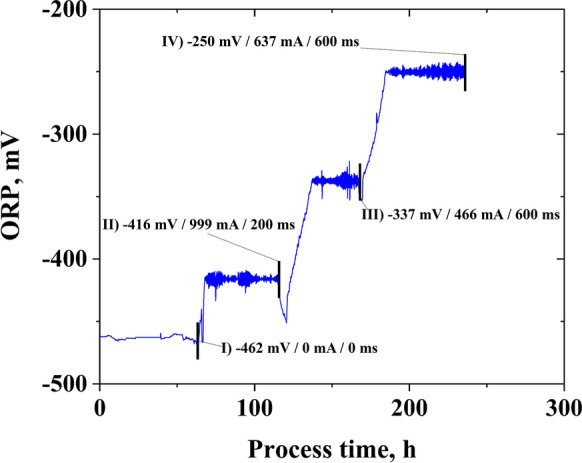
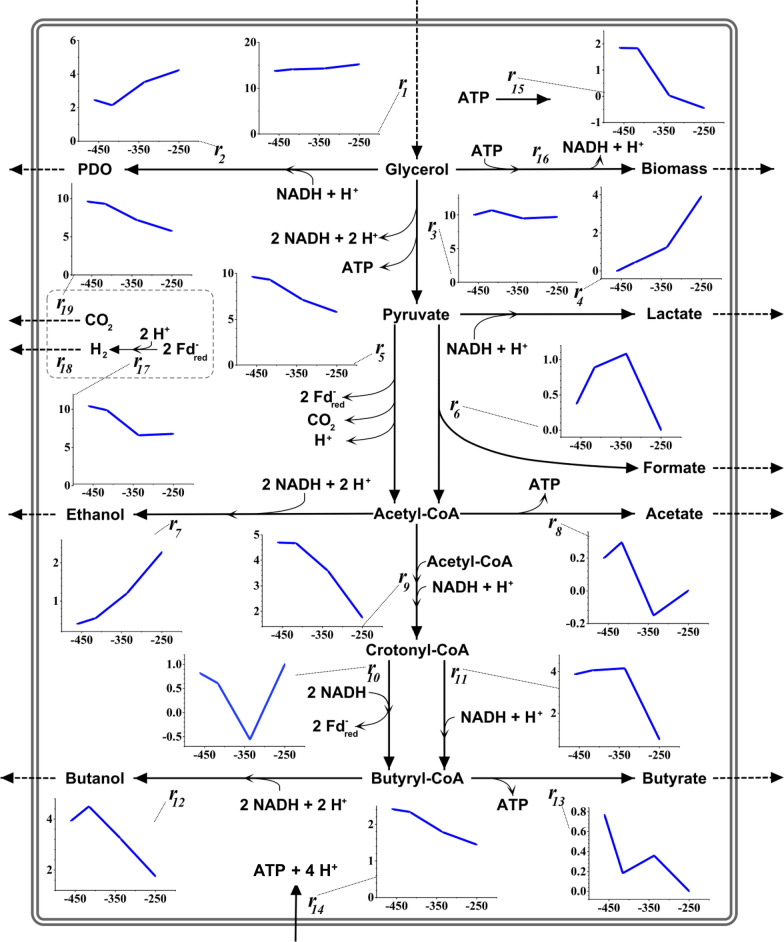
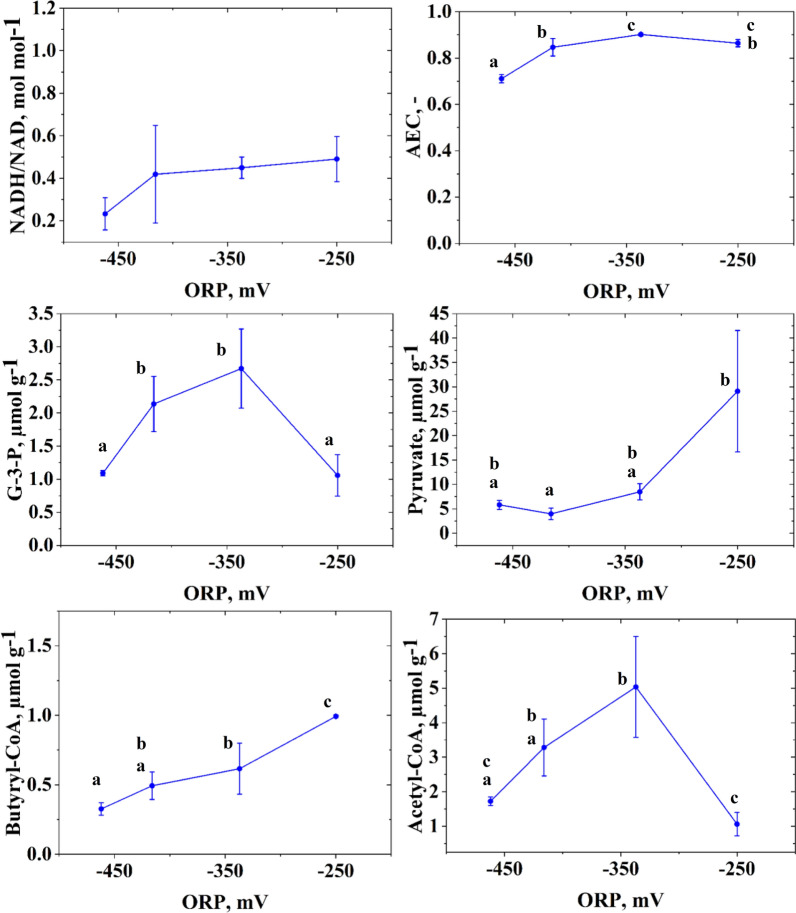
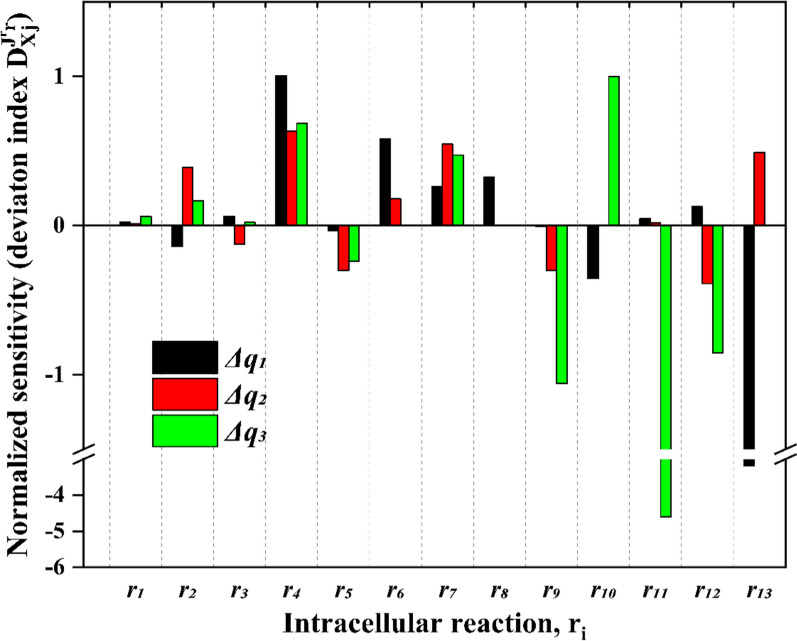
In the ORP range of -462 mV to -250 mV, the developed algorithm enabled a stable anodic electrochemical control of ORP at desired set-points and a fixed dilution rate of 0.1 h. An overall increase of 57% in the molar yield for 1,3-propanediol was observed by an ORP increase from -462 to -250 mV. MFA suggests that C. pasteurianum possesses and uses cellular energy generation mechanisms in addition to substrate-level phosphorylation. The sensitivity analysis showed that ORP exerted its strongest impact on the reaction of pyruvate-ferredoxin-oxidoreductase. The regulation analysis revealed that this influence is mainly of a direct nature. Hence, the observed metabolic shifts are primarily caused by direct inhibition of the enzyme upon electrochemical production of oxygen. A similar effect was observed for the enzyme pyruvate-formate-lyase at elevated ORP levels.
The results show that electrochemical ORP alteration is a suitable tool to steer the metabolism of C. pasteurianum and increase product yield for 1,3-propanediol in continuous culture. The approach might also be useful for application with further anaerobic or anoxic bioprocesses. However, to maximize the technique's efficiency, it is essential to understand the chemistry behind the ORP change and how the microbial system responds to it by transmitted or direct effects.
电发酵(EF)是一种新兴的生物过程强化工具。对于那些能够使细胞直接与电极表面交换电子的生物过程,预计会带来特别的好处。已经证明,在 BES 中使用电能可以通过间接的二次效应来提高生物过程的性能。在这种情况下,电能用于改变过程参数并间接激活所需的途径。在许多生物过程中,氧化还原电位(ORP)是一个关键的过程参数。虽然已经证明甘油的 C. pasteurianum 发酵受到电化学的显著影响,但潜在的机制尚不清楚。为此,我们开发了一种用于连续培养中 ORP 电化学控制的系统,通过代谢通量分析(MFA)、靶向代谢组学、敏感性和调节分析,定量研究 ORP 变化对 C. pasteurianum 的影响。
在-462 mV 到-250 mV 的 ORP 范围内,开发的算法能够在期望的设定点和固定的稀释率为 0.1 h 时稳定地进行阳极电化学 ORP 控制。通过将 ORP 从-462 mV 增加到-250 mV,1,3-丙二醇的摩尔产率总体增加了 57%。MFA 表明,C. pasteurianum 除了具有底物水平磷酸化之外,还具有并利用细胞能量生成机制。敏感性分析表明,ORP 对丙酮酸-铁氧还蛋白氧化还原酶的反应影响最大。调节分析表明,这种影响主要是直接的。因此,观察到的代谢变化主要是由于电化学产生氧气时对酶的直接抑制所致。在较高的 ORP 水平下,丙酮酸-甲酸裂解酶也观察到类似的效果。
结果表明,电化学 ORP 变化是一种合适的工具,可以控制 C. pasteurianum 的代谢并提高连续培养中 1,3-丙二醇的产物产率。该方法也可能对进一步的厌氧或缺氧生物过程的应用有用。然而,为了最大限度地提高该技术的效率,必须了解 ORP 变化背后的化学原理以及微生物系统如何通过传递或直接效应对此做出响应。