Reyes Adriana M, Schoeni Robert F, Freedman Vicki A
Cornell University, School of Public Policy and Sociology, 2223 MVR Hall, Ithaca, NY 14853, USA.
Institute for Social Research, University of Michigan, 426 Thompson Street, Ann Arbor, MI 48106, USA.
Demogr Res. 2021 Jul-Dec;45:1097-1114. doi: 10.4054/demres.2021.45.36. Epub 2021 Nov 10.
The number of adults living with limitations in daily activities in the United States is large, and projected to increase. Families, which are becoming more complex, are critical to the wellbeing of this population.
We present national estimates of the size and composition of kin networks for adults with activity limitations.
We use the 2013 Panel Study of Income Dynamics to assess kin relationships of adults aged 40 and older with an activity limitation. We assess kin relations up and down one generation and horizontally, including spouses, adult children, parents, siblings, step-kin, parent-in-laws, children-in-law, and sibling-in-laws. We estimate kinship size and differences across race/ethnicity, education, and marital status. We also estimate the number of helpers.
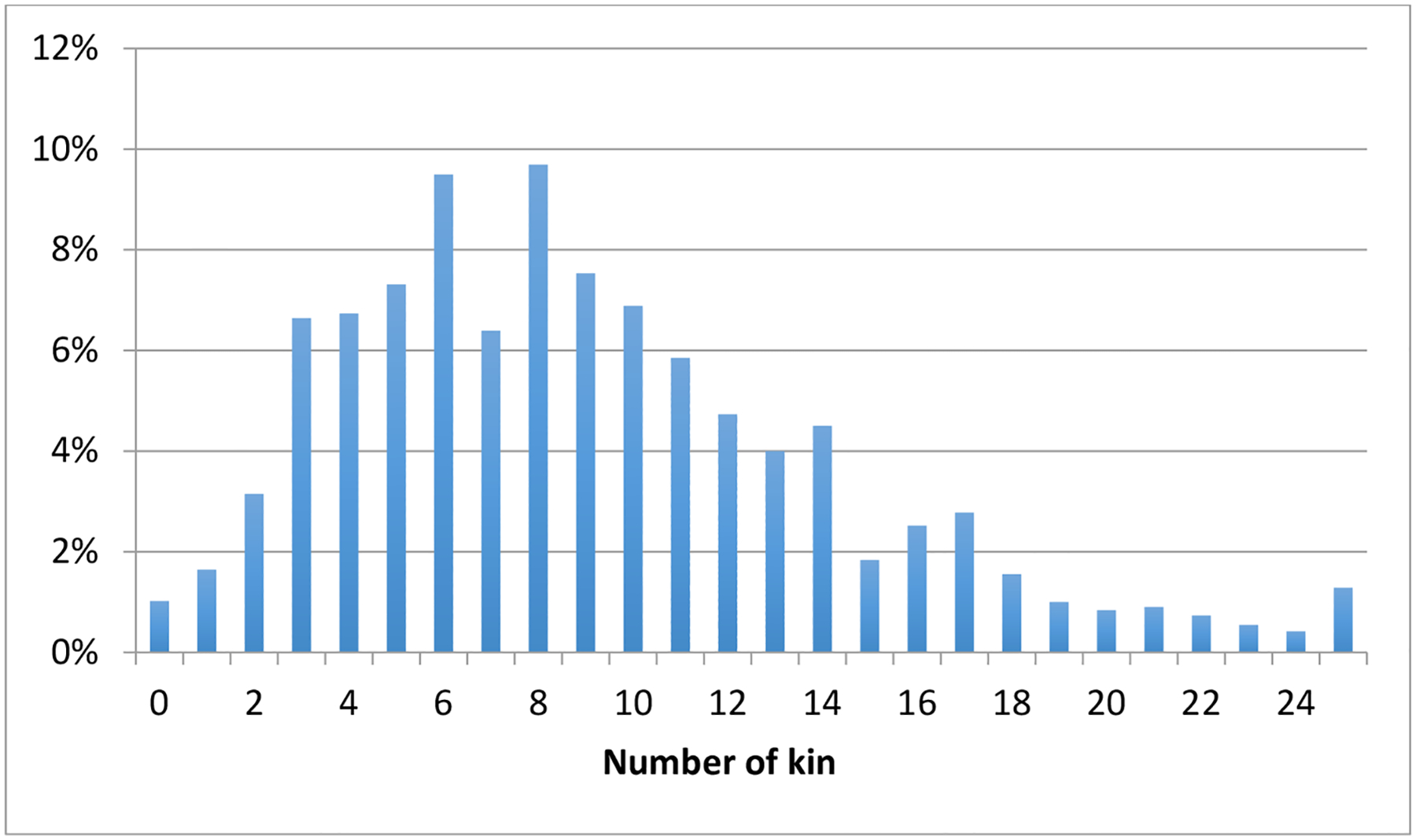
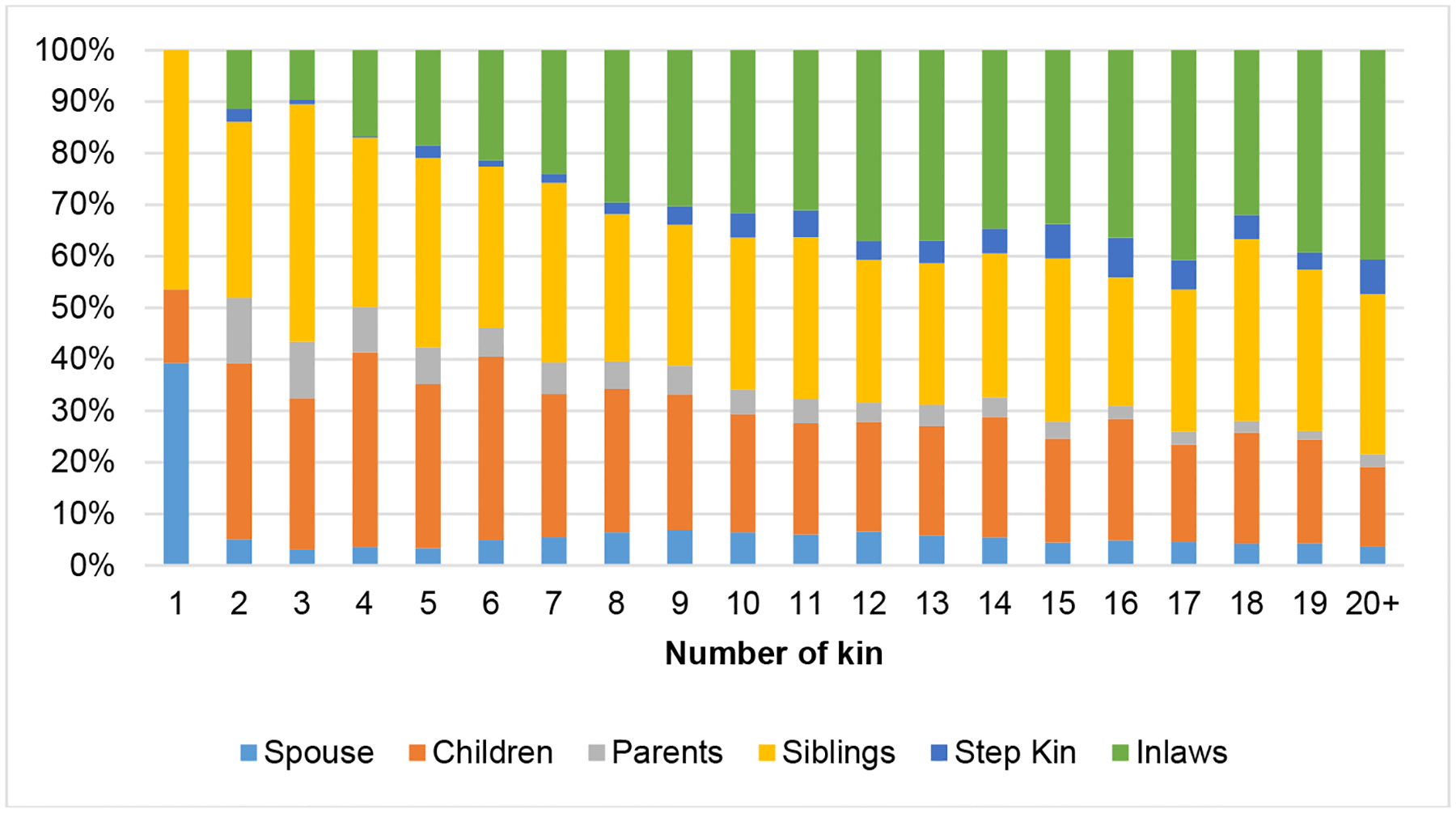
Adults with activity limitations have a substantial number of adult kin: 9.1 on average, while only 12% have fewer than four kin. Spouses and adult biological children, the most common caregivers, account for less than one-third of these kin. Kin networks are much larger among those who report their background as Hispanic rather than non-Hispanic white or Black, married rather than unmarried, and less-than-college rather than college-educated.
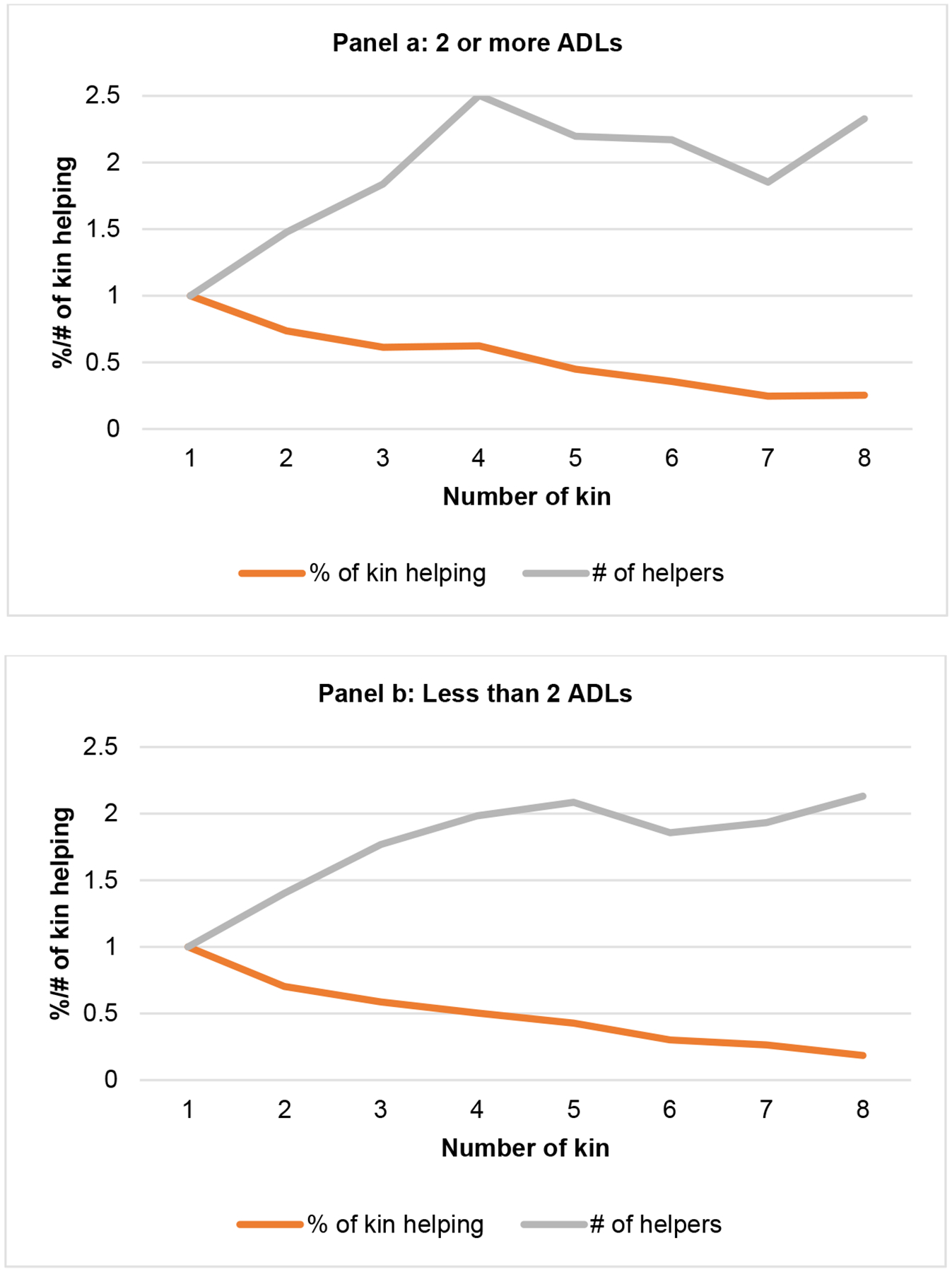
Despite concerns about increasing family complexity, we find that 88% of individuals with a limitation have four or more family members, and as kin size increases the average number of kin helping increases from one to two.
We provide estimates of kinship size and composition for adults with disabilities, assessing the number of kin, types of kin, and sociodemographic differences.
美国日常生活活动受限的成年人数量众多,且预计还会增加。家庭结构日益复杂,对这一人群的福祉至关重要。
我们给出了活动受限成年人亲属网络规模和构成的全国性估计数据。
我们利用2013年收入动态面板研究来评估40岁及以上有活动受限情况的成年人的亲属关系。我们评估上下一代以及横向的亲属关系,包括配偶、成年子女、父母、兄弟姐妹、继亲、公婆/岳父母、儿媳/女婿以及姐夫/妹夫/嫂子/弟媳。我们估计亲属规模以及不同种族/族裔、教育程度和婚姻状况之间的差异。我们还估计了帮助者的数量。
活动受限的成年人有大量成年亲属:平均9.1个,而只有12%的人亲属少于4个。配偶和亲生成年子女是最常见的照料者,但在这些亲属中占比不到三分之一。在那些自称西班牙裔而非非西班牙裔白人或黑人、已婚而非未婚、受教育程度低于大学而非受过大学教育的人群中,亲属网络要大得多。
尽管人们担心家庭结构日益复杂,但我们发现88%的受限个体有4个或更多家庭成员,而且随着亲属规模的增加,提供帮助的亲属平均数量从1个增加到2个。
我们提供了残疾成年人亲属规模和构成的估计数据,评估了亲属数量、亲属类型以及社会人口统计学差异。