Key Laboratory of Animal Models and Human Disease Mechanisms of the Chinese Academy of Sciences, Kunming Institute of Zoology, Chinese Academy of Sciences, Kunming, Yunnan, 650223, China.
Kunming College of Life Science, University of Chinese Academy of Sciences, Kunming, Yunnan, 650204, China.
Transl Psychiatry. 2022 Sep 2;12(1):361. doi: 10.1038/s41398-022-02137-z.
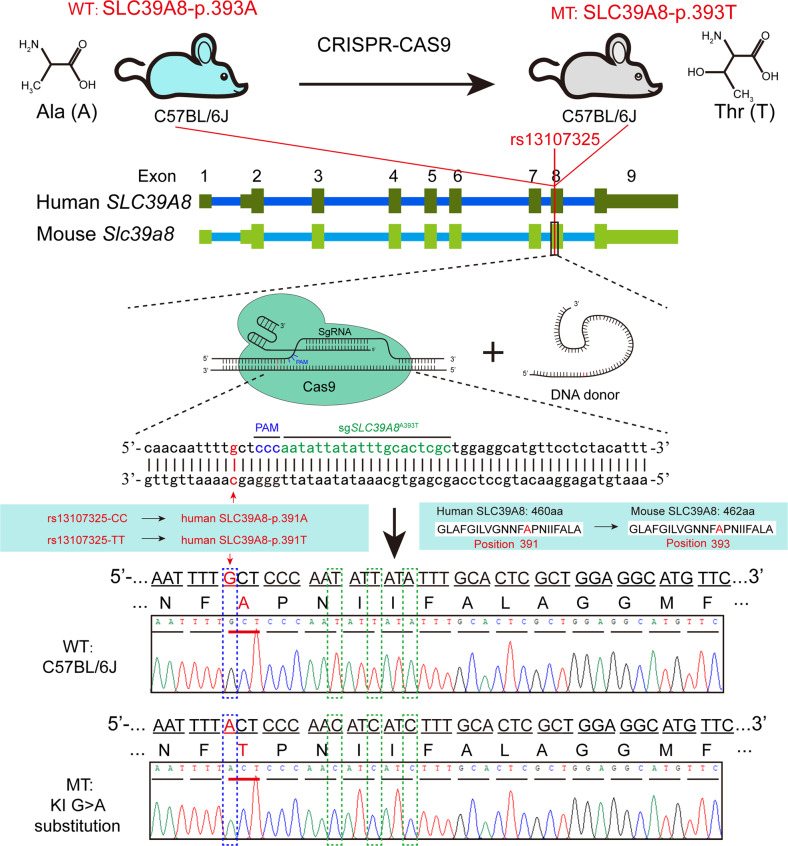
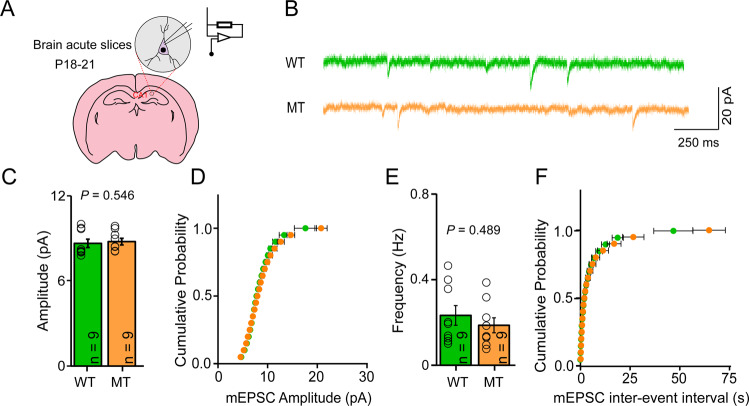
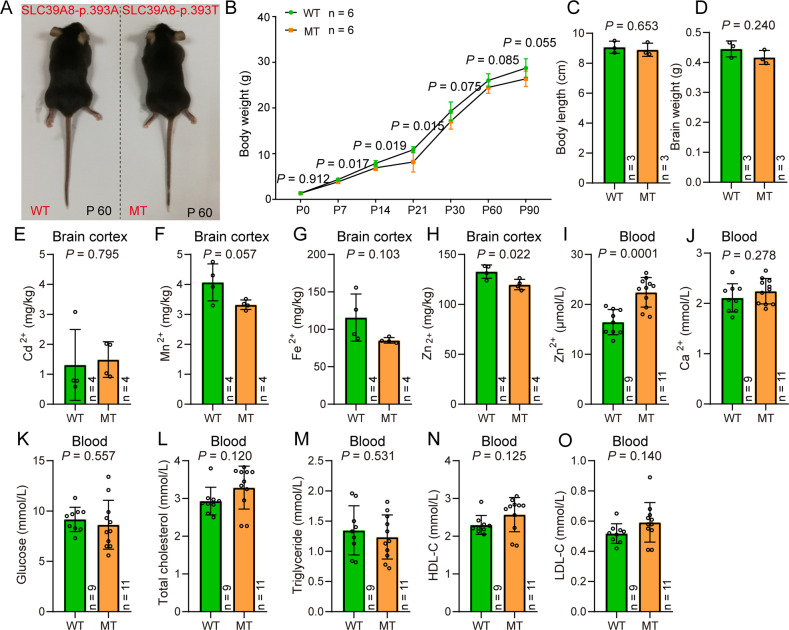
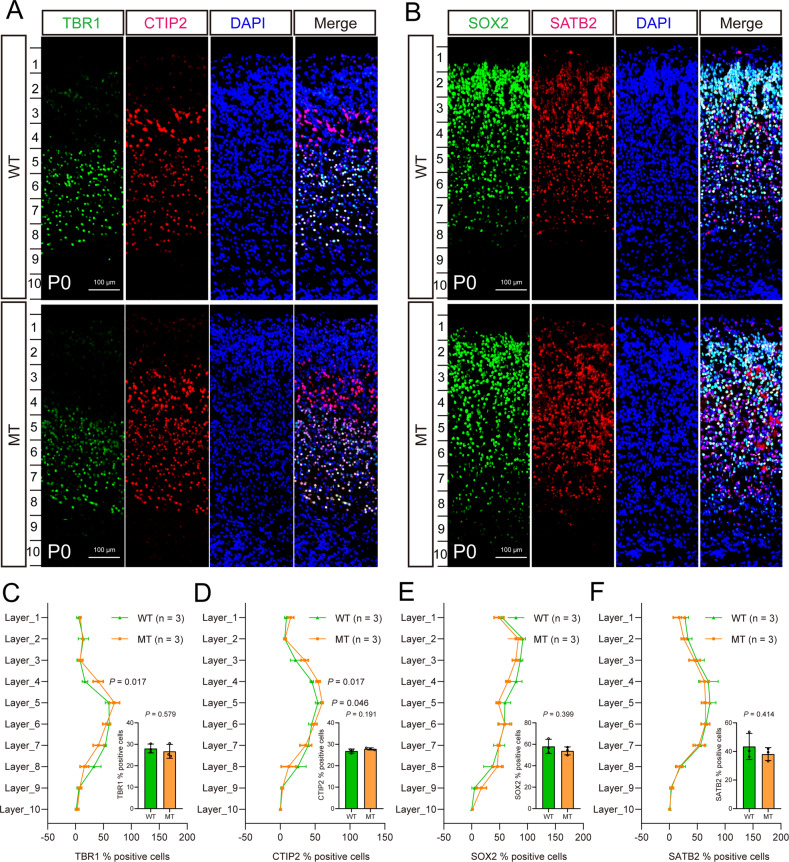
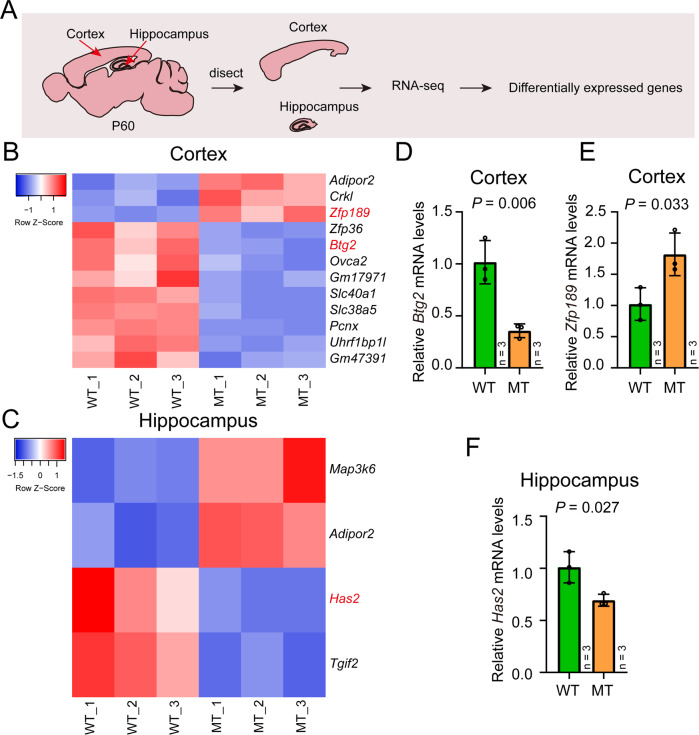
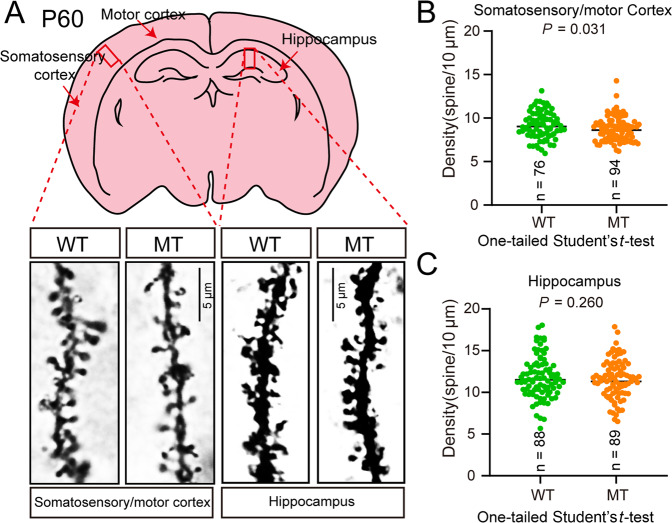
The missense variant rs13107325 (C/T, p.Ala391Thr) in SLC39A8 consistently showed robust association with schizophrenia in recent genome-wide association studies (GWASs), suggesting the potential pathogenicity of this non-synonymous risk variant. Nevertheless, how this missense variant confers schizophrenia risk remains unknown. Here we constructed a knock-in mouse model (by introducing a threonine at the 393th amino acid of mouse SLC39A8 (SLC39A8-p.393T), which corresponds to rs13107325 (p.Ala391Thr) of human SLC39A8) to explore the potential roles and biological effects of this missense variant in schizophrenia pathogenesis. We assessed multiple phenotypes and traits (associated with rs13107325) of the knock-in mice, including body and brain weight, concentrations of metal ions (including cadmium, zinc, manganese, and iron) transported by SLC39A8, blood lipids, proliferation and migration of neural stem cells (NSCs), cortical development, behaviors and cognition, transcriptome, dendritic spine density, and synaptic transmission. Many of the tested phenotypes did not show differences in SLC39A8-p.393T knock-in and wild-type mice. However, we found that zinc concentration in brain and blood of SLC39A8-p.393T knock-in mice was dysregulated compared with wild-types, validating the functionality of rs13107325. Further analysis indicated that cortical dendritic spine density of the SLC39A8-p.393T knock-in mice was significantly decreased compared with wild-types, indicating the important role of SLC39A8-p.393T in dendritic spine morphogenesis. These results indicated that SLC39A8-p.393T knock-in resulted in decreased dendritic spine density, thus mimicking the dendritic spine pathology observed in schizophrenia. Our study indicates that rs13107325 might confer schizophrenia risk by regulating zinc concentration and dendritic spine density, a featured characteristic that was frequently reported to be decreased in schizophrenia.
错义变异 rs13107325(C/T,p.Ala391Thr)在最近的全基因组关联研究(GWASs)中一直与精神分裂症有显著关联,表明这种非同义风险变异具有潜在的致病性。然而,这种错义变异如何导致精神分裂症风险仍然未知。在这里,我们构建了一个敲入小鼠模型(通过在小鼠 SLC39A8 的第 393 个氨基酸处引入苏氨酸(SLC39A8-p.393T),对应于人类 SLC39A8 的 rs13107325(p.Ala391Thr)),以探讨该错义变异在精神分裂症发病机制中的潜在作用和生物学效应。我们评估了敲入小鼠的多种表型和特征(与 rs13107325 相关),包括体重和脑重、SLC39A8 转运的金属离子(包括镉、锌、锰和铁)浓度、血脂、神经干细胞(NSCs)的增殖和迁移、皮质发育、行为和认知、转录组、树突棘密度和突触传递。在 SLC39A8-p.393T 敲入和野生型小鼠中,许多测试的表型没有差异。然而,我们发现与野生型相比,SLC39A8-p.393T 敲入小鼠大脑和血液中的锌浓度失调,验证了 rs13107325 的功能。进一步分析表明,SLC39A8-p.393T 敲入小鼠的皮质树突棘密度明显低于野生型,表明 SLC39A8-p.393T 在树突棘形态发生中起着重要作用。这些结果表明,SLC39A8-p.393T 敲入导致树突棘密度降低,从而模拟了精神分裂症中观察到的树突棘病理。我们的研究表明,rs13107325 可能通过调节锌浓度和树突棘密度来导致精神分裂症风险,这是一种在精神分裂症中经常报道的特征性特征。