• 文献检索
  • 文档翻译
  • 深度研究
  • 学术资讯
  • Suppr Zotero 插件Zotero 插件
  • 邀请有礼
  • 套餐&价格
  • 历史记录
应用&插件
Suppr Zotero 插件Zotero 插件浏览器插件Mac 客户端Windows 客户端微信小程序
定价
高级版会员购买积分包购买API积分包
服务
文献检索文档翻译深度研究API 文档MCP 服务
关于我们
关于 Suppr公司介绍联系我们用户协议隐私条款
关注我们

Suppr 超能文献

核心技术专利:CN118964589B侵权必究
粤ICP备2023148730 号-1Suppr @ 2026

文献检索

告别复杂PubMed语法,用中文像聊天一样搜索,搜遍4000万医学文献。AI智能推荐,让科研检索更轻松。

立即免费搜索

文件翻译

保留排版,准确专业,支持PDF/Word/PPT等文件格式,支持 12+语言互译。

免费翻译文档

深度研究

AI帮你快速写综述,25分钟生成高质量综述,智能提取关键信息,辅助科研写作。

立即免费体验

在 rasH2 小鼠模型的 26 周吸入研究中,未发现二氧化钛纳米颗粒具有致癌性。

No evidence for carcinogenicity of titanium dioxide nanoparticles in 26-week inhalation study in rasH2 mouse model.

机构信息

Japan Bioassay Research Center, Japan Organization of Occupational Health and Safety, 2445 Hirasawa, Hadano, Kanagawa, 257-0015, Japan.

出版信息

Sci Rep. 2022 Sep 2;12(1):14969. doi: 10.1038/s41598-022-19139-y.

DOI:10.1038/s41598-022-19139-y
PMID:36056156
原文链接:https://pmc.ncbi.nlm.nih.gov/articles/PMC9440215/
Abstract

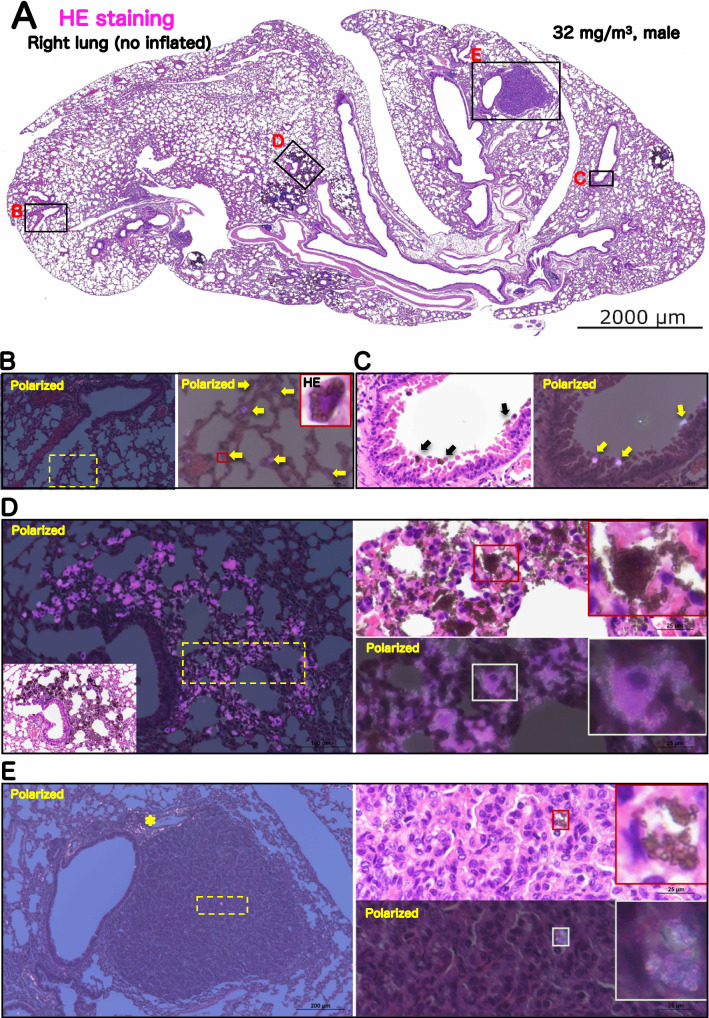
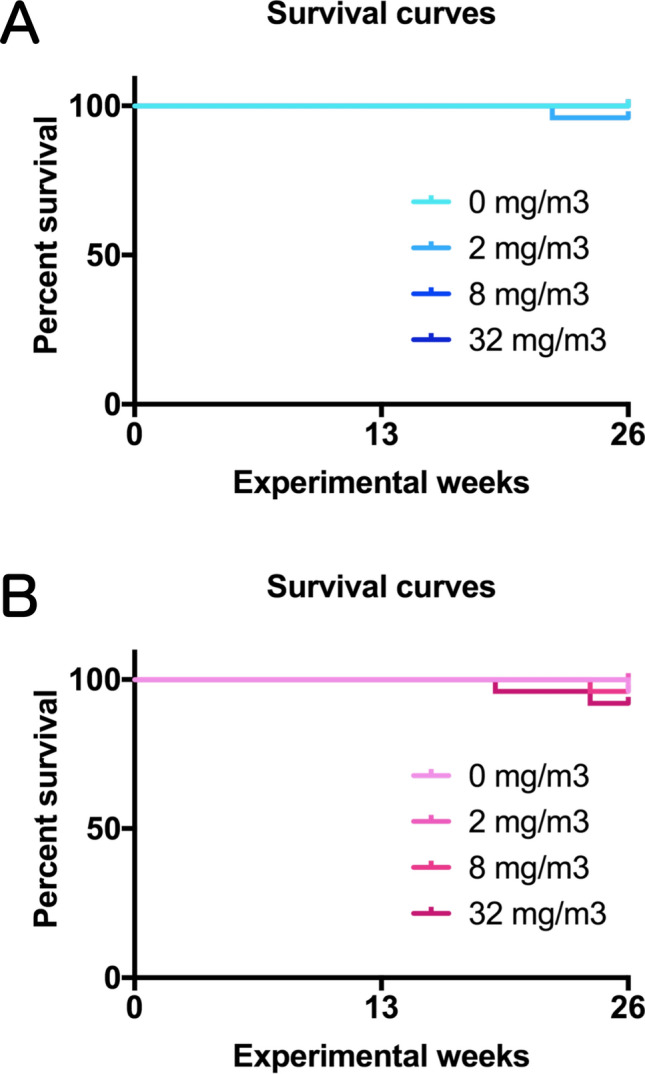
With the rapid development of alternative methods based on the spirit of animal welfare, the publications of animal studies evaluating endpoints such as cancer have been extremely reduced. We performed a 26-week inhalation exposure studies of titanium dioxide nanoparticles (TiO NPs) using CByB6F1-Tg(HRAS)2Jic (rasH2) mice model for detecting carcinogenicity. Male and female rasH2 mice were exposed to 2, 8 or 32 mg/m of TiO NPs for 6 h/day, 5 days/week for 26 weeks. All tissues and blood were collected and subjected to biological and histopathological analyses. TiO NPs exposure induced deposition of particles in lungs in a dose-dependent manner in each exposure group. Exposure to TiO NPs, as well as other organs, did not increase the incidence of lung tumors in any group, and pulmonary fibrosis and pre-neoplastic lesions were not observed in all groups. Finally, the cell proliferative activity of alveolar epithelial type 2 cells was examined, and it was not increased by exposure to TiO NPs. This is the first report showing the lack of pulmonary fibrogenicity and carcinogenicity (no evidence of carcinogenic activity) of TiO NPs in 26-week inhalation study in rasH2 mice exposed up to 32 mg/m, which is considered to be a high concentration.

摘要

随着基于动物福利精神的替代方法的快速发展,评估癌症等终点的动物研究出版物已经大大减少。我们使用 CByB6F1-Tg(HRAS)2Jic (rasH2) 小鼠模型进行了为期 26 周的吸入暴露研究,以检测二氧化钛纳米颗粒 (TiO NPs) 的致癌性。雄性和雌性 rasH2 小鼠分别暴露于 2、8 或 32 mg/m 的 TiO NPs 中,每天 6 小时,每周 5 天,共 26 周。收集所有组织和血液进行生物学和组织病理学分析。TiO NPs 暴露以剂量依赖的方式在每个暴露组中诱导颗粒在肺部沉积。暴露于 TiO NPs 以及其他器官,不会增加任何组的肺肿瘤发生率,并且在所有组中均未观察到肺纤维化和前瘤病变。最后,检查了肺泡上皮细胞 2 型细胞的增殖活性,暴露于 TiO NPs 并没有增加其活性。这是第一项报告,表明在暴露于高达 32 mg/m 的 rasH2 小鼠的 26 周吸入研究中,TiO NPs 没有肺部纤维化和致癌性(无致癌活性证据),这被认为是高浓度。
https://cdn.ncbi.nlm.nih.gov/pmc/blobs/582b/9440215/5ca6981e2304/41598_2022_19139_Fig6_HTML.jpg
https://cdn.ncbi.nlm.nih.gov/pmc/blobs/582b/9440215/f3b69aaa1f09/41598_2022_19139_Fig1_HTML.jpg
https://cdn.ncbi.nlm.nih.gov/pmc/blobs/582b/9440215/b6892c796c28/41598_2022_19139_Fig2_HTML.jpg
https://cdn.ncbi.nlm.nih.gov/pmc/blobs/582b/9440215/e8ad5bd9ec88/41598_2022_19139_Fig3_HTML.jpg
https://cdn.ncbi.nlm.nih.gov/pmc/blobs/582b/9440215/ba23426b9c28/41598_2022_19139_Fig4_HTML.jpg
https://cdn.ncbi.nlm.nih.gov/pmc/blobs/582b/9440215/878ec9179a16/41598_2022_19139_Fig5_HTML.jpg
https://cdn.ncbi.nlm.nih.gov/pmc/blobs/582b/9440215/5ca6981e2304/41598_2022_19139_Fig6_HTML.jpg
https://cdn.ncbi.nlm.nih.gov/pmc/blobs/582b/9440215/f3b69aaa1f09/41598_2022_19139_Fig1_HTML.jpg
https://cdn.ncbi.nlm.nih.gov/pmc/blobs/582b/9440215/b6892c796c28/41598_2022_19139_Fig2_HTML.jpg
https://cdn.ncbi.nlm.nih.gov/pmc/blobs/582b/9440215/e8ad5bd9ec88/41598_2022_19139_Fig3_HTML.jpg
https://cdn.ncbi.nlm.nih.gov/pmc/blobs/582b/9440215/ba23426b9c28/41598_2022_19139_Fig4_HTML.jpg
https://cdn.ncbi.nlm.nih.gov/pmc/blobs/582b/9440215/878ec9179a16/41598_2022_19139_Fig5_HTML.jpg
https://cdn.ncbi.nlm.nih.gov/pmc/blobs/582b/9440215/5ca6981e2304/41598_2022_19139_Fig6_HTML.jpg

相似文献

1
No evidence for carcinogenicity of titanium dioxide nanoparticles in 26-week inhalation study in rasH2 mouse model.在 rasH2 小鼠模型的 26 周吸入研究中,未发现二氧化钛纳米颗粒具有致癌性。
Sci Rep. 2022 Sep 2;12(1):14969. doi: 10.1038/s41598-022-19139-y.
2
Pulmonary dust foci as rat pneumoconiosis lesion induced by titanium dioxide nanoparticles in 13-week inhalation study.13 周吸入研究中二氧化钛纳米颗粒致大鼠尘肺病变的肺尘埃沉着灶。
Part Fibre Toxicol. 2022 Sep 14;19(1):58. doi: 10.1186/s12989-022-00498-3.
3
Carcinogenicity and testicular toxicity of 2-bromopropane in a 26-week inhalation study using the rasH2 mouse model.使用 rasH2 小鼠模型进行的为期 26 周的吸入研究中 2-溴丙烷的致癌性和睾丸毒性。
Sci Rep. 2023 Jan 31;13(1):1782. doi: 10.1038/s41598-023-28825-4.
4
Lung carcinogenicity by whole body inhalation exposure to Anatase-type Nano-titanium Dioxide in rats.经全身吸入暴露于锐钛矿型纳米二氧化钛致大鼠肺癌发生。
J Toxicol Sci. 2024;49(8):359-383. doi: 10.2131/jts.49.359.
5
Toxicology and carcinogenesis studies of indium phosphide (CAS No. 22398-90-7) in F344/N rats and B6C3F1 mice (inhalation studies).磷化铟(CAS编号:22398-90-7)对F344/N大鼠和B6C3F1小鼠的毒理学和致癌性研究(吸入研究)
Natl Toxicol Program Tech Rep Ser. 2001 Jul(499):7-340.
6
NTP Toxicology and Carcinogenesis Studies of Talc (CAS No. 14807-96-6)(Non-Asbestiform) in F344/N Rats and B6C3F1 Mice (Inhalation Studies).滑石(CAS编号:14807-96-6)(非石棉状)在F344/N大鼠和B6C3F1小鼠中的NTP毒理学和致癌性研究(吸入研究)
Natl Toxicol Program Tech Rep Ser. 1993 Sep;421:1-287.
7
High-dose intranasal application of titanium dioxide nanoparticles induces the systemic uptakes and allergic airway inflammation in asthmatic mice.高剂量经鼻给予二氧化钛纳米颗粒可引起哮喘小鼠的全身摄取和过敏性气道炎症。
Respir Res. 2020 Jul 2;21(1):168. doi: 10.1186/s12931-020-01386-0.
8
Chronic nasal exposure to nanoparticulate TiO causes pulmonary tumorigenesis in male mice.长期经鼻腔暴露于纳米颗粒二氧化钛会导致雄性小鼠发生肺肿瘤。
Environ Toxicol. 2017 May;32(5):1651-1657. doi: 10.1002/tox.22393. Epub 2017 Jan 19.
9
NTP toxicology and carcinogensis studies of vanadium pentoxide (CAS No. 1314-62-1) in F344/N rats and B6C3F1 mice (inhalation).五氧化二钒(CAS编号:1314-62-1)对F344/N大鼠和B6C3F1小鼠的毒理学及致癌性研究(吸入)
Natl Toxicol Program Tech Rep Ser. 2002 Dec(507):1-343.
10
Tg.rasH2 Mice and not CByB6F1 Mice Should Be Used for 28-Day Dose Range Finding Studies Prior to 26-Week Tg.rasH2 Carcinogenicity Studies.在进行26周的Tg.rasH2致癌性研究之前,应使用Tg.rasH2小鼠而非CByB6F1小鼠进行28天剂量范围探索研究。
Int J Toxicol. 2017 Jul/Aug;36(4):287-292. doi: 10.1177/1091581817707458. Epub 2017 May 28.

引用本文的文献

1
Fibrotic pulmonary dust foci is an advanced pneumoconiosis lesion in rats induced by titanium dioxide nanoparticles in a 2-year inhalation study.纤维化肺尘埃病灶是二氧化钛纳米颗粒在一项为期两年的吸入研究中诱导大鼠产生的晚期尘肺病病变。
Part Fibre Toxicol. 2025 Apr 18;22(1):7. doi: 10.1186/s12989-025-00623-y.
2
Comparative anatomy of respiratory bronchioles and lobular structures in mammals.哺乳动物呼吸细支气管和小叶结构的比较解剖学
J Toxicol Pathol. 2025 Apr;38(2):113-129. doi: 10.1293/tox.2024-0071. Epub 2025 Jan 2.
3
Subchronic Inhalation of TiO Nanoparticles Leads to Deposition in the Lung and Alterations in Erythrocyte Morphology in Mice.

本文引用的文献

1
Adverse outcome pathways as a tool for the design of testing strategies to support the safety assessment of emerging advanced materials at the nanoscale.不良结局途径作为一种工具,用于设计测试策略,以支持纳米级新兴先进材料的安全性评估。
Part Fibre Toxicol. 2020 May 25;17(1):16. doi: 10.1186/s12989-020-00344-4.
2
Mechanism of Action of TiO: Recommendations to Reduce Uncertainties Related to Carcinogenic Potential.TiO2 作用机制:减少与致癌潜能相关不确定性的建议。
Annu Rev Pharmacol Toxicol. 2021 Jan 6;61:203-223. doi: 10.1146/annurev-pharmtox-101419-100049. Epub 2020 Apr 13.
3
Expert workshop on the hazards and risks of poorly soluble low toxicity particles.
小鼠亚慢性吸入二氧化钛纳米颗粒导致肺部沉积及红细胞形态改变。
J Appl Toxicol. 2025 Jun;45(6):1004-1018. doi: 10.1002/jat.4759. Epub 2025 Feb 11.
4
Ultra-processed food consumption and risk of chronic respiratory diseases mortality among adults: evidence from a prospective cohort study.超加工食品的消费与成年人慢性呼吸系统疾病死亡率的关系:来自前瞻性队列研究的证据。
Eur J Nutr. 2024 Jun;63(4):1357-1372. doi: 10.1007/s00394-024-03356-4. Epub 2024 Feb 28.
5
Titanium Dioxide Nanoparticles Modulate Systemic Immune Response and Increase Levels of Reduced Glutathione in Mice after Seven-Week Inhalation.二氧化钛纳米颗粒在小鼠吸入七周后调节全身免疫反应并提高还原型谷胱甘肽水平。
Nanomaterials (Basel). 2023 Feb 18;13(4):767. doi: 10.3390/nano13040767.
6
Carcinogenicity and testicular toxicity of 2-bromopropane in a 26-week inhalation study using the rasH2 mouse model.使用 rasH2 小鼠模型进行的为期 26 周的吸入研究中 2-溴丙烷的致癌性和睾丸毒性。
Sci Rep. 2023 Jan 31;13(1):1782. doi: 10.1038/s41598-023-28825-4.
7
Titanium Dioxide Nanoparticles Altered the lncRNA Expression Profile in Human Lung Cells.二氧化钛纳米颗粒改变了人肺细胞中的长链非编码 RNA 表达谱。
Int J Environ Res Public Health. 2023 Jan 6;20(2):1059. doi: 10.3390/ijerph20021059.
专家研讨会:低毒性难溶性颗粒的危害与风险
Inhal Toxicol. 2020 Feb;32(2):53-62. doi: 10.1080/08958378.2020.1735581. Epub 2020 Mar 9.
4
Pulmonary toxicity in rats following inhalation exposure to poorly soluble particles: The issue of impaired clearance and the relevance for human health hazard and risk assessment.大鼠吸入难溶性颗粒物后的肺毒性:清除能力受损的问题及其与人类健康危害和风险评估的相关性。
Regul Toxicol Pharmacol. 2019 Dec;109:104498. doi: 10.1016/j.yrtph.2019.104498. Epub 2019 Oct 8.
5
Evaluation of immunologic and intestinal effects in rats administered an E 171-containing diet, a food grade titanium dioxide (TiO).评价含 E171 的饮食(食品级二氧化钛 TiO)对大鼠免疫和肠道的影响。
Food Chem Toxicol. 2019 Nov;133:110793. doi: 10.1016/j.fct.2019.110793. Epub 2019 Aug 29.
6
Different effects of titanium dioxide nanoparticles instillation in young and adult mice on DNA methylation related with lung inflammation and fibrosis.二氧化钛纳米颗粒对幼年和成年小鼠肺部炎症和纤维化相关 DNA 甲基化的不同影响。
Ecotoxicol Environ Saf. 2019 Jul 30;176:1-10. doi: 10.1016/j.ecoenv.2019.03.055. Epub 2019 Mar 21.
7
The hazards and risks of inhaled poorly soluble particles - where do we stand after 30 years of research?吸入难溶性颗粒的危害和风险——经过 30 年的研究,我们现在处于什么位置?
Part Fibre Toxicol. 2019 Feb 21;16(1):11. doi: 10.1186/s12989-019-0294-4.
8
Toxicity testing of poorly soluble particles, lung overload and lung cancer.难溶性颗粒的毒性测试、肺过载和肺癌。
Regul Toxicol Pharmacol. 2018 Dec;100:80-91. doi: 10.1016/j.yrtph.2018.10.006. Epub 2018 Oct 23.
9
Gene expression profiling in colon of mice exposed to food additive titanium dioxide (E171).在食用添加剂二氧化钛(E171)暴露下的小鼠结肠中的基因表达谱。
Food Chem Toxicol. 2018 Jan;111:153-165. doi: 10.1016/j.fct.2017.11.011. Epub 2017 Nov 8.
10
Food-grade TiO impairs intestinal and systemic immune homeostasis, initiates preneoplastic lesions and promotes aberrant crypt development in the rat colon.食品级 TiO 会损害肠道和全身免疫稳态,引发大鼠结肠的癌前病变和促进异常隐窝发育。
Sci Rep. 2017 Jan 20;7:40373. doi: 10.1038/srep40373.