Mechanical & Automotive Engineering, School of Engineering, RMIT University, 3083, Bundoora, Victoria, Australia.
Department of Otolaryngology, Head and Neck Surgery, Westmead Hospital, 2145, Westmead, New South Wales, Australia.
Pharm Res. 2022 Oct;39(10):2569-2584. doi: 10.1007/s11095-022-03375-y. Epub 2022 Sep 2.
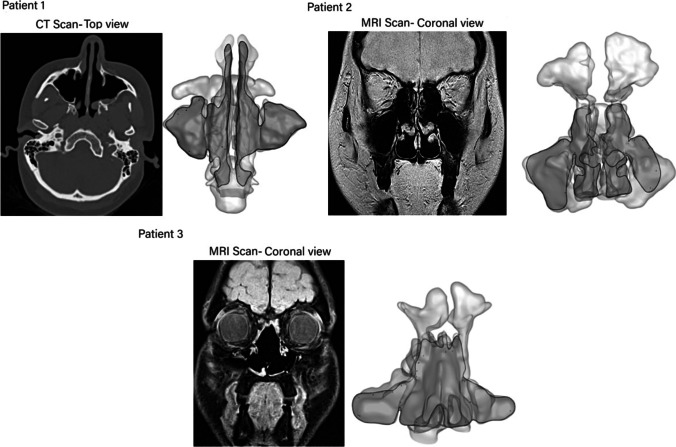
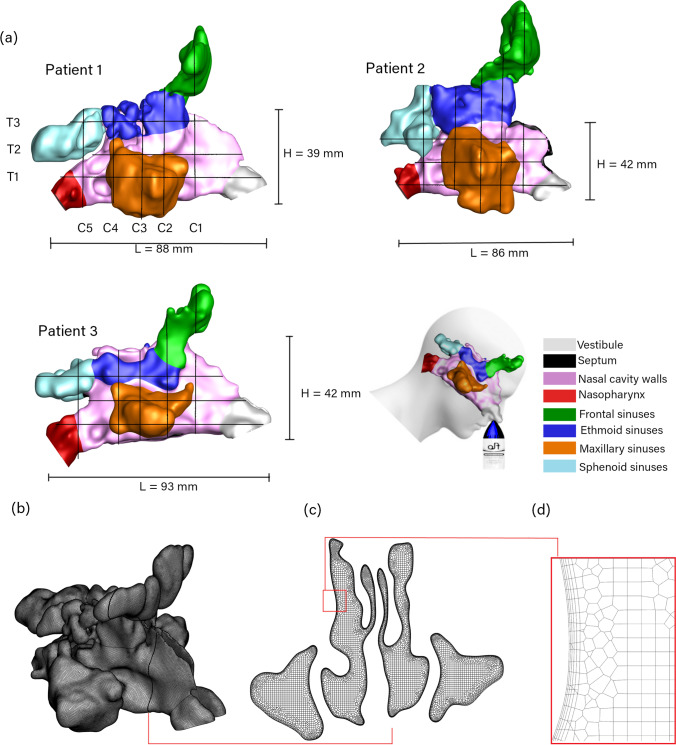
Nasal saline irrigation is highly recommended in patients following functional endoscopic sinus surgery (FESS) to aid the postoperative recovery. Post-FESS patients have significantly altered anatomy leading to markedly different flow dynamics from those found in pre-op or non-diseased airways, resulting in unknown flow dynamics.
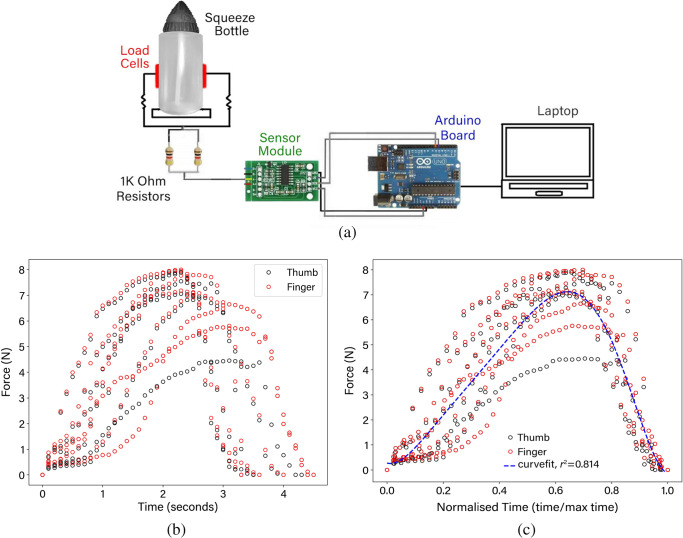
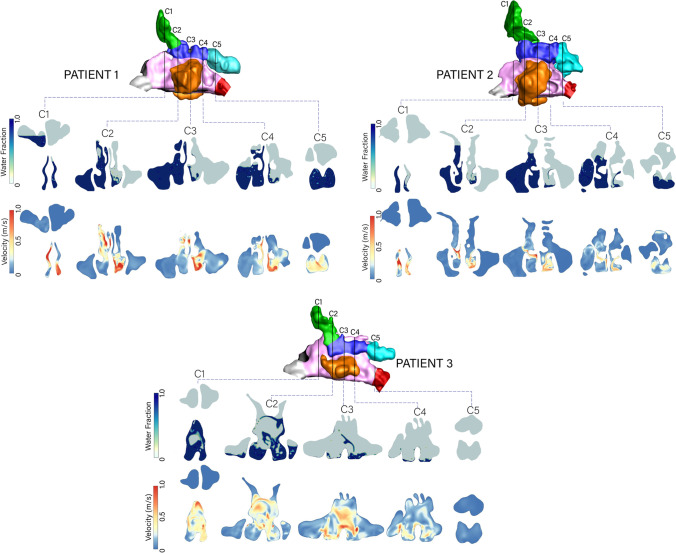
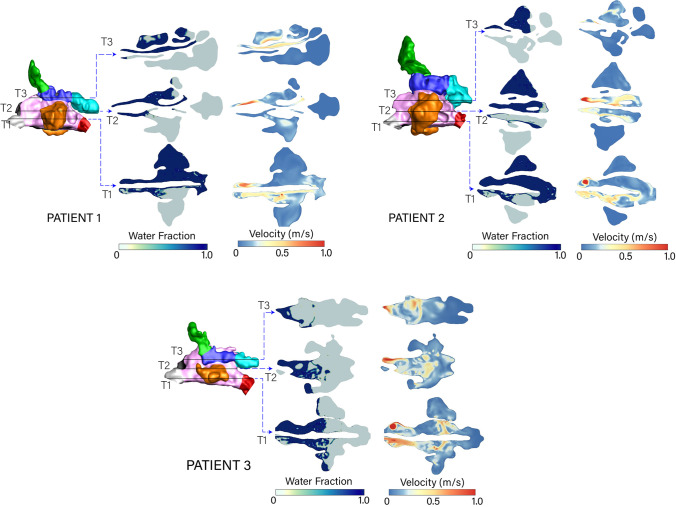
This work investigated how the liquid stream disperses through altered nasal cavities following surgery using Computational Fluid Dynamics (CFD). A realistic squeeze profile was determined from physical experiments with a 27-year-old male using a squeeze bottle with load sensors. The administration technique involved a head tilt of 45-degrees forward to represent a head position over a sink. After the irrigation event that lasted 4.5 s, the simulation continued for an additional 1.5 s, with the head orientation returning to an upright position.
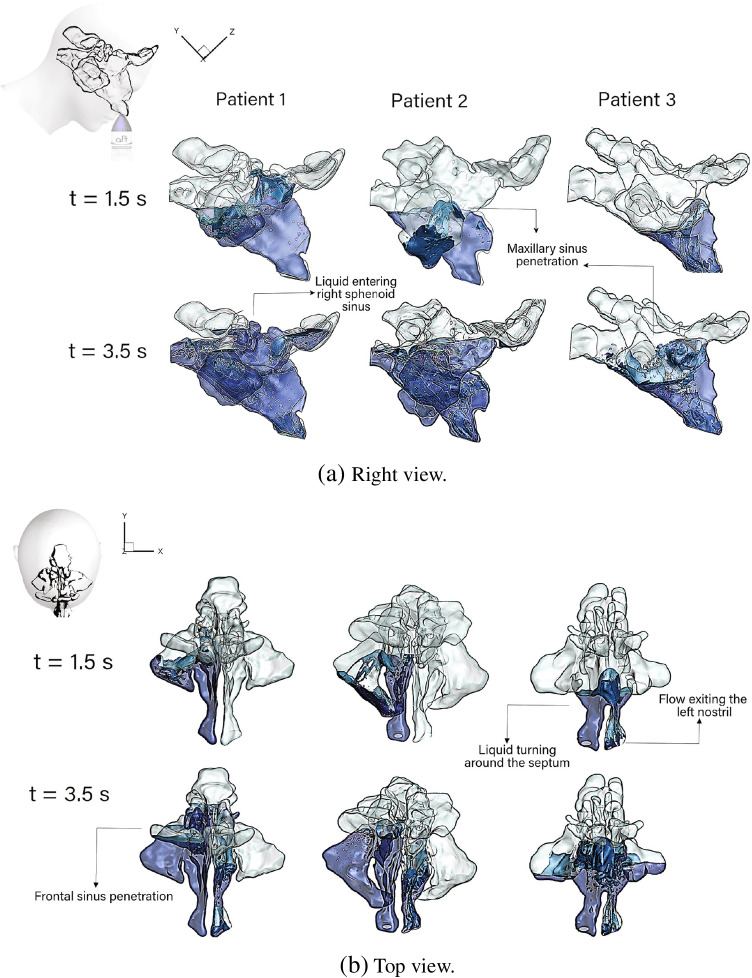
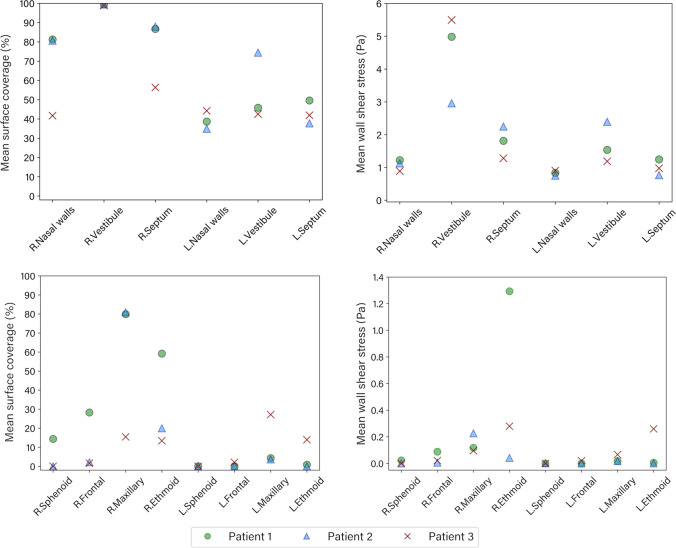
The results demonstrated that a large maxillary sinus ostium on the right side allows saline penetration into this sinus. The increased volume of saline entering the maxillary sinus limits the saline volume available to the rest of the sinonasal cavity and reduces the surface coverage of the other paranasal sinuses. The average wall shear stress was higher on the right side than on the other side for two patients. The results also revealed that head position alters the sinuses' saline residual, especially the frontal sinuses.
While greater access to sinuses is achieved through FESS surgery, patients without a nasal septum limits posterior sinus penetration due to the liquid crossing over to the contralateral cavity and exiting the nasal cavity early.
鼻腔盐水冲洗在功能性内窥镜鼻窦手术(FESS)后强烈推荐,以帮助术后恢复。FESS 术后患者的解剖结构发生了明显变化,导致与术前或非病变气道的流动动力学明显不同,从而导致流动动力学未知。
本研究使用计算流体动力学(CFD)研究了手术后液体流如何通过改变的鼻腔分散。使用带有负载传感器的挤压瓶,通过 27 岁男性的物理实验确定了真实的挤压轮廓。给药技术涉及将头部倾斜 45 度向前,以代表在水槽上方的头部位置。在持续 4.5 秒的冲洗事件之后,模拟继续进行另外 1.5 秒,头部取向返回到直立位置。
结果表明,右侧上颌窦口较大允许盐水渗透到这个鼻窦。进入上颌窦的盐水体积增加限制了可供其余鼻窦使用的盐水量,并减少了其他副鼻窦的表面覆盖率。对于两名患者,右侧的平均壁面剪切应力高于另一侧。结果还表明,头部位置改变了鼻窦的盐水残留,特别是额窦。
虽然 FESS 手术可以更好地进入鼻窦,但由于液体越过对侧腔并早期从鼻腔排出,没有鼻中隔的患者限制了后鼻窦的穿透。