Department of Pathology, Albert Einstein College of Medicine, Bronx, NY, United States.
Department of Parasitology and Medical Entomology, Muhimbili University of Health and Allied Sciences, Dar es Salaam, Tanzania.
Front Immunol. 2022 Aug 18;13:952183. doi: 10.3389/fimmu.2022.952183. eCollection 2022.
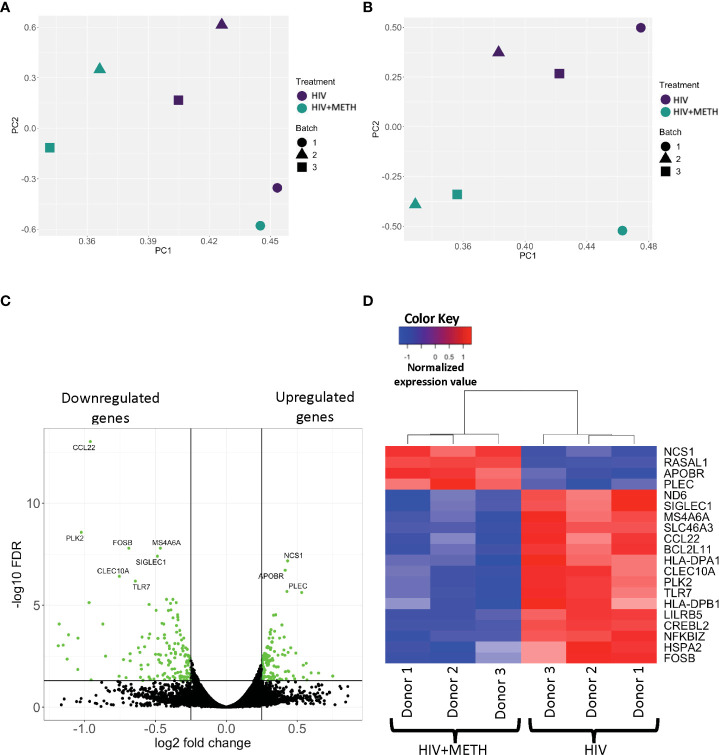
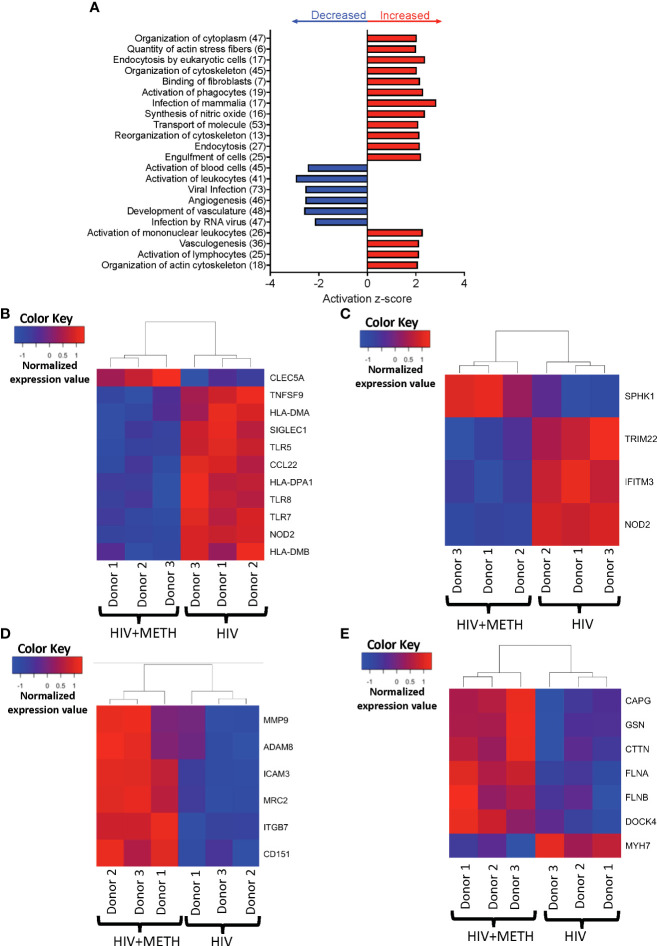
HIV-associated neurocognitive impairment (HIV-NCI) persists in 15-40% of people with HIV (PWH) despite effective antiretroviral therapy. HIV-NCI significantly impacts quality of life, and there is currently no effective treatment for it. The development of HIV-NCI is complex and is mediated, in part, by the entry of HIV-infected mature monocytes into the central nervous system (CNS). Once in the CNS, these cells release inflammatory mediators that lead to neuroinflammation, and subsequent neuronal damage. Infected monocytes may infect other CNS cells as well as differentiate into macrophages, thus contributing to viral reservoirs and chronic neuroinflammation. Substance use disorders in PWH, including the use of methamphetamine (meth), can exacerbate HIV neuropathogenesis. We characterized the effects of meth on the transcriptional profile of HIV-infected mature monocytes using RNA-sequencing. We found that meth mediated an upregulation of gene transcripts related to viral infection, cell adhesion, cytoskeletal arrangement, and extracellular matrix remodeling. We also identified downregulation of several gene transcripts involved in pathogen recognition, antigen presentation, and oxidative phosphorylation pathways. These transcriptomic changes suggest that meth increases the infiltration of mature monocytes that have a migratory phenotype into the CNS, contributing to dysregulated inflammatory responses and viral reservoir establishment and persistence, both of which contribute to neuronal damage. Overall, our results highlight potential molecules that may be targeted for therapy to limit the effects of meth on HIV neuropathogenesis.
HIV 相关的神经认知障碍(HIV-NCI)在接受有效抗逆转录病毒治疗的 HIV 感染者(PWH)中仍持续存在于 15-40%的患者中。HIV-NCI 显著影响生活质量,目前尚无有效的治疗方法。HIV-NCI 的发生机制复杂,部分由感染 HIV 的成熟单核细胞进入中枢神经系统(CNS)介导。一旦进入 CNS,这些细胞释放炎症介质,导致神经炎症和随后的神经元损伤。感染的单核细胞可能感染其他 CNS 细胞并分化为巨噬细胞,从而导致病毒储存库和慢性神经炎症。PWH 的物质使用障碍,包括使用甲基苯丙胺(冰毒),会加重 HIV 神经发病机制。我们使用 RNA 测序技术来描述冰毒对 HIV 感染成熟单核细胞转录谱的影响。我们发现,冰毒介导了与病毒感染、细胞黏附、细胞骨架排列和细胞外基质重塑相关的基因转录本的上调。我们还鉴定了几个参与病原体识别、抗原呈递和氧化磷酸化途径的基因转录本的下调。这些转录组学变化表明,冰毒增加了具有迁移表型的成熟单核细胞向 CNS 的浸润,导致失调的炎症反应和病毒储存库的建立和持续存在,这两者都导致神经元损伤。总体而言,我们的研究结果突出了可能成为治疗靶点的潜在分子,以限制冰毒对 HIV 神经发病机制的影响。