Zhou Xuehao, Ao Xiang, Jia Zhaojun, Li Yiwen, Kuang Shouxiang, Du Chengcheng, Zhang Jinyu, Wang Jianxun, Liu Ying
School of Basic Medical Sciences, Qingdao Medical College, Qingdao University, Qingdao, China.
College of New Materials and Chemical Engineering, Beijing Key Laboratory of Enze Biomass Fine Chemicals, Beijing Institute of Petrochemical Technology, Beijing, China.
Front Oncol. 2022 Aug 17;12:951864. doi: 10.3389/fonc.2022.951864. eCollection 2022.
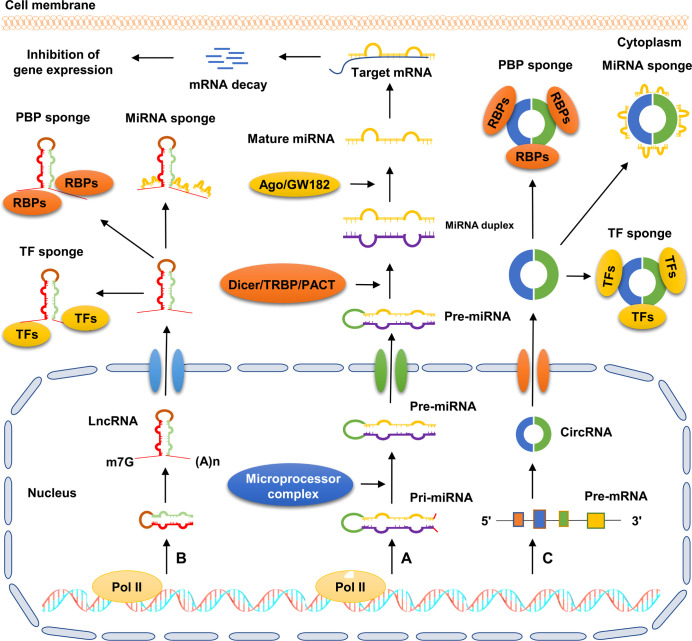
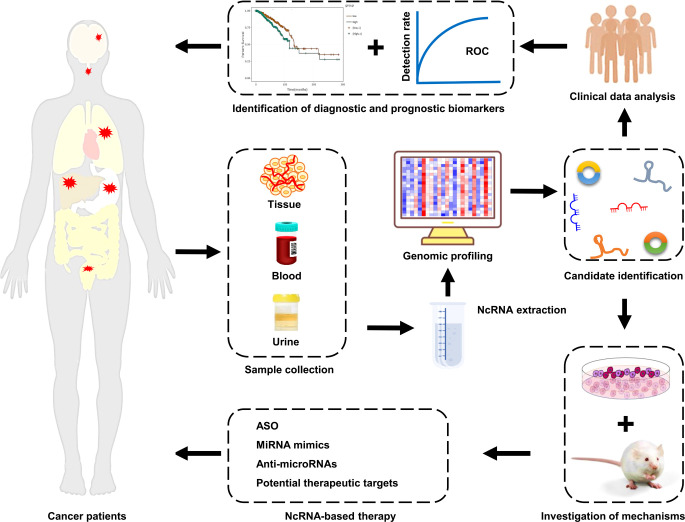
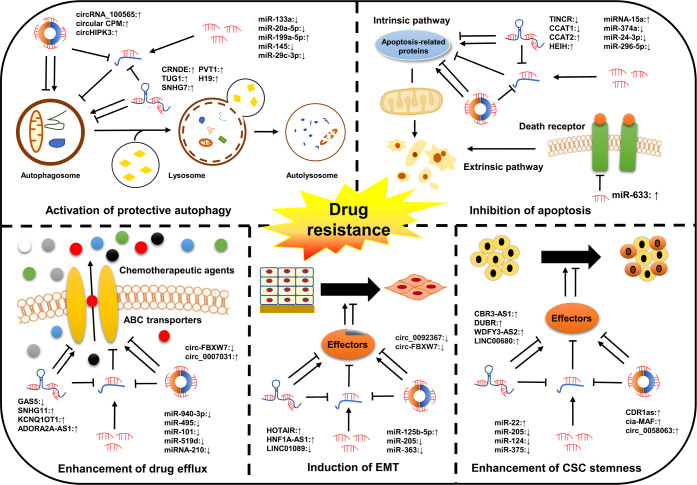
Cancer is one of the most frequently diagnosed malignant diseases worldwide, posing a serious, long-term threat to patients' health and life. Systemic chemotherapy remains the first-line therapeutic approach for recurrent or metastatic cancer patients after surgery, with the potential to effectively extend patient survival. However, the development of drug resistance seriously limits the clinical efficiency of chemotherapy and ultimately results in treatment failure and patient death. A large number of studies have shown that non-coding RNAs (ncRNAs), particularly microRNAs, long non-coding RNAs, and circular RNAs, are widely involved in the regulation of cancer drug resistance. Their dysregulation contributes to the development of cancer drug resistance by modulating the expression of specific target genes involved in cellular apoptosis, autophagy, drug efflux, epithelial-to-mesenchymal transition (EMT), and cancer stem cells (CSCs). Moreover, some ncRNAs also possess great potential as efficient, specific biomarkers in diagnosis and prognosis as well as therapeutic targets in cancer patients. In this review, we summarize the recent findings on the emerging role and underlying mechanisms of ncRNAs involved in cancer drug resistance and focus on their clinical applications as biomarkers and therapeutic targets in cancer treatment. This information will be of great benefit to early diagnosis and prognostic assessments of cancer as well as the development of ncRNA-based therapeutic strategies for cancer patients.
癌症是全球最常被诊断出的恶性疾病之一,对患者的健康和生命构成严重的长期威胁。全身化疗仍然是术后复发或转移性癌症患者的一线治疗方法,具有有效延长患者生存期的潜力。然而,耐药性的产生严重限制了化疗的临床疗效,最终导致治疗失败和患者死亡。大量研究表明,非编码RNA(ncRNAs),特别是微小RNA、长链非编码RNA和环状RNA,广泛参与癌症耐药性的调控。它们的失调通过调节参与细胞凋亡、自噬、药物外排、上皮-间质转化(EMT)和癌症干细胞(CSCs)的特定靶基因的表达,促进癌症耐药性的发展。此外,一些ncRNAs作为高效、特异的生物标志物在癌症诊断和预后以及癌症患者的治疗靶点方面也具有巨大潜力。在本综述中,我们总结了ncRNAs在癌症耐药性中新兴作用和潜在机制的最新发现,并重点关注它们作为生物标志物和治疗靶点在癌症治疗中的临床应用。这些信息将对癌症的早期诊断和预后评估以及为癌症患者开发基于ncRNA的治疗策略大有裨益。