Wang Lijuan, Sun Helin, Yang Meina, Xu Yulin, Hou Linlin, Yu Haomiao, Wang Xueyin, Zhang Zhongwen, Han Jinxiang
Department of Endocrinology and Metabolism, Affiliated Hospital of Weifang Medical University Weifang China, Shandong Provincial Qianfoshan Hospital & The First Affiliated Hospital of Shandong First Medical University, Neck-Shoulder and Lumbocrural Pain Hospital of Shandong First Medical University, Jinan, China.
Department of Endocrinology and Metabolism, The First Affiliated Hospital of Shandong First Medical University, Jinan, China.
Front Pharmacol. 2022 Aug 19;13:948173. doi: 10.3389/fphar.2022.948173. eCollection 2022.
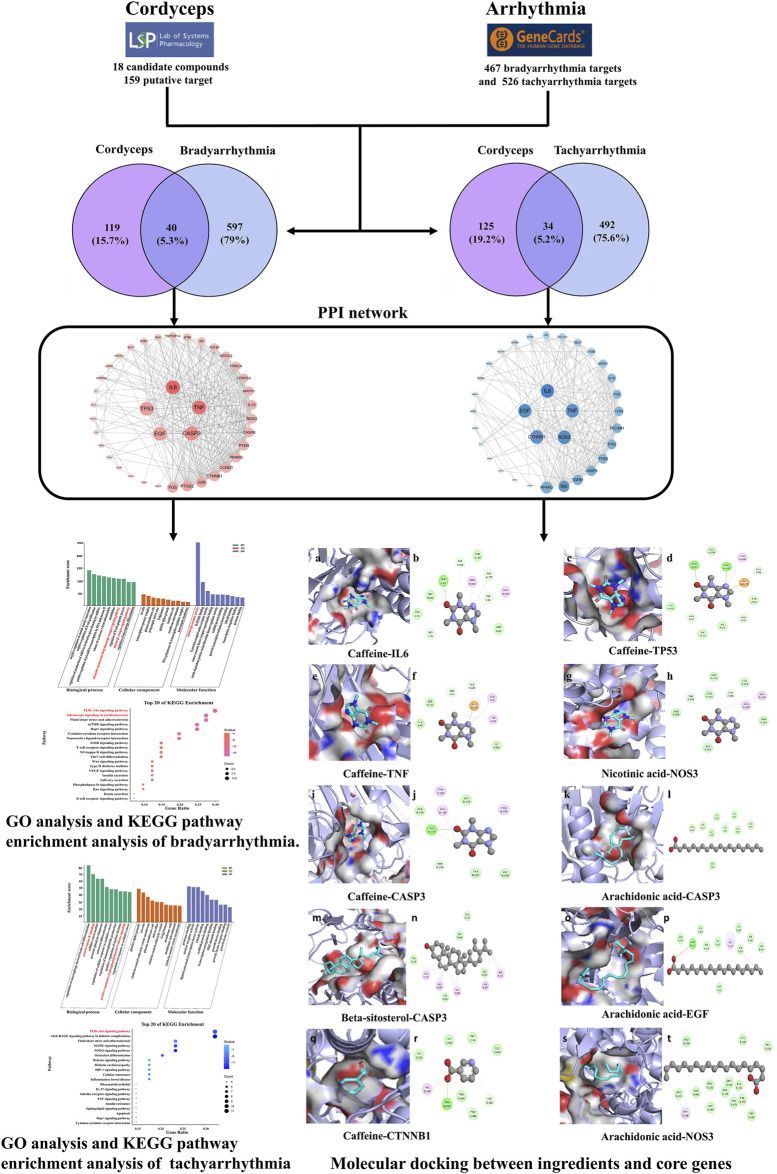
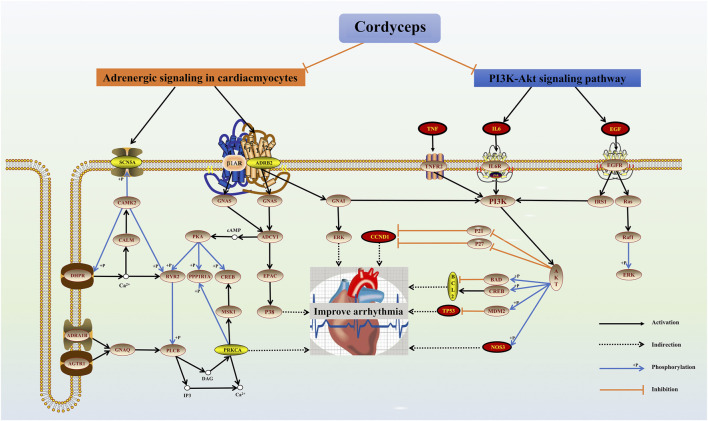
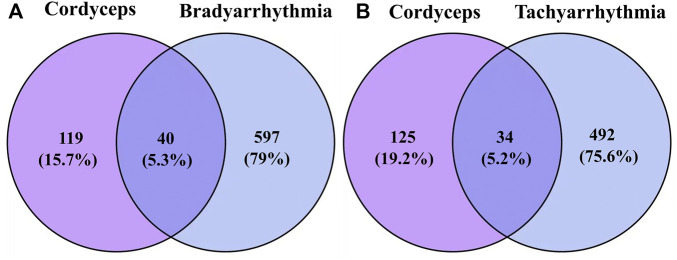
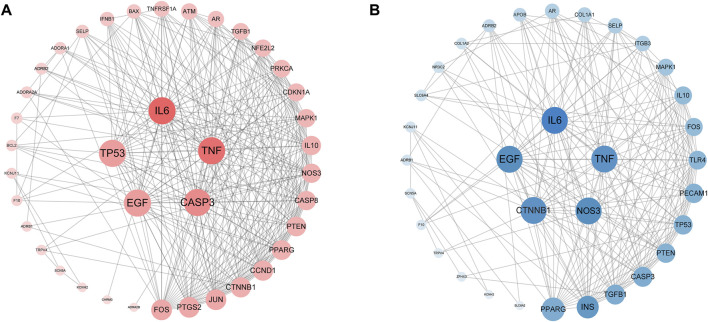
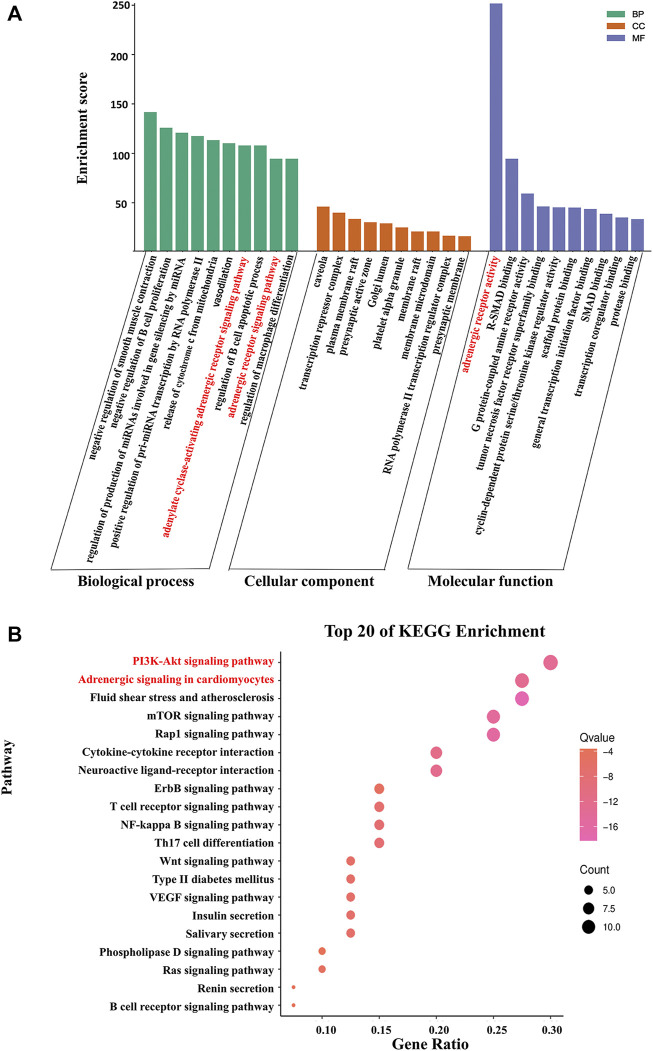
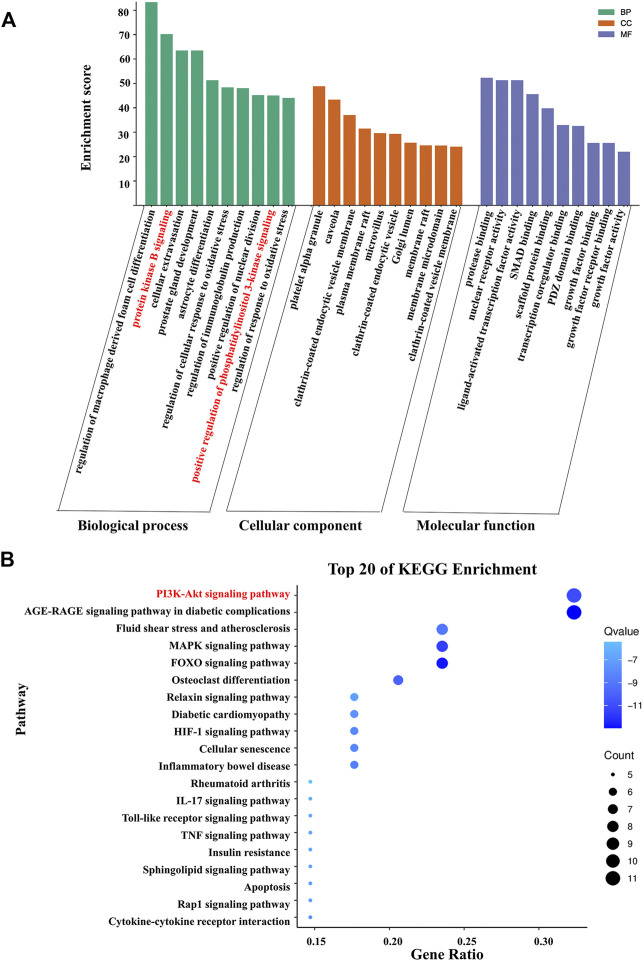
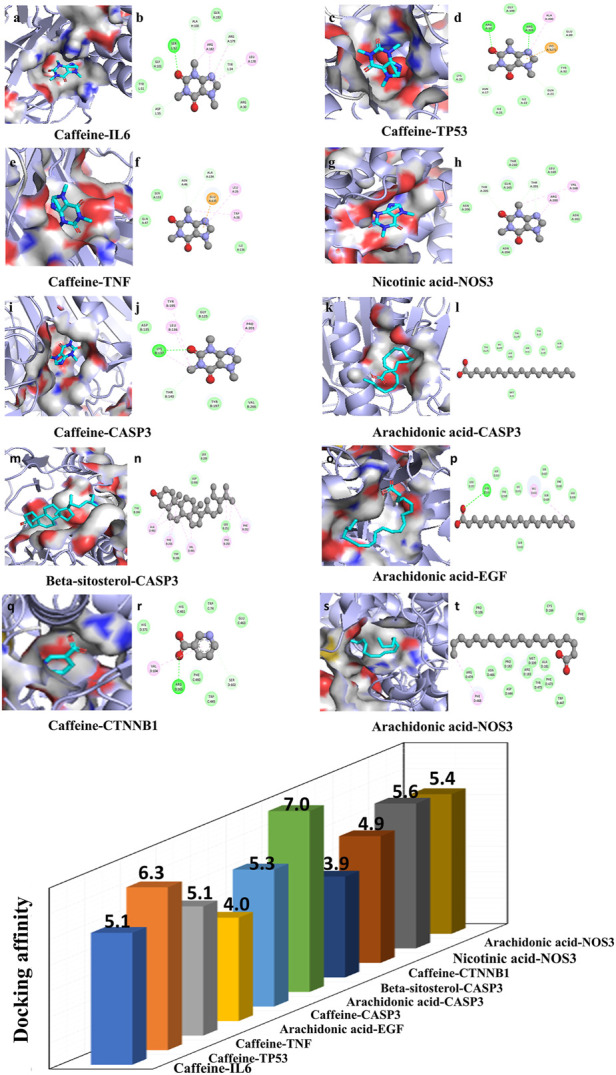
Cordyceps is a precious Chinese herbal medicine with rich bio-active ingredients and is used for regulating arrhythmia alongside routine treatments. However, the efficacy and potential mechanisms of Cordyceps on patients with arrhythmia remain unclear. Randomized controlled trials of bradycardia treatment with Cordyceps were retrieved from diverse databases and available data. Dichotomous variables were expressed as a risk ratio (RR) with a 95% confidence interval (CI). Continuous variables were expressed as a standardized mean difference (SMD) with a 95% CI. Network pharmacology was used to identify potential targets of Cordyceps for arrhythmia. Metascape was used for gene ontology (GO) and genome (KEGG) pathway enrichment analysis. Nineteen trials included 1,805 patients with arrhythmia, of whom 918 were treated with Ningxinbao capsule plus routine drugs, and, as a control, 887 were treated with only routine drugs. Six trials reported on bradycardia and the other 13 on tachycardia. Treatment with Cordyceps significantly improved the total efficacy rate in both bradycardia (RR = 1.24; 95% CI, 1.15 to 1.35; P <0.00001) and tachycardia (RR = 1.27; 95% CI, 1.17 to 1.39; P <0.00001). Cordyceps also had beneficial secondary outcomes. No serious adverse events occurred in patients treated with Cordyceps. The results of KEGG pathway enrichment analysis were mainly connected to adrenergic signaling in cardiomyocytes and the PI3K-Akt signaling pathway. IL6, TNF, TP53, CASP3, CTNNB1, EGF, and NOS3 might be key targets for Cordyceps in the treatment of arrhythmia. This study confirmed that Cordyceps has a certain positive effect on the treatment of arrhythmia and that its main mechanism may be through the regulation of adrenergic signaling in cardiomyocytes and the PI3K-Akt signaling pathway.
冬虫夏草是一种珍贵的中药材,含有丰富的生物活性成分,可与常规治疗一起用于调节心律失常。然而,冬虫夏草对心律失常患者的疗效和潜在机制仍不清楚。从多个数据库和现有数据中检索了关于冬虫夏草治疗心动过缓的随机对照试验。二分变量表示为风险比(RR),95%置信区间(CI)。连续变量表示为标准化平均差(SMD),95%CI。采用网络药理学方法确定冬虫夏草治疗心律失常的潜在靶点。使用Metascape进行基因本体(GO)和基因组(KEGG)通路富集分析。19项试验纳入了1805例心律失常患者,其中918例接受宁心宝胶囊加常规药物治疗,作为对照,887例仅接受常规药物治疗。6项试验报告了心动过缓,其他13项报告了心动过速。冬虫夏草治疗显著提高了心动过缓(RR = 1.24;95%CI,1.15至1.35;P <0.00001)和心动过速(RR = 1.27;95%CI,1.17至1.39;P <0.00001)的总有效率。冬虫夏草还有有益的次要结局。接受冬虫夏草治疗的患者未发生严重不良事件。KEGG通路富集分析结果主要与心肌细胞中的肾上腺素能信号通路和PI3K-Akt信号通路相关。IL6、TNF、TP53、CASP3、CTNNB1、EGF和NOS3可能是冬虫夏草治疗心律失常的关键靶点。本研究证实,冬虫夏草对心律失常的治疗有一定的积极作用,其主要机制可能是通过调节心肌细胞中的肾上腺素能信号通路和PI3K-Akt信号通路。