Bülow Pernille, Patgiri Anupam, Faundez Victor
Department of Cell Biology, Emory University School of Medicine, Atlanta, GA 30322, USA.
Department of Pharmacology and Chemical Biology, Emory University School of Medicine, Atlanta, GA 30322, USA.
iScience. 2022 Aug 13;25(9):104920. doi: 10.1016/j.isci.2022.104920. eCollection 2022 Sep 16.
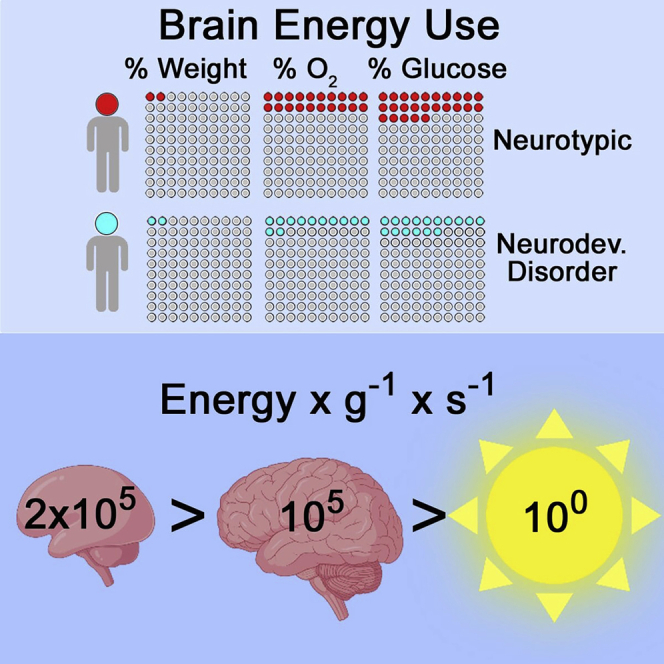
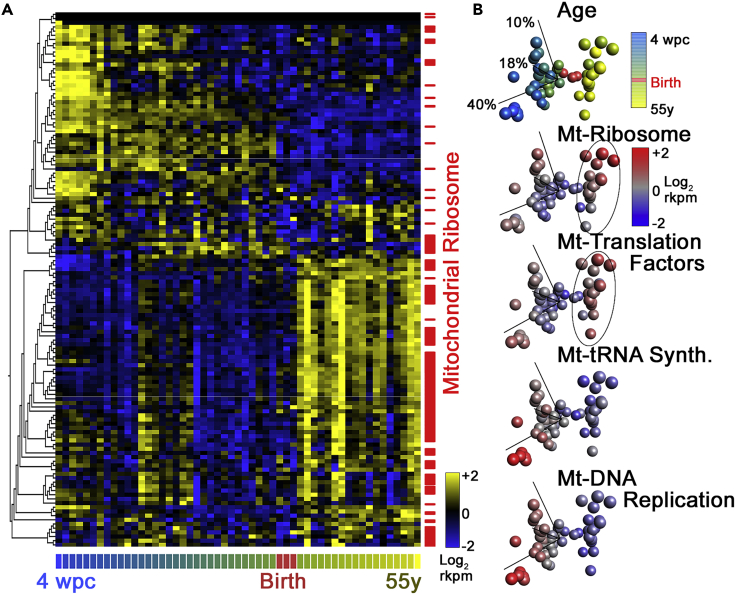
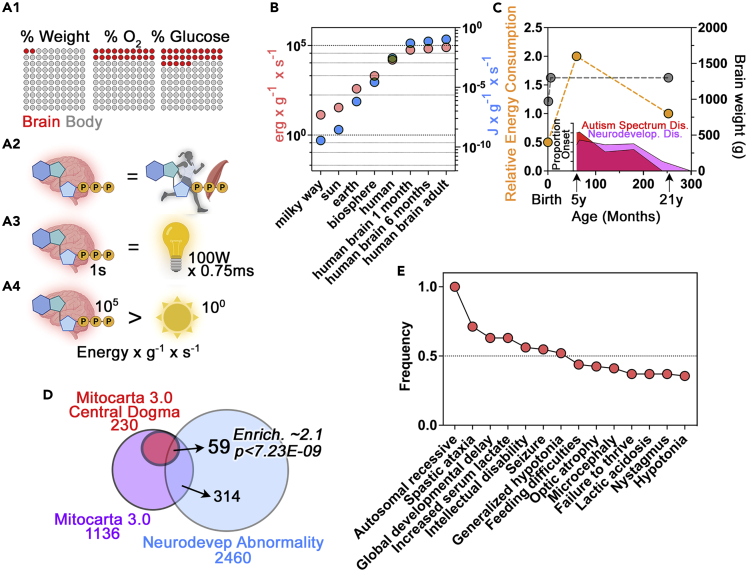
The human brain consumes five orders of magnitude more energy than the sun by unit of mass and time. This staggering bioenergetic cost serves mostly synaptic transmission and actin cytoskeleton dynamics. The peak of both brain bioenergetic demands and the age of onset for neurodevelopmental disorders is approximately 5 years of age. This correlation suggests that defects in the machinery that provides cellular energy would be causative and/or consequence of neurodevelopmental disorders. We explore this hypothesis from the perspective of the machinery required for the synthesis of the electron transport chain, an ATP-producing and NADH-consuming enzymatic cascade. The electron transport chain is constituted by nuclear- and mitochondrial-genome-encoded subunits. These subunits are synthesized by the 80S and the 55S ribosomes, which are segregated to the cytoplasm and the mitochondrial matrix, correspondingly. Mitochondrial protein synthesis by the 55S ribosome is the rate-limiting step in the synthesis of electron transport chain components, suggesting that mitochondrial protein synthesis is a bottleneck for tissues with high bionergetic demands. We discuss genetic defects in the human nuclear and mitochondrial genomes that affect these protein synthesis machineries and cause a phenotypic spectrum spanning autism spectrum disorders to neurodegeneration during neurodevelopment. We propose that dysregulated mitochondrial protein synthesis is a chief, yet understudied, causative mechanism of neurodevelopmental and behavioral disorders.
按单位质量和时间计算,人类大脑消耗的能量比太阳多五个数量级。这种惊人的生物能量消耗主要用于突触传递和肌动蛋白细胞骨架动力学。大脑生物能量需求的峰值以及神经发育障碍的发病年龄大约都在5岁左右。这种相关性表明,提供细胞能量的机制中的缺陷可能是神经发育障碍的病因和/或后果。我们从电子传递链合成所需机制的角度探讨这一假设,电子传递链是一个产生ATP并消耗NADH的酶促级联反应。电子传递链由核基因组和线粒体基因组编码的亚基组成。这些亚基分别由80S和55S核糖体合成,它们分别定位于细胞质和线粒体基质。55S核糖体进行的线粒体蛋白质合成是电子传递链组分合成中的限速步骤,这表明线粒体蛋白质合成是对生物能量需求高的组织的一个瓶颈。我们讨论了人类核基因组和线粒体基因组中影响这些蛋白质合成机制并在神经发育过程中导致从自闭症谱系障碍到神经退行性变等一系列表型的遗传缺陷。我们提出,线粒体蛋白质合成失调是神经发育和行为障碍的一个主要但尚未得到充分研究的致病机制。