Summer Kate, Browne Jessica, Hollanders Matthijs, Benkendorff Kirsten
Faculty of Science and Engineering, Southern Cross University, Military Road, Lismore, NSW, 2480, Australia.
Faculty of Health, Southern Cross University, Terminal Drive, Bilinga, Qld, 4225, Australia.
Biofilm. 2022 Aug 17;4:100081. doi: 10.1016/j.bioflm.2022.100081. eCollection 2022 Dec.
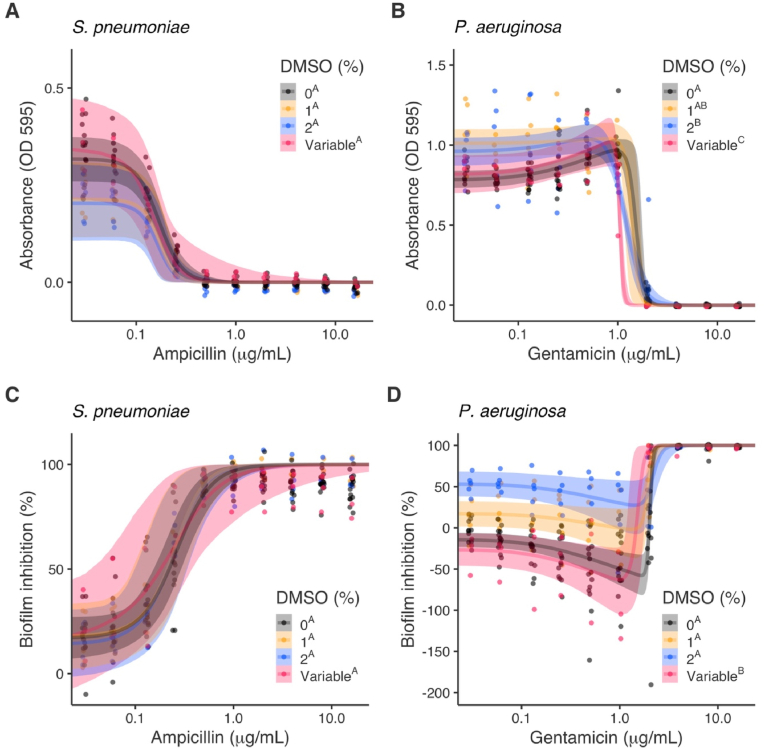
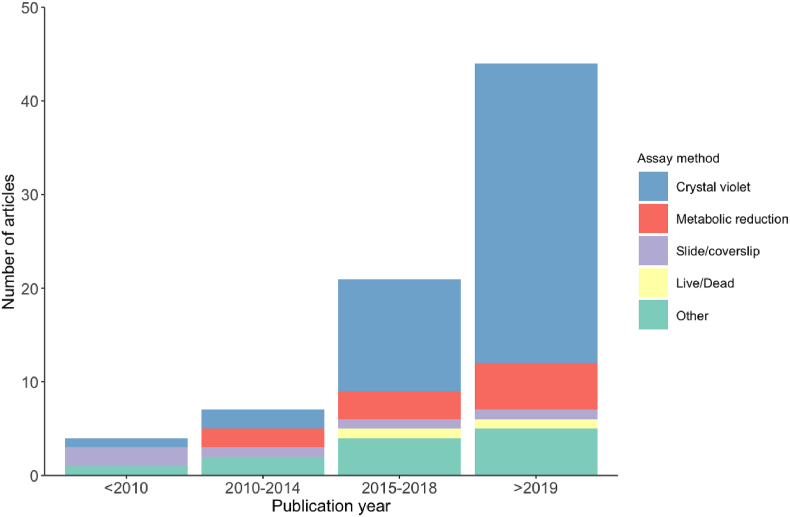
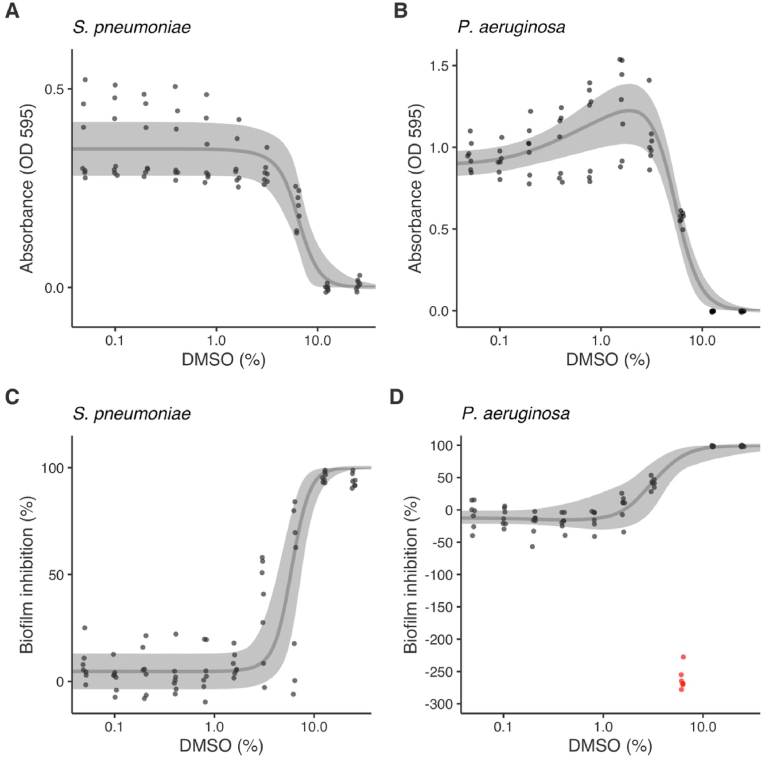
Bacteria in biofilm formations are up to 1000 times less susceptible to antibiotics than their planktonic counterparts. Recognition of the role of biofilms in ∼80% of chronic infections, their contribution to bacterial tolerance and development of antimicrobial resistance, and thus the search for compounds with antibiofilm properties, has increased greatly in recent years. The need for robust experimental methods is therefore critical but currently undermined by inappropriate controls when dimethyl-sulfoxide (DMSO) is used to enhance test compound solubility. DMSO is known to have a limited effect on planktonic growth, but emerging data indicates that the solvent can affect biofilm formation even at low concentrations. Here, we present both a literature review on the application of DMSO in antibiofilm studies, as well as a series of experiments and Bayesian hormetic dose-response modelling to define the effects of DMSO alone and in combination with standard antibiotics using two clinically important biofilm-forming bacteria. DMSO has been used in 76 published studies to solubilise a wide variety of synthesised and natural products, including plant extracts, isolated secondary metabolites, modified lead molecules and proteins, in antibiofilm assays. DMSO solvent concentrations to which biofilms were exposed ranged between <1 and 100% but unfortunately, 35% of articles did not specify the DMSO concentrations used, 50% of articles did not include solvent controls and, of those that did, 26% did not specify control concentrations, 47% did not report or discuss control data, and 53% omitted media controls. In a further 12 studies, DMSO is used as a biofilm treatment, demonstrating the antibiofilm properties of this solvent at higher concentrations. We provide evidence that DMSO (between 0.03 and 25%) significantly inhibits biofilm formation in , but not , and acts synergistically with standard antibiotics at very low concentrations (<1%). Interestingly, intermediate concentrations of DMSO (∼6%) strongly promote the growth of biofilms. As the research community strives to identify bioactive antimicrobial compounds, there is a need for increased scientific rigour when using DMSO as a solvent in antibiofilm assays.
生物膜中的细菌对抗生素的敏感性比其浮游状态的同类细菌低多达1000倍。近年来,人们越来越认识到生物膜在约80%的慢性感染中的作用、它们对细菌耐受性和抗菌耐药性发展的影响,因此对具有抗生物膜特性的化合物的研究也大幅增加。因此,需要强大的实验方法至关重要,但目前当使用二甲基亚砜(DMSO)来提高测试化合物的溶解度时,由于对照设置不当而受到影响。已知DMSO对浮游生长的影响有限,但新出现的数据表明,即使在低浓度下,这种溶剂也会影响生物膜的形成。在这里,我们既对DMSO在抗生物膜研究中的应用进行了文献综述,也进行了一系列实验以及贝叶斯兴奋剂量反应建模,以确定单独使用DMSO以及DMSO与标准抗生素联合使用对两种临床上重要的生物膜形成细菌的影响。DMSO已在76项已发表的研究中用于在抗生物膜测定中溶解各种合成和天然产物,包括植物提取物、分离的次生代谢物、修饰的先导分子和蛋白质。生物膜所接触的DMSO溶剂浓度范围在<1%至100%之间,但不幸的是,35%的文章未指定所使用的DMSO浓度,50%的文章未包括溶剂对照,而在那些设置了溶剂对照的文章中,26%未指定对照浓度,47%未报告或讨论对照数据,53%省略了培养基对照。在另外12项研究中,DMSO被用作生物膜处理剂,证明了这种溶剂在较高浓度下具有抗生物膜特性。我们提供的证据表明,DMSO(0.03%至25%)能显著抑制[具体细菌1]中的生物膜形成,但对[具体细菌2]无此作用,并且在极低浓度(<1%)下与标准抗生素具有协同作用。有趣的是,中等浓度的DMSO(约6%)能强烈促进[具体细菌3]生物膜的生长。随着研究界努力鉴定具有生物活性的抗菌化合物,在抗生物膜测定中使用DMSO作为溶剂时,需要提高科学严谨性。