
镰状细胞对一氧化碳刺激的脑血管反应性:太少,太慢。
Sickle cell cerebrovascular reactivity to a CO stimulus: Too little, too slow.
作者信息
Forté Stéphanie, Sobczyk Olivia, Poublanc Julien, Duffin James, Hare Gregory M T, Fisher Joseph Arnold, Mikulis David, Kuo Kevin H M
机构信息
Division of Medical Oncology and Hematology, Departement of Medicine, Centre Hospitalier de l'Université de Montréal, Montréal, QC, Canada.
Division of Medical Oncology and Hematology, Department of Medicine, University Health Network, Toronto, ON, Canada.
出版信息
Front Physiol. 2022 Aug 19;13:886807. doi: 10.3389/fphys.2022.886807. eCollection 2022.
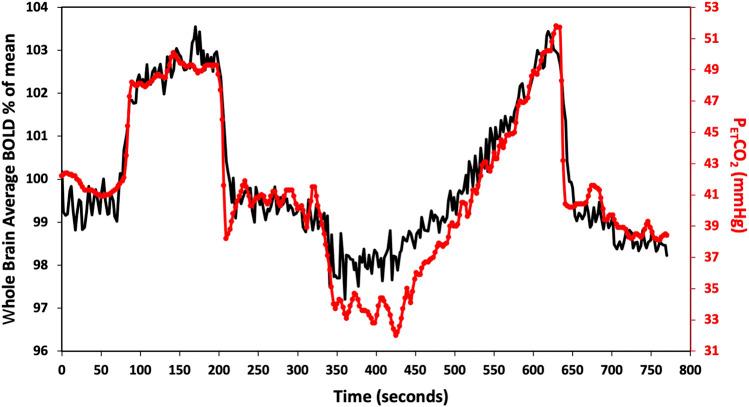
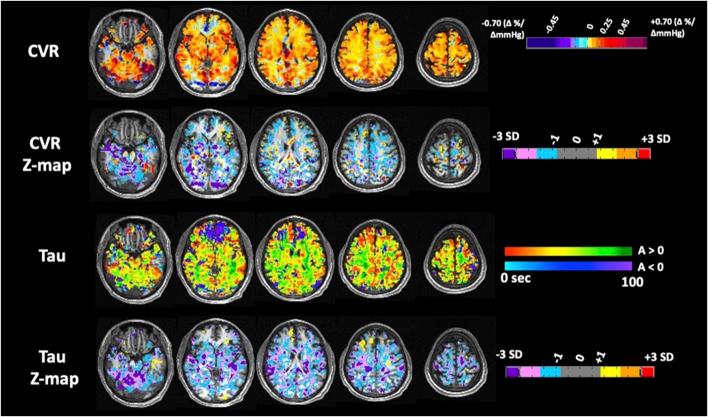
Despite increased cerebral blood flow (CBF), cerebral infarcts occur in patients with sickle cell disease (SCD). This suggests increased CBF does not meet metabolic demand possibly due to compromised cerebral vasodilatory response. Hypothesis: In adult SCD patients, cerebrovascular reactivity (CVR) and speed of vasodilatory response (tau) to a standardized vasodilatory stimulus, are reduced compared to normal subjects. Functional brain imaging performed as part of routine care in adult SCD patients without known large vessel cerebral vasculopathy was reviewed retrospectively. CVR was calculated as the change in CBF measured as the blood-oxygenation-level-dependent (BOLD)-magnetic resonance imaging signal, in response to a standard vasoactive stimulus of carbon dioxide (CO). The tau corresponding to the best fit between the convolved end-tidal partial pressures of CO and BOLD signal was defined as the speed of vascular response. CVR and tau were normalized using a previously generated atlas of 42 healthy controls. Fifteen patients were included. CVR was reduced in grey and white matter (mean Z-score for CVR -0.5 [-1.8 to 0.3] and -0.6 [-2.3 to 0.7], respectively). Tau Z-scores were lengthened in grey and white matter (+0.9 [-0.5 to 3.3] and +0.8 [-0.7 to 2.7], respectively). Hematocrit was the only significant independent predictor of CVR on multivariable regression. Both measures of cerebrovascular health (CVR and tau) in SCD patients were attenuated compared to normal controls. These findings show that CVR represents a promising tool to assess disease state, stroke risk, and therapeutic efficacy of treatments in SCD and merits further investigation.
尽管镰状细胞病(SCD)患者的脑血流量(CBF)增加,但仍会发生脑梗死。这表明增加的脑血流量可能无法满足代谢需求,可能是由于脑血管舒张反应受损所致。假设:与正常受试者相比,成年SCD患者对标准化血管舒张刺激的脑血管反应性(CVR)和血管舒张反应速度(tau)降低。回顾性分析了在无已知大血管脑血管病变的成年SCD患者的常规护理中进行的功能性脑成像。CVR计算为响应标准血管活性刺激二氧化碳(CO)时,通过血氧水平依赖(BOLD)磁共振成像信号测量的CBF变化。与CO的卷积呼气末分压和BOLD信号之间最佳拟合对应的tau被定义为血管反应速度。使用先前生成的42名健康对照的图谱对CVR和tau进行标准化。纳入了15名患者。灰质和白质的CVR均降低(CVR的平均Z分数分别为-0.5[-1.8至0.3]和-0.6[-2.3至0.7])。灰质和白质的tau Z分数延长(分别为+0.9[-0.5至3.3]和+0.8[-0.7至2.7])。在多变量回归中,血细胞比容是CVR唯一显著的独立预测因子。与正常对照组相比,SCD患者的两种脑血管健康指标(CVR和tau)均减弱。这些发现表明,CVR是评估SCD疾病状态、中风风险和治疗疗效的一个有前景的工具,值得进一步研究。


 Zotero 插件