Liang Jun, Song Yanxin, Belkacem Abdelkader Nasreddine, Li Fengmin, Liu Shizhong, Chen Xiaona, Wang Xinrui, Wang Yueyun, Wan Chunxiao
Department of Rehabilitation, Tianjin Medical University General Hospital, Tianjin, China.
Laboratory of Neural Engineering and Rehabilitation, Department of Biomedical Engineering, College of Precision Instruments and Optoelectronics Engineering, Tianjin University, Tianjin, China.
Front Neurosci. 2022 Aug 18;16:968928. doi: 10.3389/fnins.2022.968928. eCollection 2022.
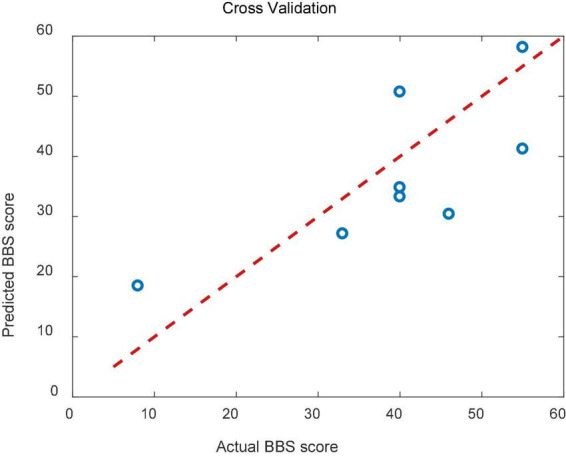
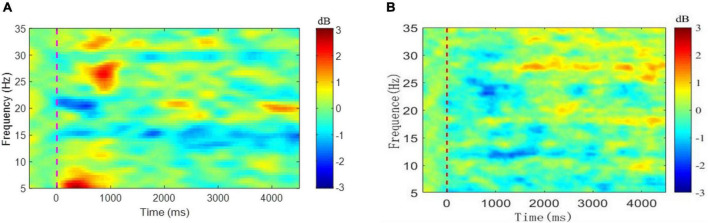
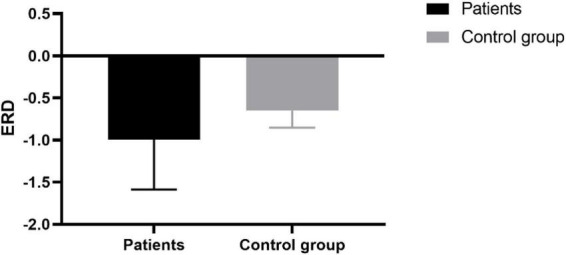
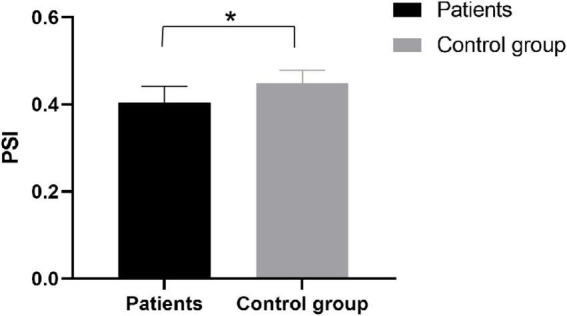
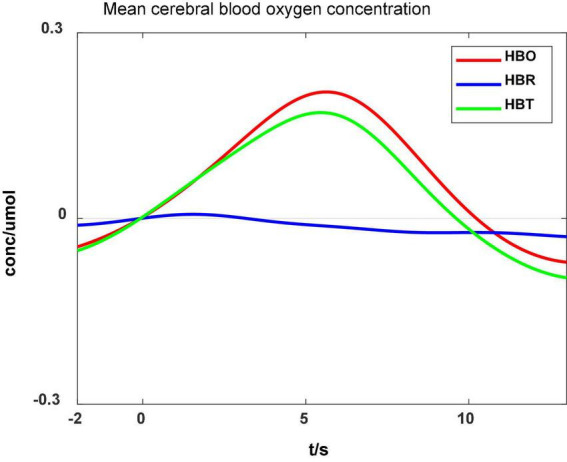
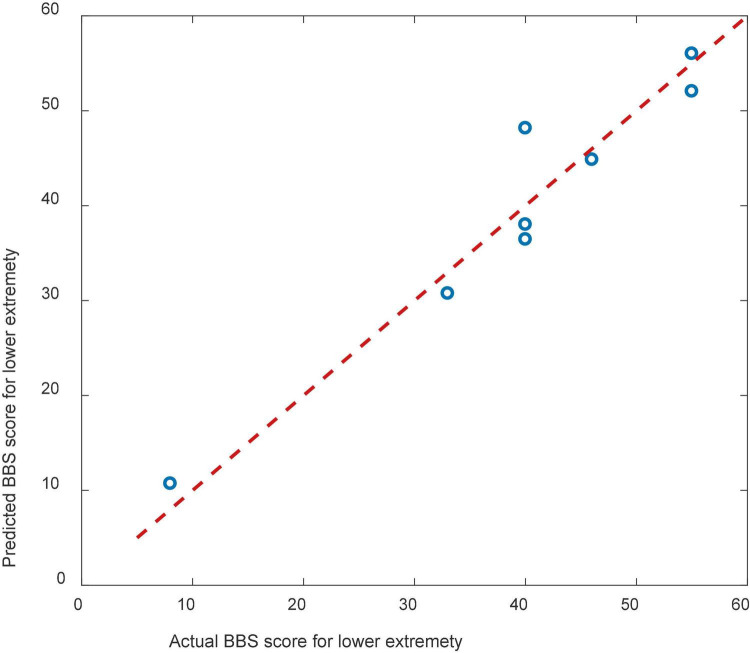
Balance rehabilitation is exceedingly crucial during stroke rehabilitation and is highly related to the stroke patients' secondary injuries (caused by falling). Stroke patients focus on walking ability rehabilitation during the early stage. Ankle dorsiflexion can activate the brain areas of stroke patients, similar to walking. The combination of electroencephalography (EEG) and functional near-infrared spectroscopy (fNIRS) was a new method, providing more beneficial information. We extracted the event-related desynchronization (ERD), oxygenated hemoglobin (HBO), and Phase Synchronization Index (PSI) features during ankle dorsiflexion from EEG and fNIRS. Moreover, we established a linear regression model to predict Berg Balance Scale (BBS) values and used an eightfold cross validation to test the model. The results showed that ERD, HBO, PSI, and age were critical biomarkers in predicting BBS. ERD and HBO during ankle dorsiflexion and age were promising biomarkers for stroke motor recovery.
平衡康复在中风康复过程中极其关键,并且与中风患者的继发性损伤(由跌倒引起)高度相关。中风患者在早期专注于步行能力康复。踝背屈与步行一样,能够激活中风患者的脑区。脑电图(EEG)和功能近红外光谱(fNIRS)相结合是一种新方法,可提供更多有益信息。我们从EEG和fNIRS中提取了踝背屈过程中的事件相关去同步化(ERD)、氧合血红蛋白(HBO)和相位同步指数(PSI)特征。此外,我们建立了一个线性回归模型来预测伯格平衡量表(BBS)值,并使用八折交叉验证来测试该模型。结果表明,ERD、HBO、PSI和年龄是预测BBS的关键生物标志物。踝背屈过程中的ERD和HBO以及年龄是中风运动恢复的有前景的生物标志物。