Choi Jin-Wook, Kim Ha-Eun, Kim Seungill
Department of Environmental Horticulture, University of Seoul, Seoul, South Korea.
Front Plant Sci. 2022 Aug 19;13:967546. doi: 10.3389/fpls.2022.967546. eCollection 2022.
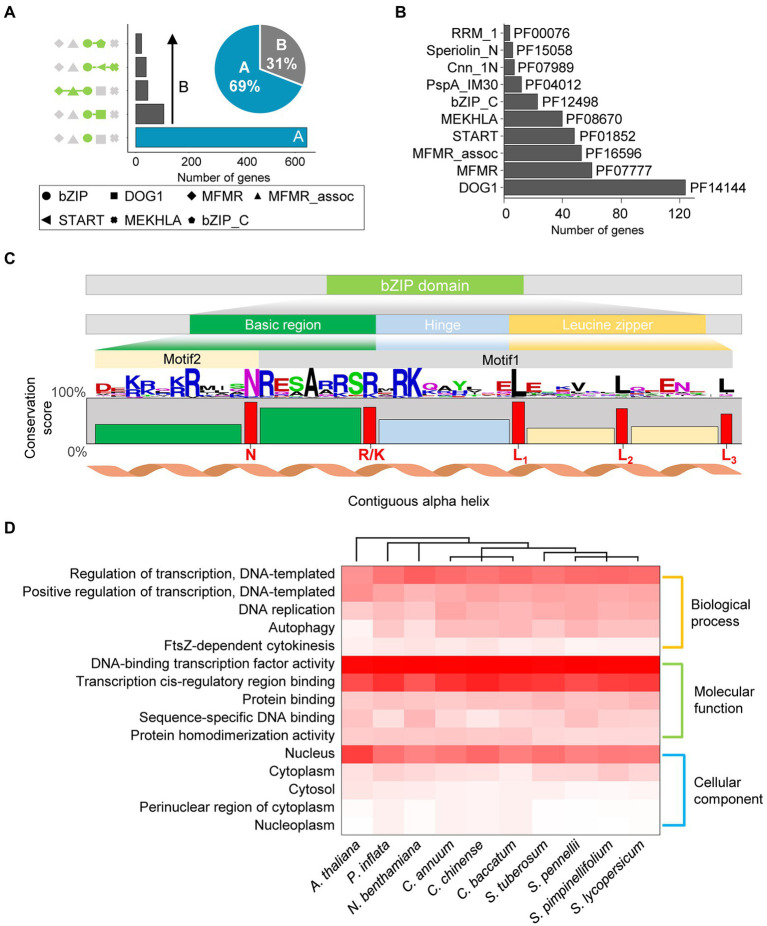
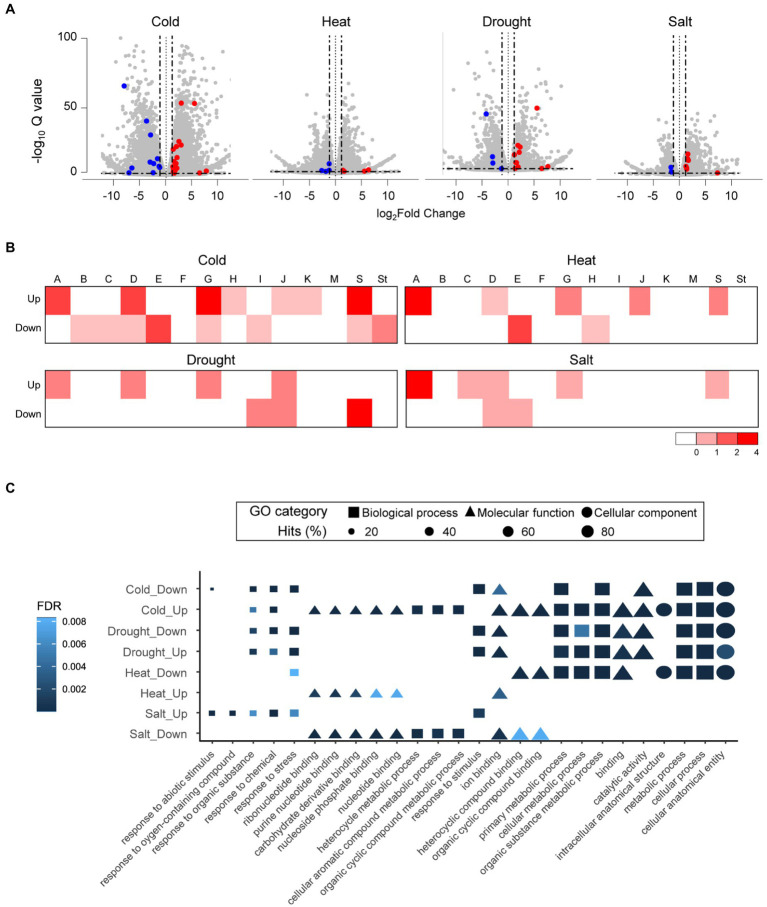
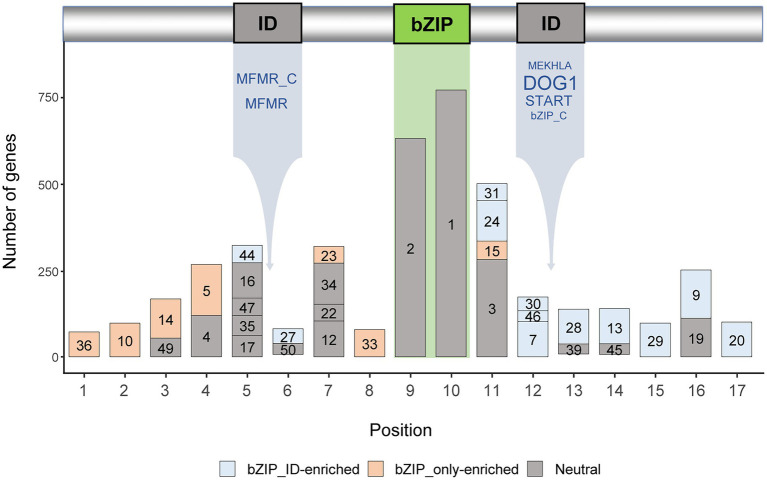
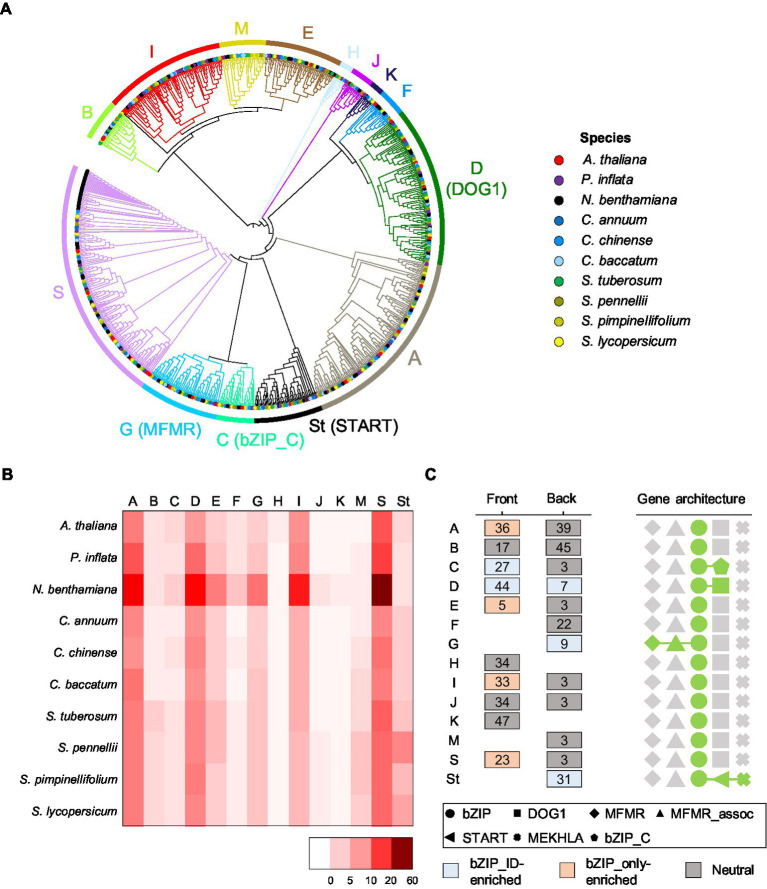
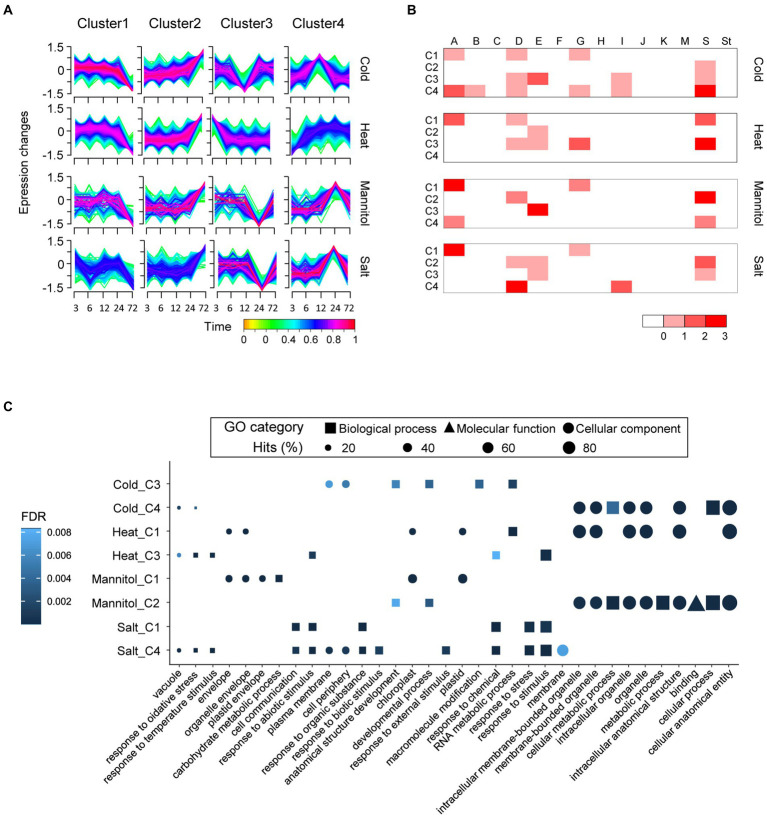
The gene family is one of the largest transcription factor families and has important roles in plant growth, development, and stress responses. However, genes in the Solanaceae family have not been extensively investigated. Here, we conducted genome-wide re-annotation in nine Solanaceae species and . We annotated 935 genes, including 107 (11%) that were newly identified. Structural analyses of genes in the Solanaceae family revealed that the bZIP domain displayed two types of architectures depending on the presence of an additional domain, suggesting that these architectures generate diversified structures and functions. Motif analyses indicated that the two types of genes had distinct sequences adjacent to the bZIP domain. Phylogenetic analyses suggested that the two types of genes distinctly evolved and ultimately adapted in different lineages. Transcriptome analyses in pepper () and tomato () revealed putative functional diversity between the two types of genes in response to various abiotic stresses. This study extensively updated gene family annotations and provided novel evolutionary and functional evidence for the role of genes in Solanaceae plants. Our findings provide evolutionary and functional characteristics of genes for a better understanding of their roles in Solanaceae plants.
该基因家族是最大的转录因子家族之一,在植物生长、发育和应激反应中发挥着重要作用。然而,茄科植物中的该基因尚未得到广泛研究。在此,我们对9种茄科植物进行了全基因组重新注释。我们注释了935个该基因,其中包括107个(11%)新鉴定的基因。对茄科植物中该基因的结构分析表明,根据是否存在额外结构域,bZIP结构域呈现出两种类型的结构,这表明这些结构产生了多样化的结构和功能。基序分析表明,两种类型的该基因在bZIP结构域附近具有不同的序列。系统发育分析表明,两种类型的该基因进化方式不同,最终在不同谱系中适应。辣椒和番茄的转录组分析揭示了两种类型的该基因在应对各种非生物胁迫时可能存在功能多样性。本研究广泛更新了该基因家族的注释,并为该基因在茄科植物中的作用提供了新的进化和功能证据。我们的研究结果提供了该基因的进化和功能特征,有助于更好地理解它们在茄科植物中的作用。