Jiangsu Key Laboratory for Horticultural Crop Genetic Improvement, Institute of Vegetable Crops, Jiangsu Academy of Agricultural Sciences, Nanjing 210014, China.
College of Agricultural, Food and Environment, University of Kentucky, Lexington, KY 40546, USA.
Int J Mol Sci. 2018 Mar 29;19(4):1028. doi: 10.3390/ijms19041028.
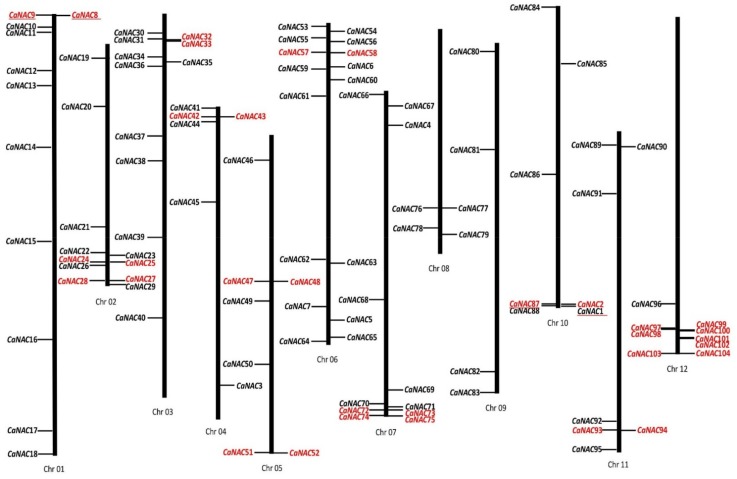
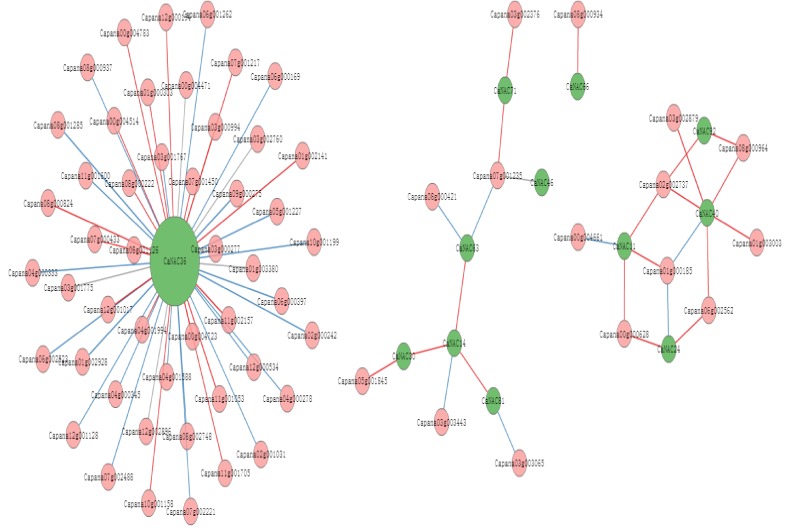
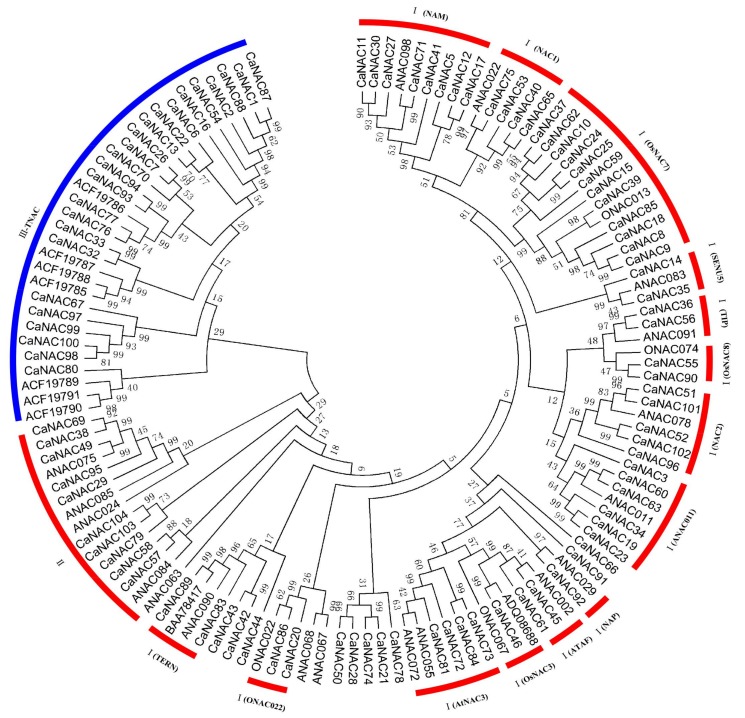
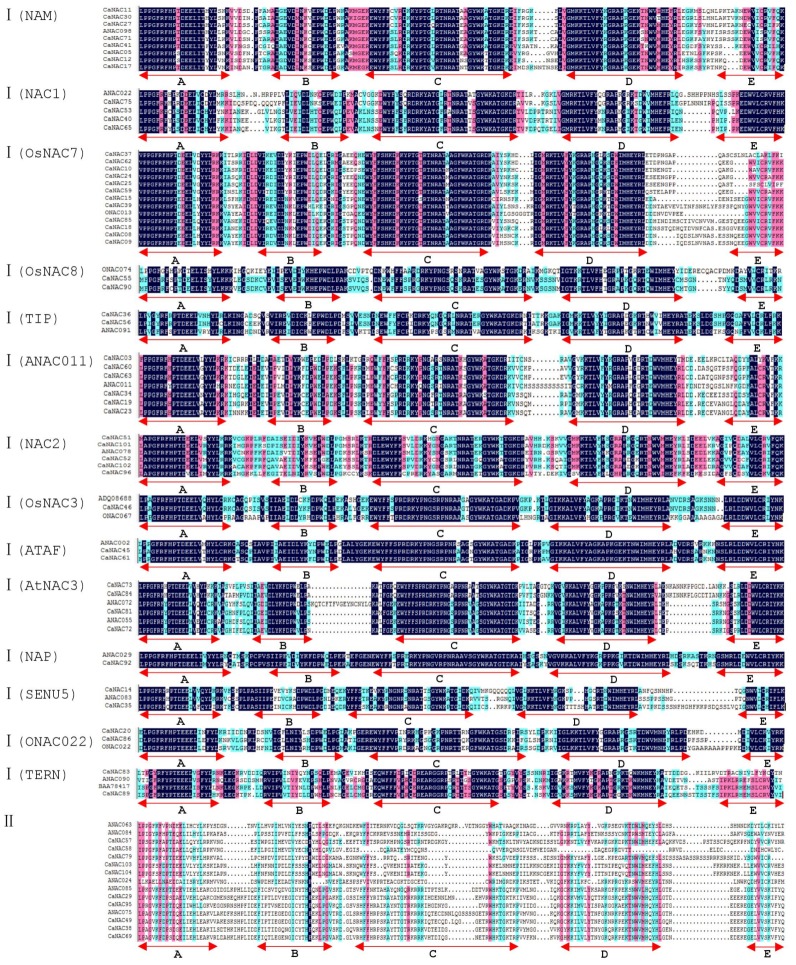
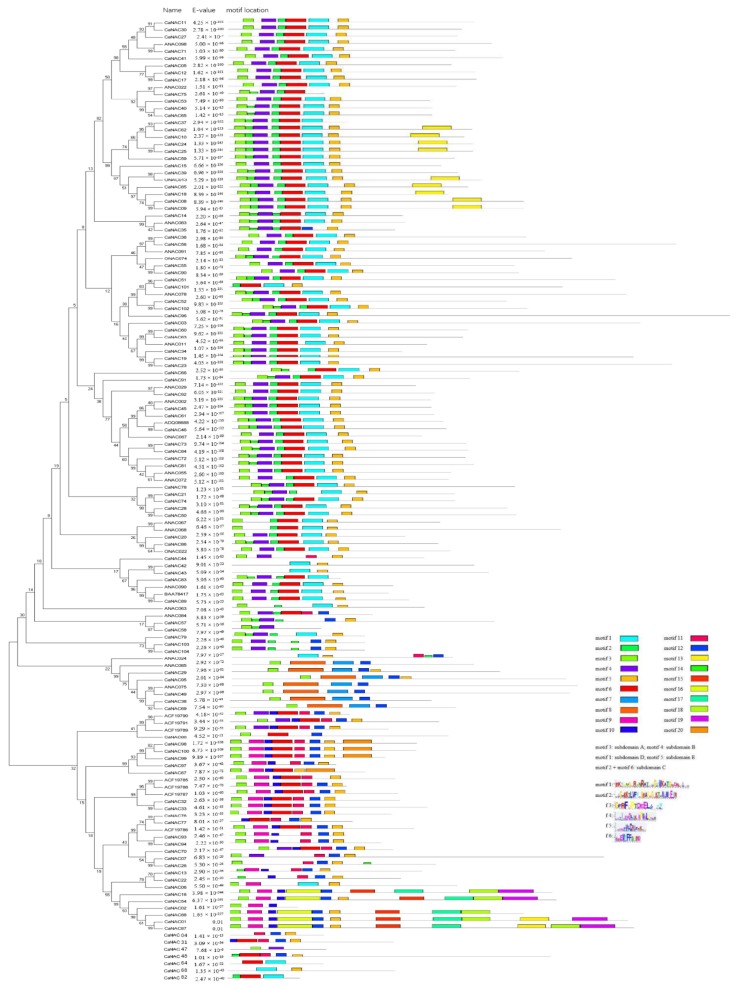
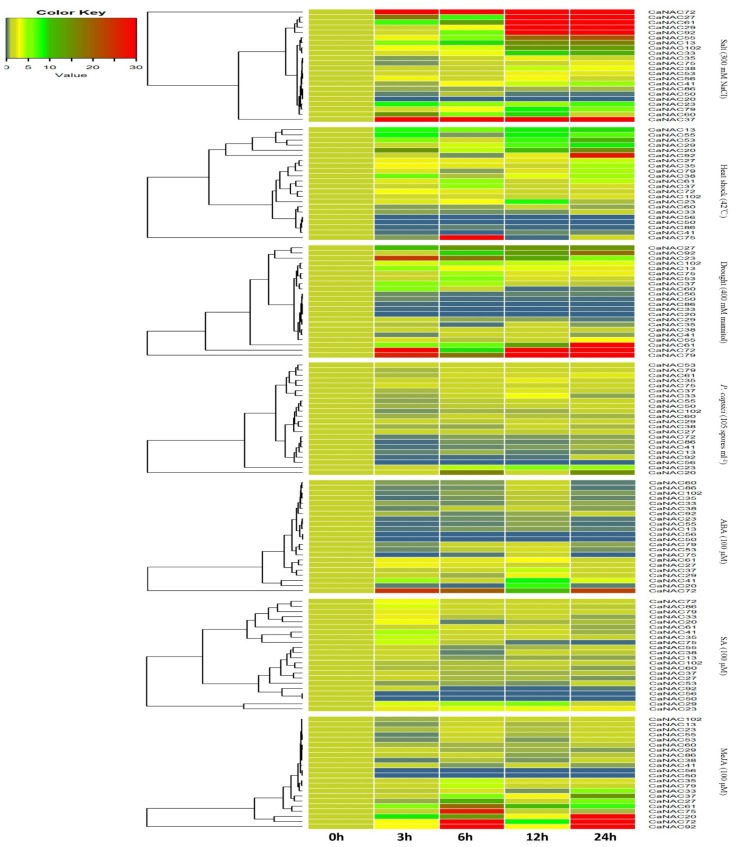
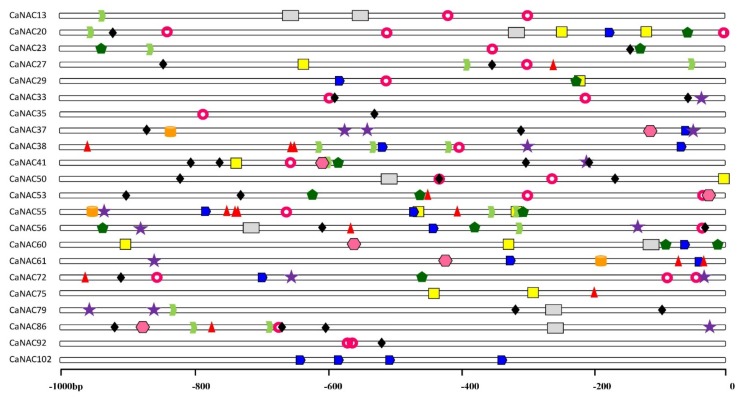
The NAM, ATAF1/2, and CUC2 (NAC) transcription factors form a large plant-specific gene family, which is involved in the regulation of tissue development in response to biotic and abiotic stress. To date, there have been no comprehensive studies investigating chromosomal location, gene structure, gene phylogeny, conserved motifs, or gene expression of NAC in pepper ( L.). The recent release of the complete genome sequence of pepper allowed us to perform a genome-wide investigation of L. NAC () proteins. In the present study, a comprehensive analysis of the gene family in pepper was performed, and a total of 104 genes were identified. Genome mapping analysis revealed that genes were enriched on four chromosomes (chromosomes 1, 2, 3, and 6). In addition, phylogenetic analysis of the NAC domains from pepper, potato, , and rice showed that genes could be clustered into three groups (I, II, and III). Group III, which contained 24 genes, was exclusive to the plant family. Gene structure and protein motif analyses showed that these genes were relatively conserved within each subgroup. The number of introns in genes varied from 0 to 8, with 83 (78.9%) of genes containing two or less introns. Promoter analysis confirmed that genes are involved in pepper growth, development, and biotic or abiotic stress responses. Further, the expression of 22 selected genes in response to seven different biotic and abiotic stresses [salt, heat shock, drought, , abscisic acid, salicylic acid (SA), and methyl jasmonate (MeJA)] was evaluated by quantitative RT-PCR to determine their stress-related expression patterns. Several putative stress-responsive genes, including 72 and 27, which are orthologs of the known stress-responsive gene 055 and potato gene 30, respectively, were highly regulated by treatment with different types of stress. Our results also showed that 36 plays an important role in the interaction network, interacting with 48 genes. Most of these genes are in the mitogen-activated protein kinase (MAPK) family. Taken together, our results provide a platform for further studies to identify the biological functions of genes.
NAM、ATAF1/2 和 CUC2(NAC)转录因子构成了一个大型的植物特异性基因家族,该家族参与了组织发育的调控,以响应生物和非生物胁迫。迄今为止,还没有关于辣椒(L.)NAC 的全基因组染色体定位、基因结构、基因系统发育、保守基序和基因表达的综合研究。辣椒全基因组序列的最新发布使我们能够对 L. NAC()蛋白进行全基因组研究。在本研究中,对辣椒基因家族进行了全面分析,共鉴定出 104 个基因。基因组图谱分析表明,基因富集在四个染色体(1、2、3 和 6 号染色体)上。此外,对辣椒、马铃薯、和水稻的 NAC 结构域的系统发育分析表明,基因可以分为三组(I、II 和 III)。III 组包含 24 个基因,仅存在于植物科中。基因结构和蛋白基序分析表明,这些基因在每个亚组内相对保守。基因的内含子数量从 0 到 8 不等,83(78.9%)个基因包含两个或更少的内含子。启动子分析证实,基因参与了辣椒的生长、发育以及生物和非生物胁迫反应。进一步地,通过定量 RT-PCR 评估了 22 个选定基因对 7 种不同生物和非生物胁迫[盐、热休克、干旱、、脱落酸、水杨酸(SA)和茉莉酸甲酯(MeJA)]的响应,以确定它们的胁迫相关表达模式。一些假定的应激响应基因,包括与已知应激响应基因 055 和马铃薯基因 30 分别为同源的 72 和 27,对不同类型的应激处理有高度的调控作用。我们的结果还表明,36 在互作网络中起着重要作用,与 48 个基因相互作用。这些基因中的大多数都属于丝裂原活化蛋白激酶(MAPK)家族。总之,我们的研究结果为进一步研究鉴定基因的生物学功能提供了一个平台。