Brolin R E, Krasna M J, Mast B A
Ann Surg. 1987 Aug;206(2):126-33. doi: 10.1097/00000658-198708000-00002.
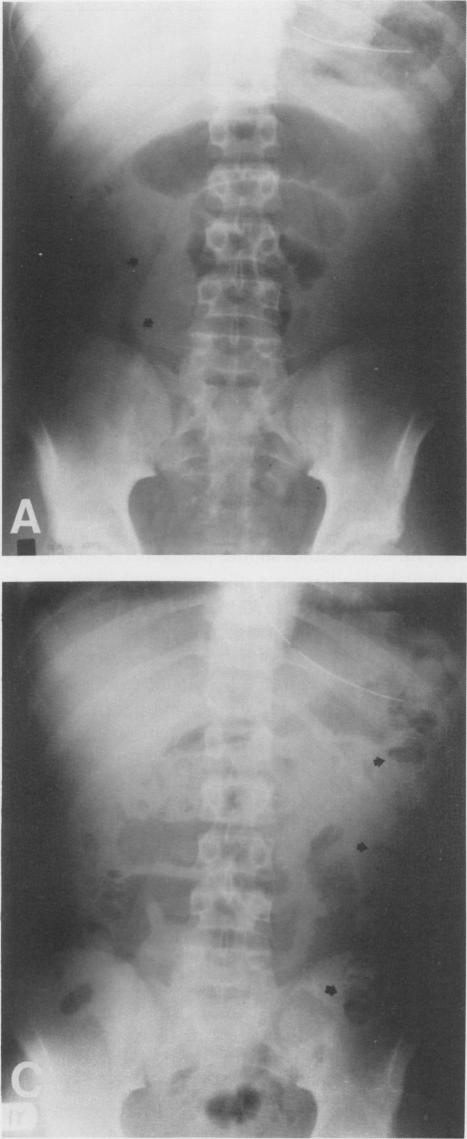
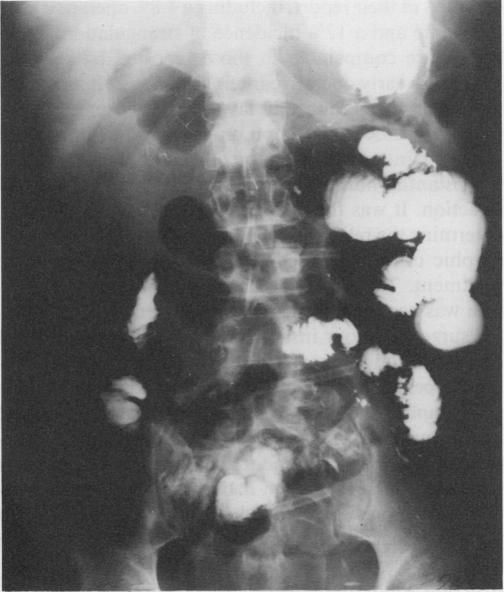
During the past 10 years 311 consecutive patients were admitted with 342 episodes of small bowel obstruction (SBO). There were 193 cases of partial small bowel obstruction (PSBO) and 149 cases of complete small bowel obstruction (CSBO) as determined by interpretation of the abdominal radiographs done on admission. The purpose of this review was to determine the reliability of the admission plain abdominal radiographs and subsequent upper gastrointestinal (UGI) contrast studies in predicting the need for operative intervention. The use of nasogastric tubes (NGT) versus nasointestinal (long) tubes (NIT) was correlated with the following outcome variables; length of hospital stay (LOS), timing of operative intervention, incidence of postoperative complications, and duration of postoperative ileus. Long tubes (NIT) were used in 64 episodes of PSBO and 81 episodes of CSBO, whereas nasogastric tubes (NGT) were used in 116 cases of PSBO and 68 cases of CSBO. Thirty-eight of 193 (19%) patients with PSBO required operation (20 of 116 with NGT and 18 of 64 with NIT), whereas 125 of 149 (84%) patients with CSBO required operation (60 of 68 with NGT and 65 of 81 with NIT). Need for operation was not correlated with whether or not long tubes passed beyond the pylorus; 50 passed versus 33 not passed in operative groups (p = 0.15). Twelve of 83 patients with NIT had operation within 24 hours versus 52 of 80 patients with NGT (p less than 0.001). In six of 64 patients who had surgery within 24 hours, complications developed versus in 39 of 99 patients operated on more than 24 hours after admission (p less than or equal to 0.001). In 29 of 83 patients treated with NIT, postoperative complications developed versus in 16 of 80 patients with NGT (p less than or equal to 0.04). The mean duration of postoperative ileus in patients with NIT was 7 days versus 4.1 days for NGT patients (p less than 0.001). The mean LOS was 12.2 days for NGT patients versus 21 days for patients with NIT (p less than 0.001). Barium UGI contrast studies were performed in 57 patients to establish the presence of obstruction. In 34 of 57 patients the UGI disclosed mechanical obstruction that required operative intervention. In the remaining 23 patients no obstruction was demonstrated, and all 23 patients recovered without operation. In conclusion, there is no inherent superiority of NIT versus NGT in the treatment of SBO.(ABSTRACT TRUNCATED AT 400 WORDS)
在过去10年中,311例连续患者因342次小肠梗阻(SBO)入院。根据入院时腹部X光片的解读,有193例部分性小肠梗阻(PSBO)和149例完全性小肠梗阻(CSBO)。本综述的目的是确定入院时腹部平片及随后的上消化道(UGI)造影检查在预测手术干预需求方面的可靠性。鼻胃管(NGT)与鼻肠(长)管(NIT)的使用与以下结果变量相关:住院时间(LOS)、手术干预时机、术后并发症发生率及术后肠梗阻持续时间。64次PSBO发作和81次CSBO发作使用了长管(NIT),而116例PSBO和68例CSBO使用了鼻胃管(NGT)。193例PSBO患者中有38例(19%)需要手术(116例使用NGT的患者中有20例,64例使用NIT的患者中有18例),而149例CSBO患者中有125例(84%)需要手术(68例使用NGT的患者中有60例,81例使用NIT的患者中有65例)。手术需求与长管是否通过幽门无关;手术组中通过的有50例,未通过的有33例(p = 0.15)。83例使用NIT的患者中有12例在24小时内进行了手术,而80例使用NGT的患者中有52例(p < 0.001)。64例在24小时内进行手术的患者中有6例出现并发症,而99例入院后24小时以上进行手术的患者中有39例出现并发症(p ≤ 0.00!)。83例接受NIT治疗的患者中有29例出现术后并发症,而80例使用NGT的患者中有16例出现并发症(p ≤ 0.04)。使用NIT的患者术后肠梗阻的平均持续时间为7天,而使用NGT的患者为4.1天(p < 0.001)。使用NGT的患者平均住院时间为12.2天,而使用NIT的患者为21天(p < 0.001)。对57例患者进行了钡剂UGI造影检查以确定梗阻的存在。57例患者中有34例UGI显示机械性梗阻,需要手术干预。其余23例患者未显示梗阻,所有23例患者未经手术即康复。总之,在SBO的治疗中,NIT与NGT没有内在的优越性。(摘要截断于400字)