Department of Rheumatology, the Second Xiangya Hospital of Central South University, Changsha, 410011, Hunan, China.
Department of Cardiology, Heart Center of Henan Provincial People's Hospital, Henan Key Laboratory for Coronary Heart Disease Prevention and Control, Central China Fuwai Hospital of Zhengzhou University, Zhengzhou, Henan, China.
BMC Psychiatry. 2022 Sep 5;22(1):591. doi: 10.1186/s12888-022-04236-z.
Systemic Lupus Erythematosus (SLE) is an autoimmune disease that affects multiple systems and increases the risk of mental disorders such as depression and anxiety. We conducted an observational, single-center, cross-sectional study to investigate the relationship between depression, anxiety, and SLE disease activity.
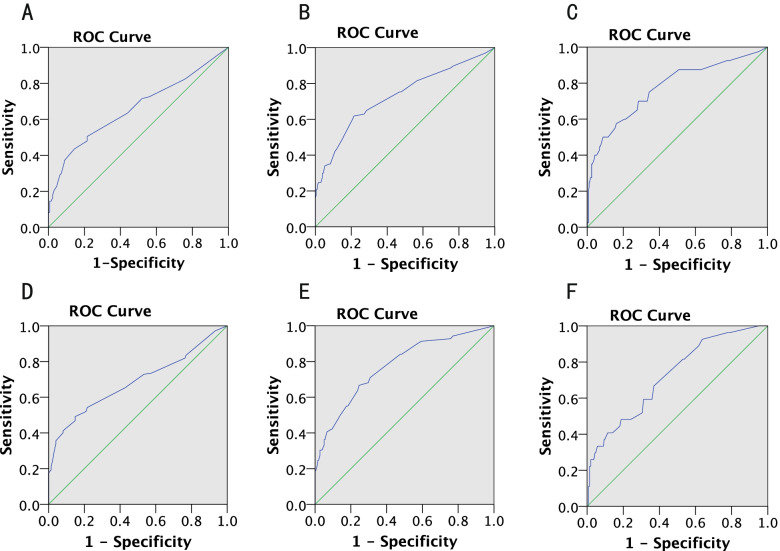
The Patient Health Questionnaire 9 (PHQ-9) was used to assess depression, and the 7-item Generalized Anxiety Disorders Scale was used to assess anxiety (GAD-7). Using the chi-square/exact Fisher's tests, socio-demographic data, clinical and other characteristics of SLE patients were compared between depression or anxiety and non-depression/non-anxiety groups. To identify optimal levels of Systemic Lupus Erythematosus Disease Activity Index (SLEDAI) for predicting depression or anxiety, receiver-operator curves (ROC) were drawn.
Among the 325 patients involved in this study, patients with depression or anxiety had significantly higher SLE activity (p < 0.001), and more frequent musculoskeletal (p < 0.05) and neuropsychiatric symptoms (p < 0.05). Depression and anxiety are more common in the moderate-severe active group than in the inactive-mild active group (depression: OR 3.350, 95%CI 2.015, 5.570, p < 0.001; anxiety: OR 4.085, 95%CI 2.493, 6.692, p < 0.001). The optimal SLEDAI cutoff value of 8.5 predicted depression with a sensitivity of 50.5% and a specificity of 78.4% (AUC 0.660, p < 0.001) and anxiety with a sensitivity of 54.2% and a specificity of 78.4% (AUC 0.684, p < 0.001).
SLE disease activity is positively associated with the severity of depression and anxiety. Those patients whose SLEDAI scores are greater than 8.5 are more likely to suffer from mental disorders which require additional attention to them.
系统性红斑狼疮(SLE)是一种影响多个系统的自身免疫性疾病,增加了抑郁和焦虑等精神障碍的风险。我们进行了一项观察性、单中心、横断面研究,旨在探讨抑郁、焦虑与 SLE 疾病活动之间的关系。
采用患者健康问卷 9 项(PHQ-9)评估抑郁,采用 7 项广泛性焦虑症量表(GAD-7)评估焦虑。采用卡方检验或确切 Fisher 检验比较抑郁或焦虑与非抑郁/非焦虑组 SLE 患者的社会人口统计学数据、临床及其他特征。为了确定系统性红斑狼疮疾病活动指数(SLEDAI)预测抑郁或焦虑的最佳水平,绘制了受试者工作特征曲线(ROC)。
在纳入的 325 例患者中,抑郁或焦虑患者的 SLE 活动度显著更高(p<0.001),且更频繁出现肌肉骨骼(p<0.05)和神经精神症状(p<0.05)。在中重度活动组,抑郁和焦虑比轻度活动组更常见(抑郁:OR 3.350,95%CI 2.015,5.570,p<0.001;焦虑:OR 4.085,95%CI 2.493,6.692,p<0.001)。SLEDAI 最佳截断值为 8.5,预测抑郁的敏感度为 50.5%,特异性为 78.4%(AUC 0.660,p<0.001),预测焦虑的敏感度为 54.2%,特异性为 78.4%(AUC 0.684,p<0.001)。
SLE 疾病活动与抑郁和焦虑的严重程度呈正相关。SLEDAI 评分大于 8.5 的患者更有可能患精神障碍,需要对其给予额外关注。