Internal Medicine and Nephrology, Jura Bernois Hospital, Berne, Moutier, Switzerland.
Nephrology and Hypertension Service, Geneva University Hospitals, Geneva, Switzerland.
Int J Equity Health. 2022 Sep 5;21(1):126. doi: 10.1186/s12939-022-01715-3.
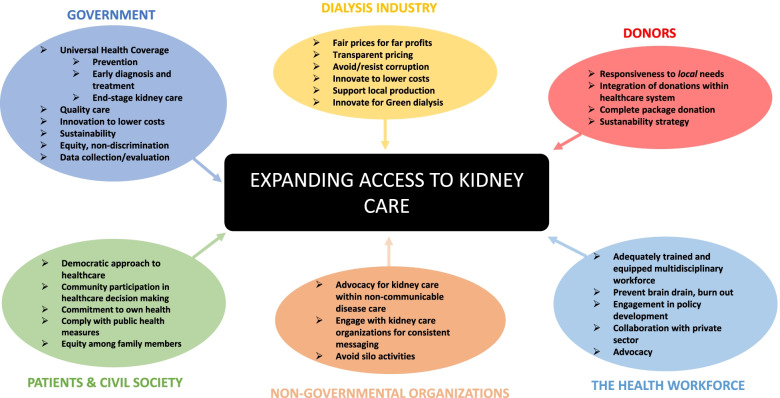
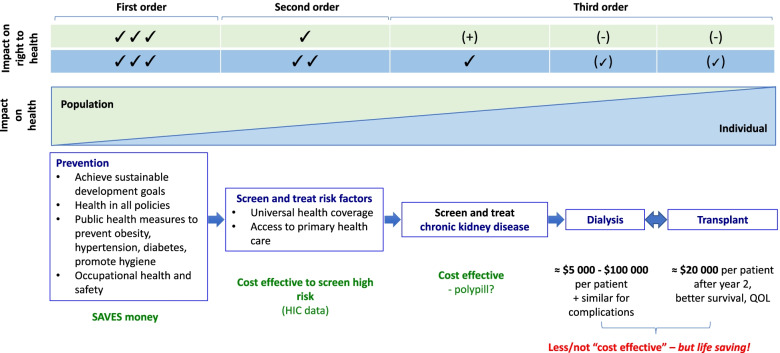
Realization of the individual's right to health in settings such as sub-Saharan Africa, where health care adequate resources are lacking, is challenging. This paper demonstrates this challenge by illustrating the example of dialysis, which is an expensive but life-saving treatment for people with kidney failure. Dialysis resources, if available in sub-Saharan Africa, are generally limited but in high demand, and clinicians at the bedside are faced with deciding who lives and who dies. When resource limitations exist, transparent and objective priority setting regarding access to such expensive care is required to improve equity across all health needs in a population. This process however, which weighs individual and population health needs, denies some the right to health by limiting access to health care.This paper unpacks what it means to recognize the right to health in sub-Saharan Africa, acknowledging the current resource availability and scarcity, and the larger socio-economic context. We argue, the first order of the right to health, which should always be realized, includes protection of health, i.e. prevention of disease through public health and health-in-all policy approaches. The second order right to health care would include provision of universal health coverage to all, such that risk factors and diseases can be effectively and equitably detected and treated early, to prevent disease progression or development of complications, and ultimately reduce the demand for expensive care. The third order right to health care would include equitable access to expensive care. In this paper, we argue that recognition of the inequities in realization of the right to health between individuals with "expensive" needs versus those with more affordable needs, countries must determine if, how, and when they will begin to provide such expensive care, so as to minimize these inequities as rapidly as possible. Such a process requires good governance, multi-stakeholder engagement, transparency, communication and a commitment to progress. We conclude the paper by emphasizing that striving towards the progressive realization of the right to health for all people living in SSA is key to achieving equity in access to quality health care and equitable opportunities for each individual to maximize their own state of health.
在撒哈拉以南非洲等卫生资源不足的地方,实现个人的健康权具有挑战性。本文通过举例说明透析治疗来展示这一挑战,透析是一种昂贵但可以挽救肾衰竭患者生命的治疗方法。如果在撒哈拉以南非洲有透析资源,一般来说,这些资源是有限的,但需求却很高,床边的临床医生必须决定谁生谁死。当资源有限时,需要透明和客观地确定获取这种昂贵治疗的优先顺序,以提高所有人在所有健康需求方面的公平性。然而,这种权衡个人和人群健康需求的过程,通过限制获得医疗保健的机会,剥夺了一些人获得健康的权利。本文深入探讨了在撒哈拉以南非洲承认健康权的含义,承认当前的资源可利用性和稀缺性,以及更大的社会经济背景。我们认为,健康权的首要顺序,即始终应实现的顺序,包括保护健康,即通过公共卫生和全健康政策方法预防疾病。第二顺序的健康权将包括为所有人提供全民健康覆盖,以便能够及早有效地发现和治疗风险因素和疾病,以防止疾病进展或并发症的发生,并最终减少对昂贵医疗的需求。第三顺序的健康权包括公平获得昂贵医疗服务的机会。在本文中,我们认为,认识到那些有“昂贵”需求的人与那些有更可负担得起的需求的人之间在实现健康权方面的不平等,各国必须确定他们是否、如何以及何时开始提供这种昂贵的医疗服务,以便尽快最大限度地减少这些不平等。这一过程需要良好的治理、多方利益攸关方参与、透明度、沟通和对取得进展的承诺。最后,我们强调,努力为生活在撒哈拉以南非洲的所有人逐步实现健康权,是实现获得高质量医疗保健公平和每个人最大限度地提高自身健康状况的平等机会的关键。