Laboratorio de Inmunobiología y Diagnóstico Molecular, Facultad de Ciencias Químico Biológicas, Universidad Autónoma de Guerrero, Chilpancingo de los Bravo, Guerrero, Mexico.
Unidad de Investigación en Inmunología y Proteómica, Laboratorio de Investigación en COVID-19, Hospital Infantil de México "Federico Gómez", Mexico City, Mexico.
Sci Rep. 2022 Sep 5;12(1):15057. doi: 10.1038/s41598-022-18517-w.
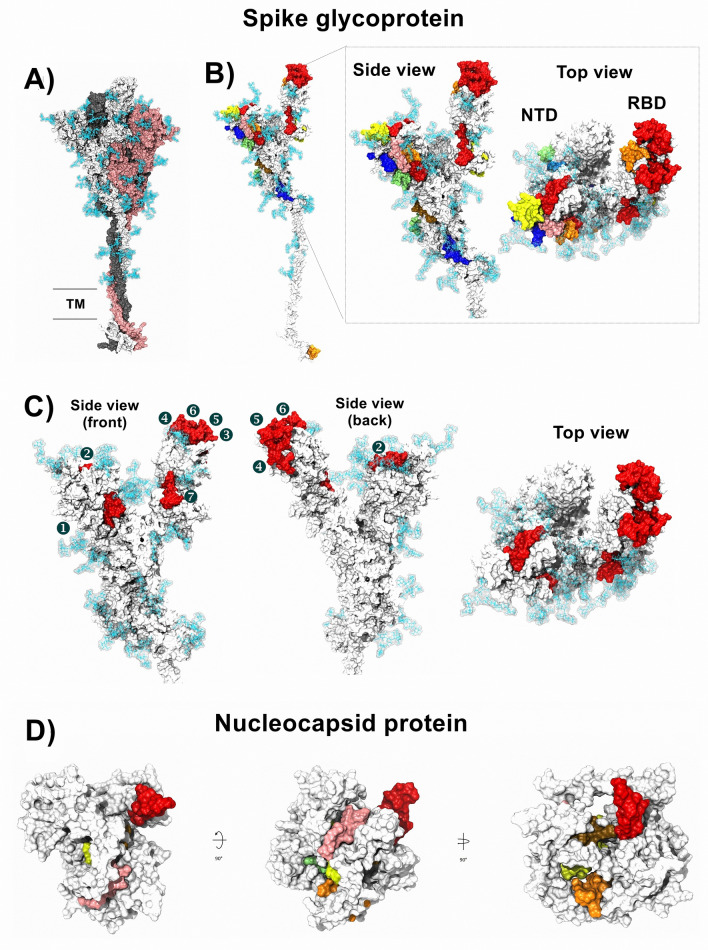
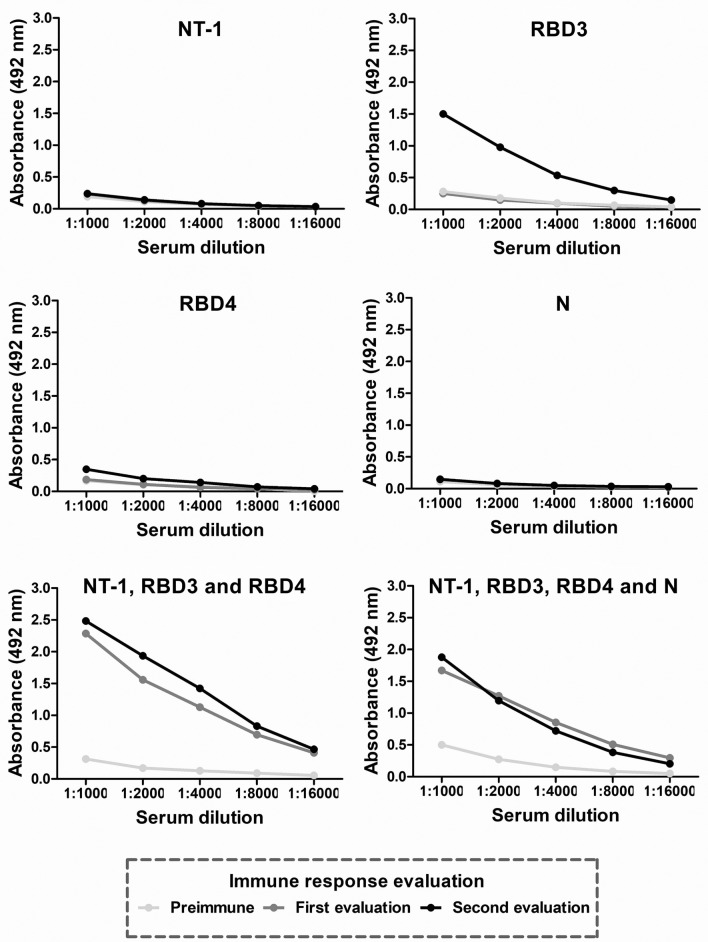
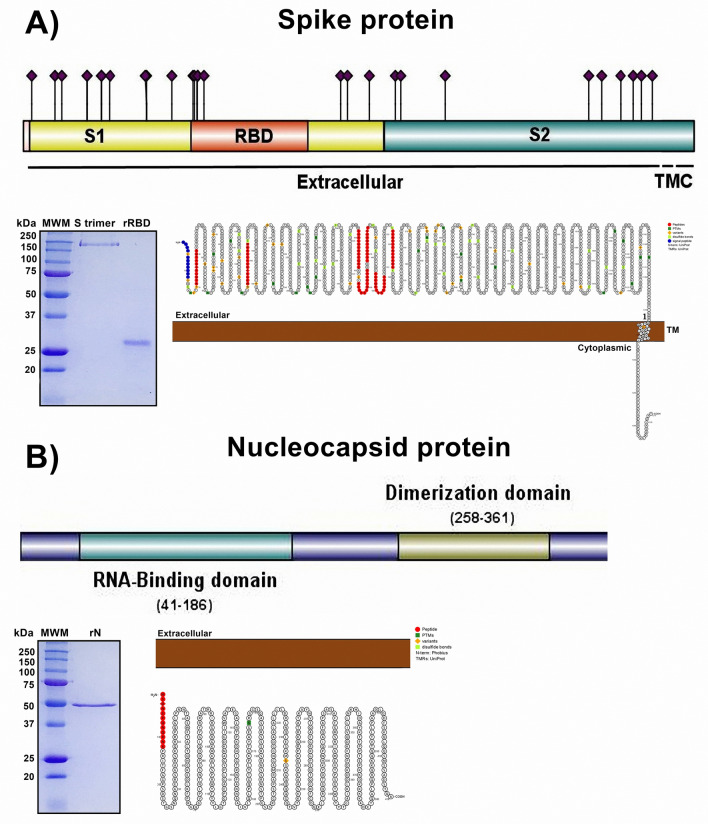
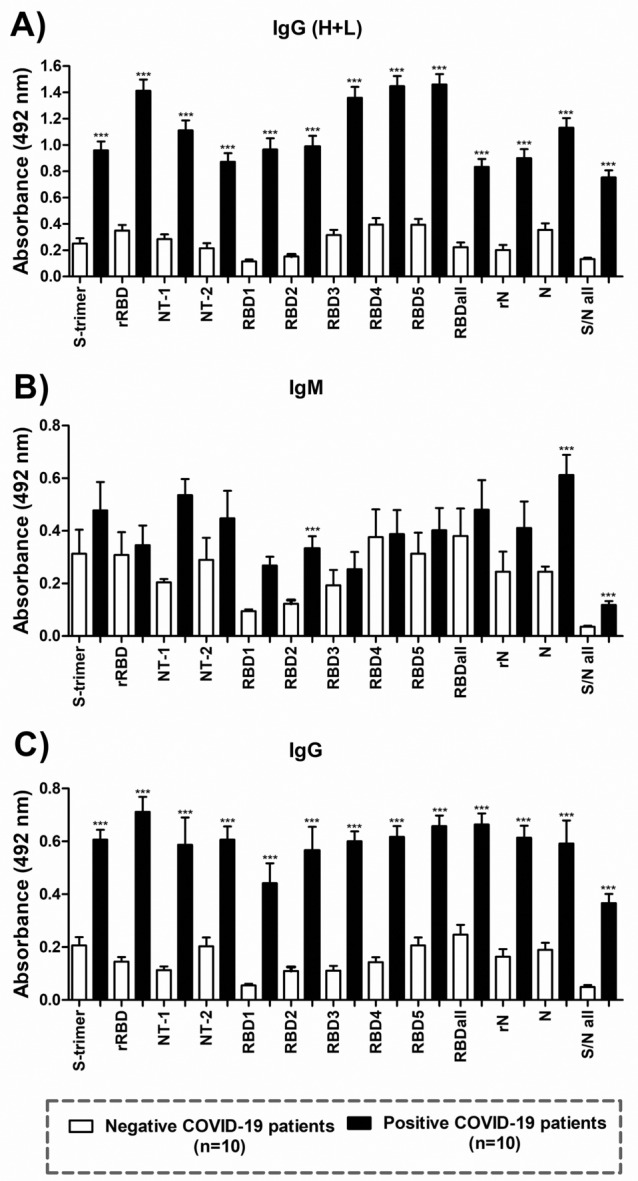
SARS-CoV-2 contains four structural proteins, two of which, the spike and nucleocapsid, are commonly used for the standardization of novel methods for antibody detection; however, some limitations in their use have been observed due to the homology of this virus with other phylogenetically-related viruses. We performed in silico analysis to search for novel immunogenic and antigenic peptides. A total of twenty-five peptides were preliminarily selected, located in the 3D structure of both proteins. Finally, eight peptides were selected: one located in the N protein and seven in the S1 domain of the spike protein. Additionally, the localization of selected peptides in 2D structures and possible changes in the sequences of these peptides in SARS-CoV-2 variants of concern were analyzed. All peptides were synthetized in MAP8 format, and recombinant S (trimer and RBD) and N proteins were used as antigens to search for antibodies in serum samples derived from COVID-19 patients, and for antibody response in New Zealand rabbits. Results showed high recognition of the serum derived from COVID-19 patients to all selected peptides; however, only the RBD3 peptide induced antibody production. In conclusion, this work provides evidence for a new strategy in peptide selection and its use for antibody detection or antibody production in animals.
SARS-CoV-2 包含四种结构蛋白,其中两种,刺突蛋白和核衣壳蛋白,常用于抗体检测新方法的标准化;然而,由于该病毒与其他系统发育相关病毒的同源性,在使用过程中观察到了一些限制。我们进行了计算机分析,以寻找新的免疫原性和抗原性肽。总共初步选择了 25 个肽,位于这两种蛋白质的 3D 结构中。最后,选择了 8 个肽:1 个位于 N 蛋白,7 个位于刺突蛋白的 S1 结构域。此外,还分析了所选肽在 2D 结构中的定位以及 SARS-CoV-2 关注变体中这些肽序列的可能变化。所有肽均以 MAP8 格式合成,并使用重组 S(三聚体和 RBD)和 N 蛋白作为抗原,在源自 COVID-19 患者的血清样本中寻找抗体,并在新西兰兔中寻找抗体反应。结果表明,源自 COVID-19 患者的血清对所有选定的肽均具有高识别性;然而,只有 RBD3 肽诱导了抗体产生。总之,这项工作为肽选择的新策略及其在动物中用于抗体检测或抗体生产提供了证据。