Metastasis Research Center, Department of Cancer Biology, University of Texas MD Anderson Cancer Center, Houston, Texas, USA.
Department of Microbiology, Immunology and Biochemistry, University of Tennessee Health Science Center College of Medicine, Memphis, Tennessee, USA.
JCI Insight. 2020 Sep 17;5(18):142386. doi: 10.1172/jci.insight.142386.
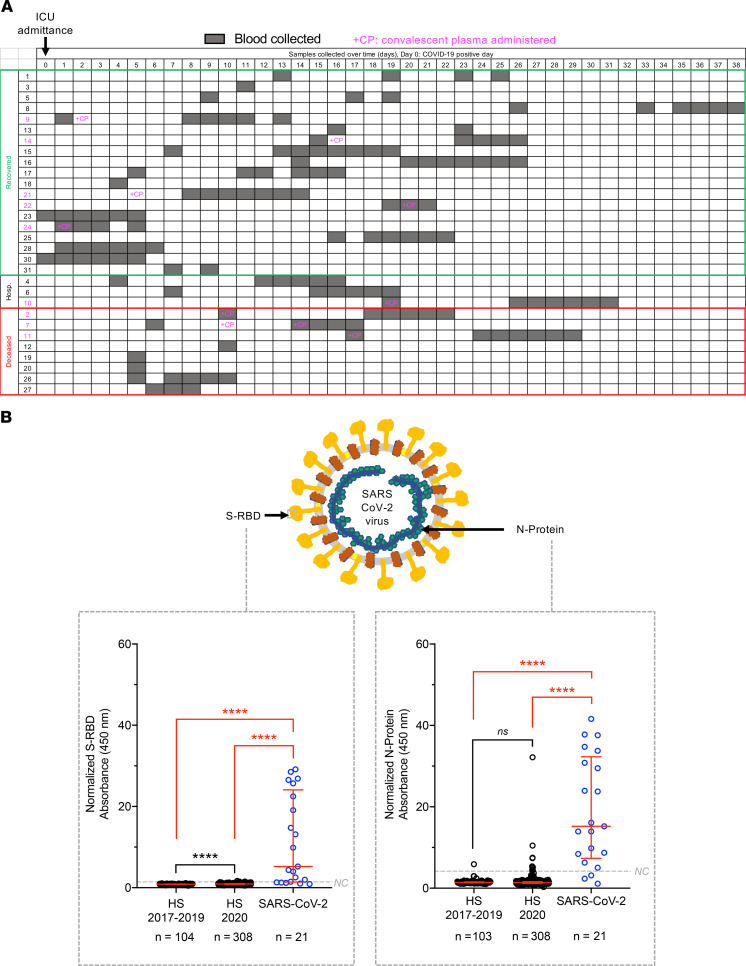
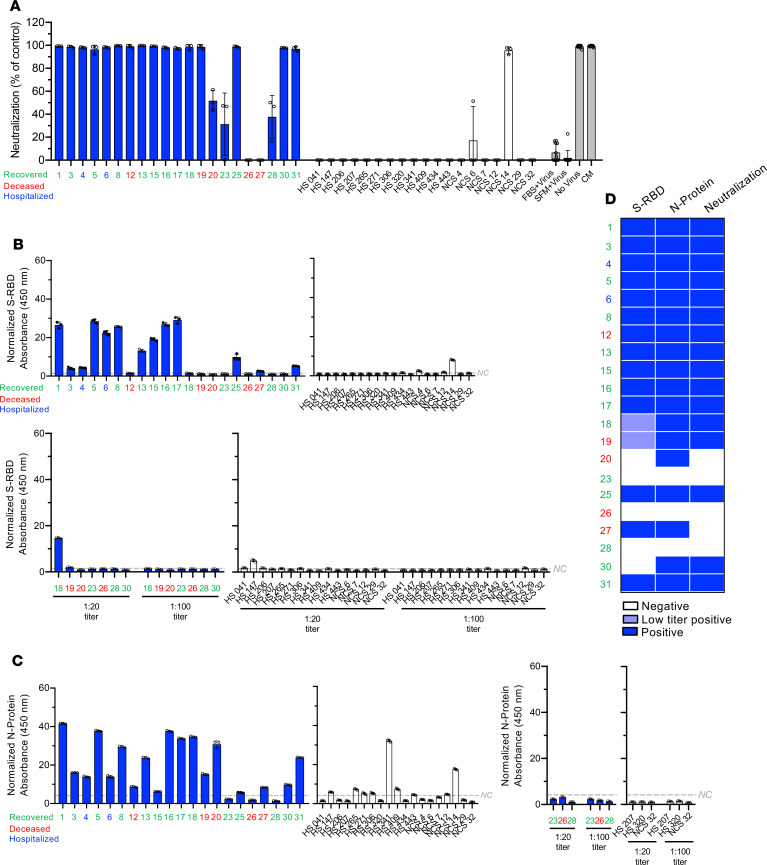
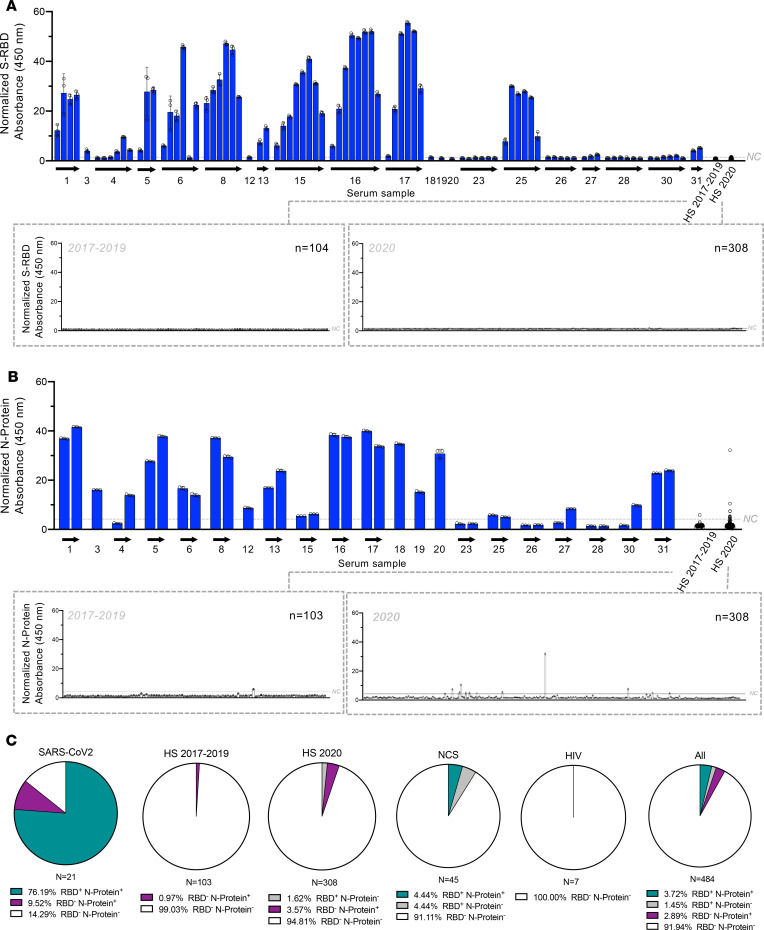
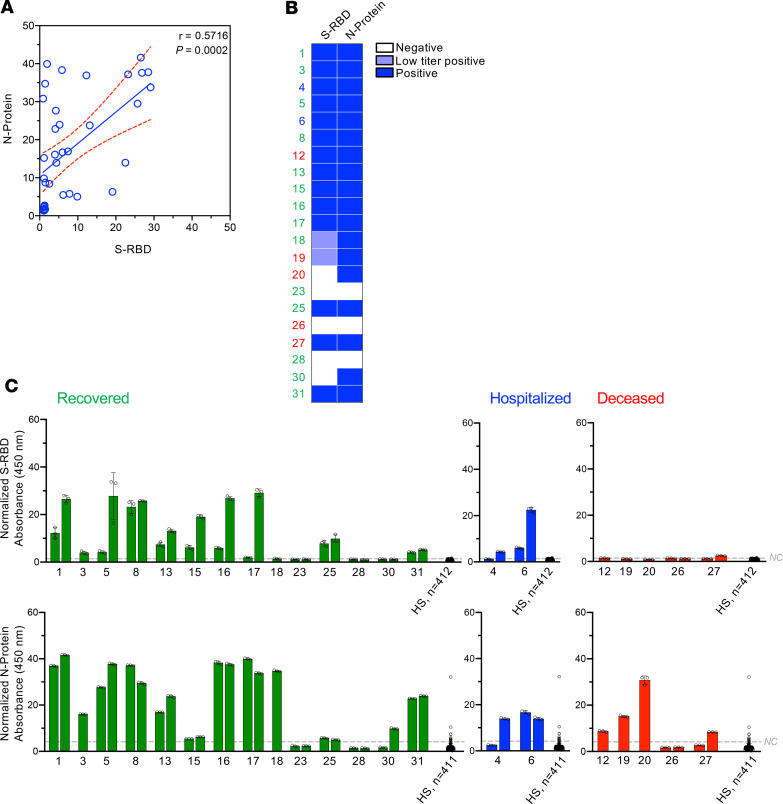
Evaluation of potential immunity against the novel severe acute respiratory syndrome (SARS) coronavirus that emerged in 2019 (SARS-CoV-2) is essential for health, as well as social and economic recovery. Generation of antibody response to SARS-CoV-2 (seroconversion) may inform on acquired immunity from prior exposure, and antibodies against the SARS-CoV-2 spike protein receptor binding domain (S-RBD) are speculated to neutralize virus infection. Some serology assays rely solely on SARS-CoV-2 nucleocapsid protein (N-protein) as the antibody detection antigen; however, whether such immune responses correlate with S-RBD response and COVID-19 immunity remains unknown. Here, we generated a quantitative serological ELISA using recombinant S-RBD and N-protein for the detection of circulating antibodies in 138 serial serum samples from 30 reverse transcription PCR-confirmed, SARS-CoV-2-hospitalized patients, as well as 464 healthy and non-COVID-19 serum samples that were collected between June 2017 and June 2020. Quantitative detection of IgG antibodies against the 2 different viral proteins showed a moderate correlation. Antibodies against N-protein were detected at a rate of 3.6% in healthy and non-COVID-19 sera collected during the pandemic in 2020, whereas 1.9% of these sera were positive for S-RBD. Approximately 86% of individuals positive for S-RBD-binding antibodies exhibited neutralizing capacity, but only 74% of N-protein-positive individuals exhibited neutralizing capacity. Collectively, our studies show that detection of N-protein-binding antibodies does not always correlate with presence of S-RBD-neutralizing antibodies and caution against the extensive use of N-protein-based serology testing for determination of potential COVID-19 immunity.
评估针对 2019 年出现的新型严重急性呼吸综合征(SARS)冠状病毒(SARS-CoV-2)的潜在免疫力对于健康、社会和经济恢复至关重要。针对 SARS-CoV-2 的抗体反应(血清转化)可能反映了先前暴露引起的获得性免疫,并且针对 SARS-CoV-2 刺突蛋白受体结合域(S-RBD)的抗体被推测能够中和病毒感染。一些血清学检测仅依赖 SARS-CoV-2 核衣壳蛋白(N 蛋白)作为抗体检测抗原;然而,这种免疫反应是否与 S-RBD 反应和 COVID-19 免疫力相关仍不清楚。在这里,我们使用重组 S-RBD 和 N 蛋白生成了一种定量血清学 ELISA,用于检测 30 名经逆转录聚合酶链反应(RT-PCR)确认的 SARS-CoV-2 住院患者的 138 份连续血清样本以及 464 份在 2017 年 6 月至 2020 年 6 月期间采集的健康和非 COVID-19 血清样本中的循环抗体。针对这 2 种不同病毒蛋白的 IgG 抗体的定量检测显示出中等相关性。在 2020 年大流行期间采集的健康和非 COVID-19 血清中,N 蛋白的抗体检测率为 3.6%,而 S-RBD 的阳性率为 1.9%。大约 86%的 S-RBD 结合抗体阳性个体表现出中和能力,但仅有 74%的 N 蛋白阳性个体表现出中和能力。总之,我们的研究表明,N 蛋白结合抗体的检测并不总是与 S-RBD 中和抗体的存在相关,并提醒不要广泛使用基于 N 蛋白的血清学检测来确定潜在的 COVID-19 免疫力。