Department of Clinical Neurosciences, University of Cambridge, UK.
Division of Anaesthesia, Department of Medicine, University of Cambridge, UK.
Brain. 2022 Nov 21;145(11):4097-4107. doi: 10.1093/brain/awac321.
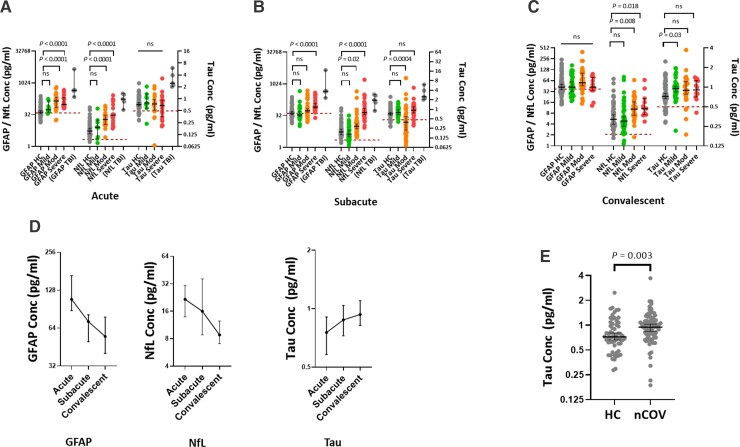
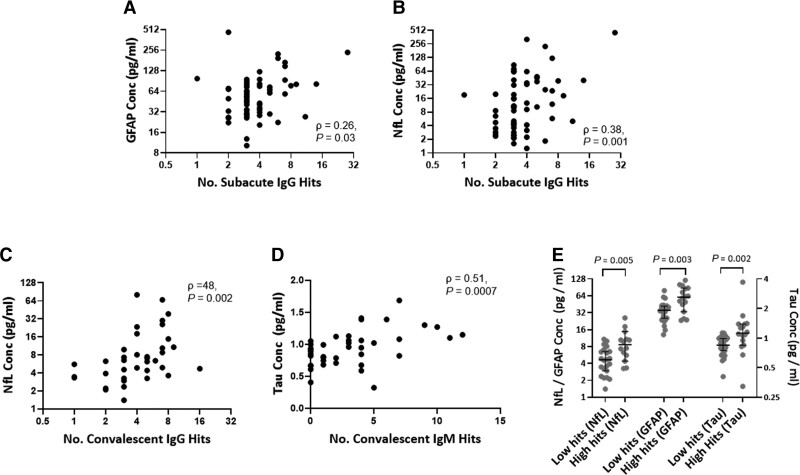
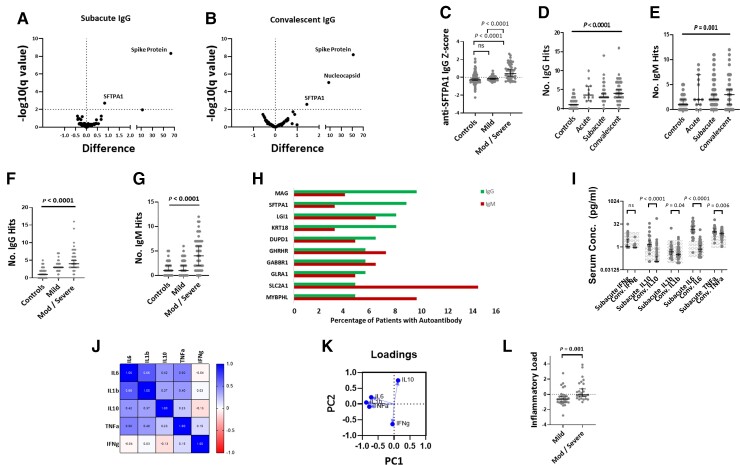
COVID-19 is associated with neurological complications including stroke, delirium and encephalitis. Furthermore, a post-viral syndrome dominated by neuropsychiatric symptoms is common, and is seemingly unrelated to COVID-19 severity. The true frequency and underlying mechanisms of neurological injury are unknown, but exaggerated host inflammatory responses appear to be a key driver of COVID-19 severity. We investigated the dynamics of, and relationship between, serum markers of brain injury [neurofilament light (NfL), glial fibrillary acidic protein (GFAP) and total tau] and markers of dysregulated host response (autoantibody production and cytokine profiles) in 175 patients admitted with COVID-19 and 45 patients with influenza. During hospitalization, sera from patients with COVID-19 demonstrated elevations of NfL and GFAP in a severity-dependent manner, with evidence of ongoing active brain injury at follow-up 4 months later. These biomarkers were associated with elevations of pro-inflammatory cytokines and the presence of autoantibodies to a large number of different antigens. Autoantibodies were commonly seen against lung surfactant proteins but also brain proteins such as myelin associated glycoprotein. Commensurate findings were seen in the influenza cohort. A distinct process characterized by elevation of serum total tau was seen in patients at follow-up, which appeared to be independent of initial disease severity and was not associated with dysregulated immune responses unlike NfL and GFAP. These results demonstrate that brain injury is a common consequence of both COVID-19 and influenza, and is therefore likely to be a feature of severe viral infection more broadly. The brain injury occurs in the context of dysregulation of both innate and adaptive immune responses, with no single pathogenic mechanism clearly responsible.
COVID-19 与包括中风、谵妄和脑炎在内的神经系统并发症有关。此外,一种以神经精神症状为主的病毒性后综合征很常见,且似乎与 COVID-19 的严重程度无关。神经损伤的真实频率和潜在机制尚不清楚,但宿主炎症反应过度似乎是 COVID-19 严重程度的一个关键驱动因素。我们研究了 175 例 COVID-19 住院患者和 45 例流感患者血清脑损伤标志物[神经丝轻链(NfL)、胶质纤维酸性蛋白(GFAP)和总tau]与失调宿主反应标志物(自身抗体产生和细胞因子谱)之间的动态关系。在住院期间,COVID-19 患者的血清 NfL 和 GFAP 呈严重程度依赖性升高,在 4 个月后随访时,证据表明持续存在活跃的脑损伤。这些生物标志物与促炎细胞因子的升高和针对大量不同抗原的自身抗体的存在有关。自身抗体通常针对肺表面活性剂蛋白,但也针对脑蛋白,如髓鞘相关糖蛋白。在流感队列中也观察到了类似的发现。在随访患者中观察到一种以血清总 tau 升高为特征的独特过程,与初始疾病严重程度无关,与 NfL 和 GFAP 不同,它与失调的免疫反应无关。这些结果表明,脑损伤是 COVID-19 和流感的常见后果,因此可能更广泛地是严重病毒感染的一个特征。脑损伤发生在固有和适应性免疫反应失调的情况下,没有单一的致病机制明确负责。