Department of Emergency and Critical Care Medicine, Nara Medical University, Kashihara City, Nara, Japan.
PLoS One. 2022 Sep 6;17(9):e0273787. doi: 10.1371/journal.pone.0273787. eCollection 2022.
The evaluation of the effects of resuscitation activity factors on the outcome of out-of-hospital cardiopulmonary arrest (OHCA) requires consideration of the interactions among these factors. To improve OHCA success rates, this study assessed the prognostic interactions resulting from simultaneously modifying two prehospital factors using a trained machine learning model.
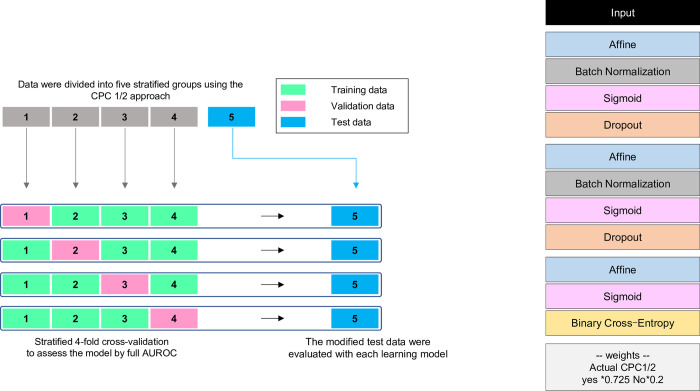
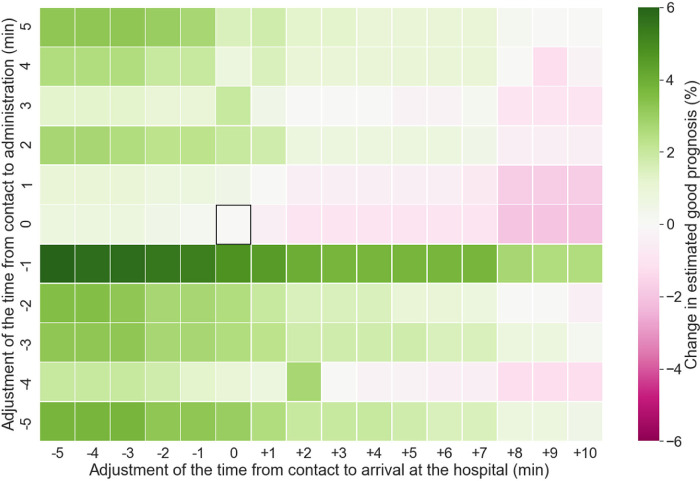
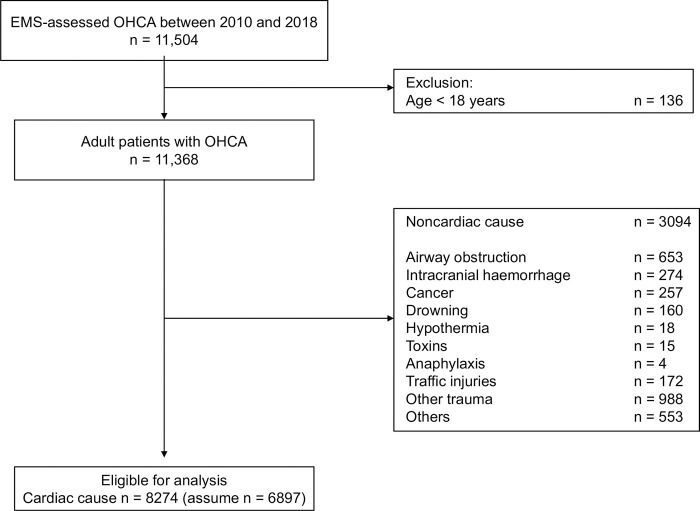
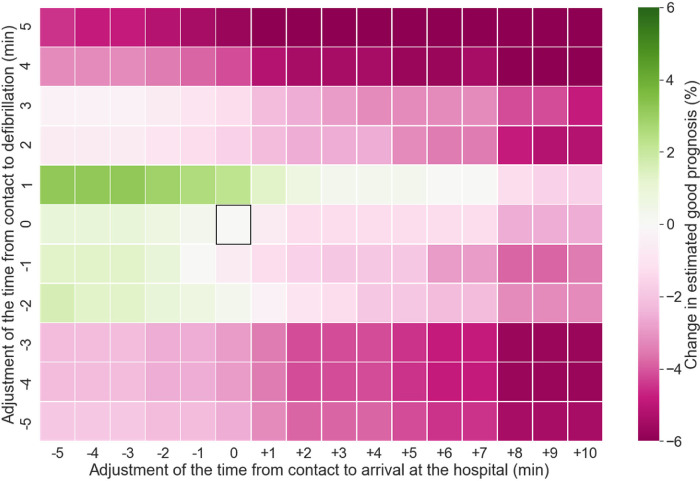
We enrolled 8274 OHCA patients resuscitated by emergency medical services (EMS) in Nara prefecture, Japan, with a unified activity protocol between January 2010 and December 2018; patients younger than 18 and those with noncardiogenic cardiopulmonary arrest were excluded. Next, a three-layer neural network model was constructed to predict the cerebral performance category score of 1 or 2 at one month based on 24 features of prehospital EMS activity. Using this model, we evaluated the prognostic impact of continuously and simultaneously varying the transport time and the defibrillation or drug-administration time in the test data based on heatmaps.
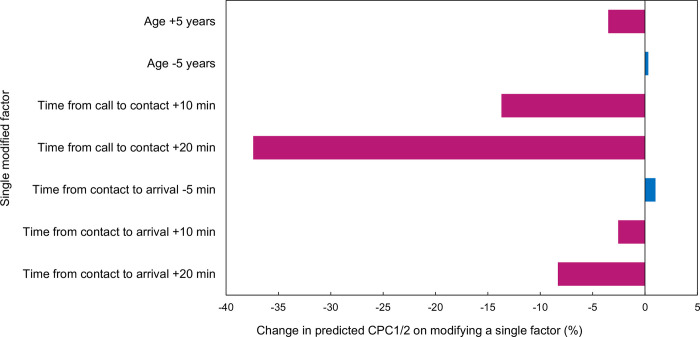
The average class sensitivity of the prognostic model was more than 0.86, with a full area under the receiver operating characteristics curve of 0.94 (95% confidence interval of 0.92-0.96). By adjusting the two time factors simultaneously, a nonlinear interaction was obtained between the two adjustments, instead of a linear prediction of the outcome.
Modifications to the parameters using a machine-learning-based prognostic model indicated an interaction among the prognostic factors. These findings could be used to evaluate which factors should be prioritized to reduce time in the trained region of machine learning in order to improve EMS activities.
评估复苏活动因素对院外心搏骤停(OHCA)结局的影响,需要考虑这些因素之间的相互作用。为了提高 OHCA 的成功率,本研究使用经过训练的机器学习模型评估同时修改两个院前因素所产生的预后相互作用。
我们纳入了日本奈良县 2010 年 1 月至 2018 年 12 月间由急救医疗服务(EMS)复苏的 8274 例 OHCA 患者;排除年龄小于 18 岁和非心源性心搏骤停的患者。接下来,构建了一个三层神经网络模型,基于院前 EMS 活动的 24 个特征,预测一个月时的脑功能分类评分 1 或 2。使用该模型,我们基于热图评估了在测试数据中连续且同时改变转运时间和除颤或药物给药时间对预后的影响。
预后模型的平均类灵敏度均大于 0.86,接受者操作特征曲线下面积为 0.94(95%置信区间为 0.92-0.96)。通过同时调整两个时间因素,两个调整之间存在非线性相互作用,而不是对结果的线性预测。
使用基于机器学习的预后模型调整参数表明预后因素之间存在相互作用。这些发现可用于评估应优先考虑哪些因素,以减少在机器学习训练区域的时间,从而改善 EMS 活动。