Toy Jake, Bosson Nichole, Schlesinger Shira, Gausche-Hill Marianne, Stratton Samuel
University of California Los Angeles, Fielding School of Public Health, 650 Charles E Young Drive South, Los Angeles, CA 90095, USA.
Harbor-UCLA Department of Emergency Medicine & The Lundquist Research Institute, 1000 W Carson Street, Torrance, CA 90502, USA.
Resusc Plus. 2023 Nov 1;16:100491. doi: 10.1016/j.resplu.2023.100491. eCollection 2023 Dec.
Artificial intelligence (AI) has demonstrated significant potential in supporting emergency medical services personnel during out-of-hospital cardiac arrest (OHCA) care; however, the extent of research evaluating this topic is unknown. This scoping review examines the breadth of literature on the application of AI in early OHCA care.
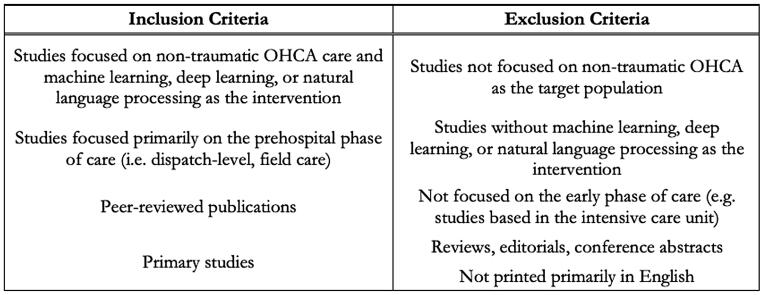
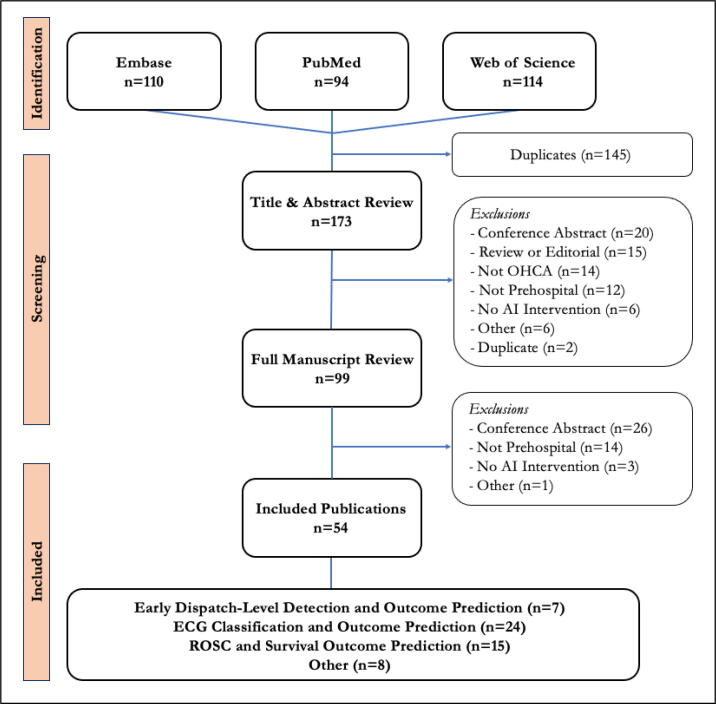
We conducted a search of PubMed®, Embase, and Web of Science in accordance with the Preferred Reporting Items for Systematic Reviews and Meta-Analyses Extension for Scoping Reviews guidelines. Articles focused on non-traumatic OHCA and published prior to January 18th, 2023 were included. Studies were excluded if they did not use an AI intervention (including machine learning, deep learning, or natural language processing), or did not utilize data from the prehospital phase of care.
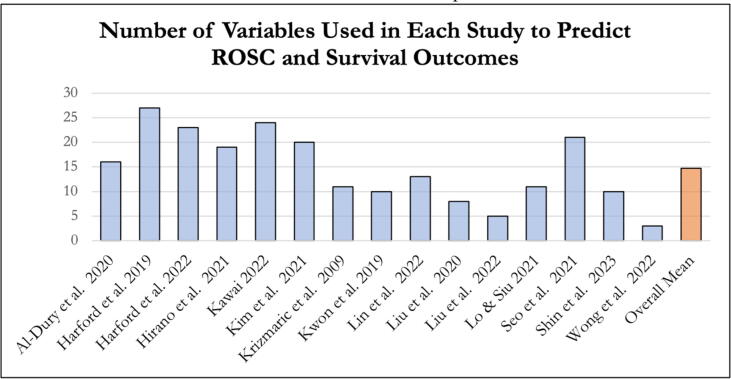
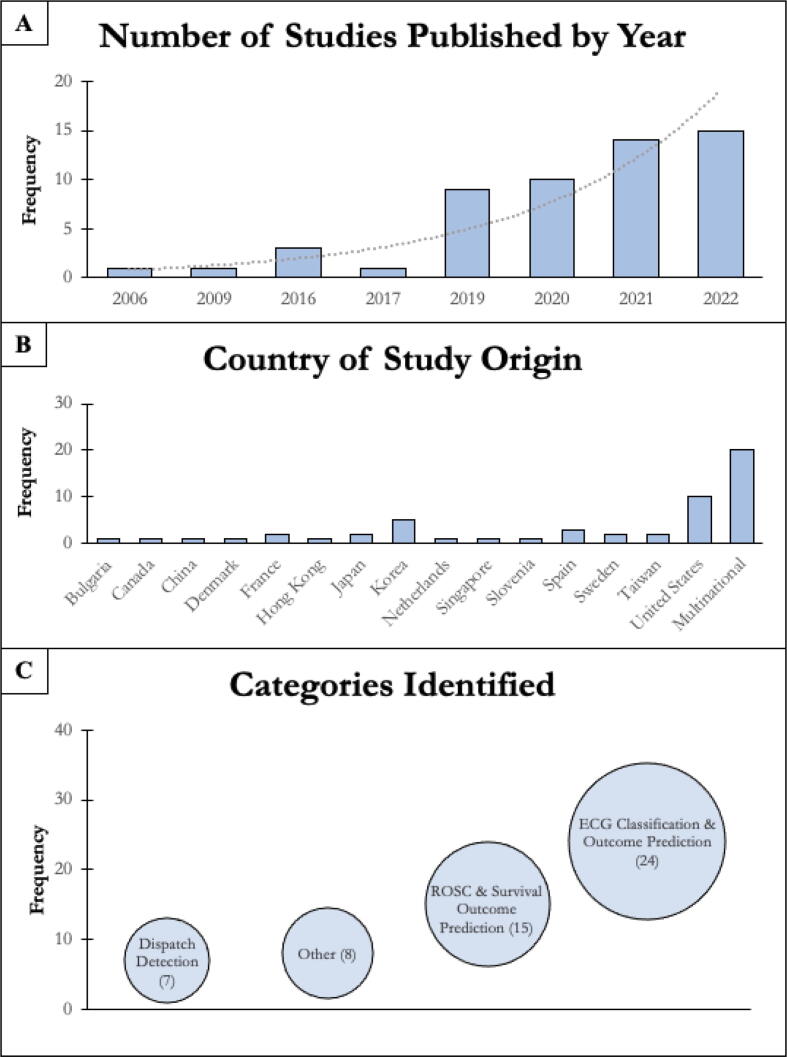
Of 173 unique articles identified, 54 (31%) were included after screening. Of these studies, 15 (28%) were from the year 2022 and with an increasing trend annually starting in 2019. The majority were carried out by multinational collaborations (20/54, 38%) with additional studies from the United States (10/54, 19%), Korea (5/54, 10%), and Spain (3/54, 6%). Studies were classified into three major categories including ECG waveform classification and outcome prediction (24/54, 44%), early dispatch-level detection and outcome prediction (7/54, 13%), return of spontaneous circulation and survival outcome prediction (15/54, 20%), and other (9/54, 16%). All but one study had a retrospective design.
A small but growing body of literature exists describing the use of AI to augment early OHCA care.
人工智能(AI)在院外心脏骤停(OHCA)护理期间为急救医疗服务人员提供支持方面已显示出巨大潜力;然而,评估这一主题的研究范围尚不清楚。本综述探讨了关于人工智能在早期OHCA护理中应用的文献广度。
我们根据系统评价和Meta分析扩展的首选报告项目(PRISMA-ScR)指南,对PubMed®、Embase和Web of Science进行了检索。纳入2023年1月18日前发表的聚焦于非创伤性OHCA的文章。如果研究未使用人工智能干预(包括机器学习、深度学习或自然语言处理),或未使用院前护理阶段的数据,则将其排除。
在确定的173篇独特文章中,筛选后纳入54篇(31%)。在这些研究中,15篇(28%)来自2022年,自2019年起呈逐年增加趋势。大多数研究是由跨国合作开展的(20/54,38%),另有来自美国(10/54,19%)、韩国(5/54,10%)和西班牙(3/54,6%)的研究。研究分为三大类,包括心电图波形分类和结果预测(24/54,44%)、早期调度级检测和结果预测(7/54,13%)、自主循环恢复和生存结果预测(15/54,20%)以及其他(9/54,16%)。除一项研究外,所有研究均采用回顾性设计。
描述使用人工智能增强早期OHCA护理的文献虽少但在不断增加。