Qin Geng, Zhao Chuanqi, Liu Yan, Zhang Cheng, Yang Guang, Yang Jie, Wang Zhao, Wang Chunyu, Tu Changchun, Guo Zhendong, Ren Jinsong, Qu Xiaogang
Laboratory of Chemical Biology and State Key Laboratory of Rare Earth Resource Utilization, Changchun Institute of Applied Chemistry, Chinese Academy of Sciences, Changchun, Jilin, China.
University of Science and Technology of China, Hefei, Anhui, China.
Cell Discov. 2022 Sep 6;8(1):86. doi: 10.1038/s41421-022-00450-x.
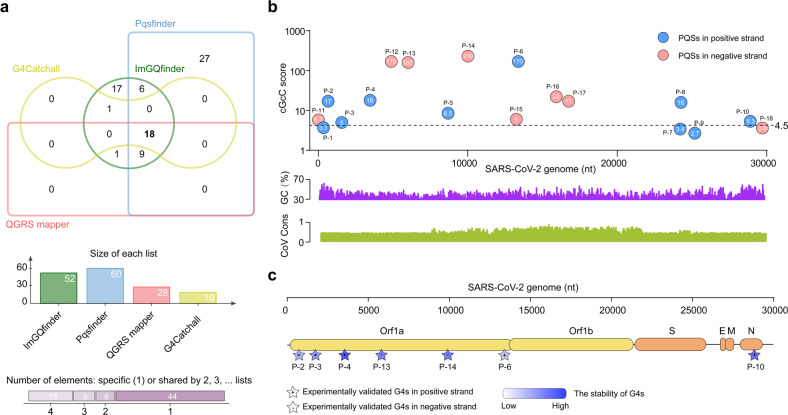
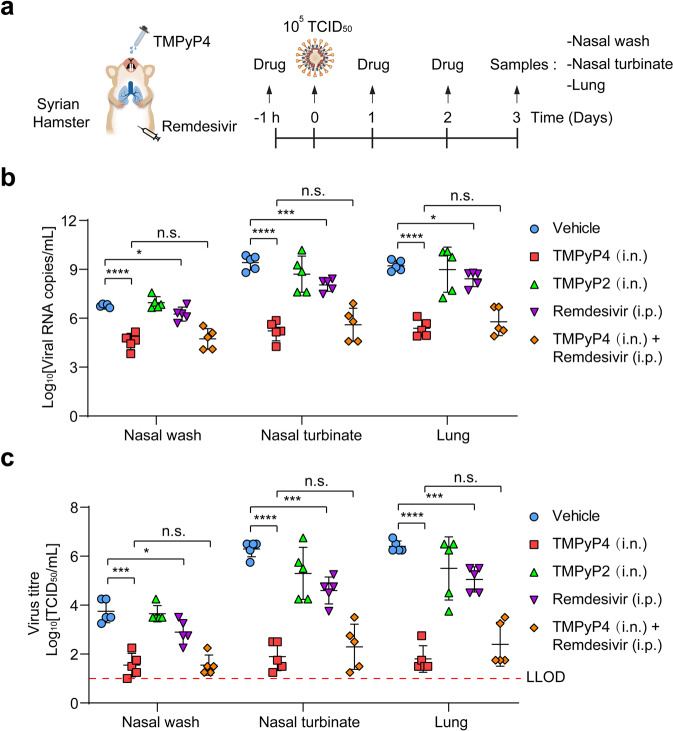
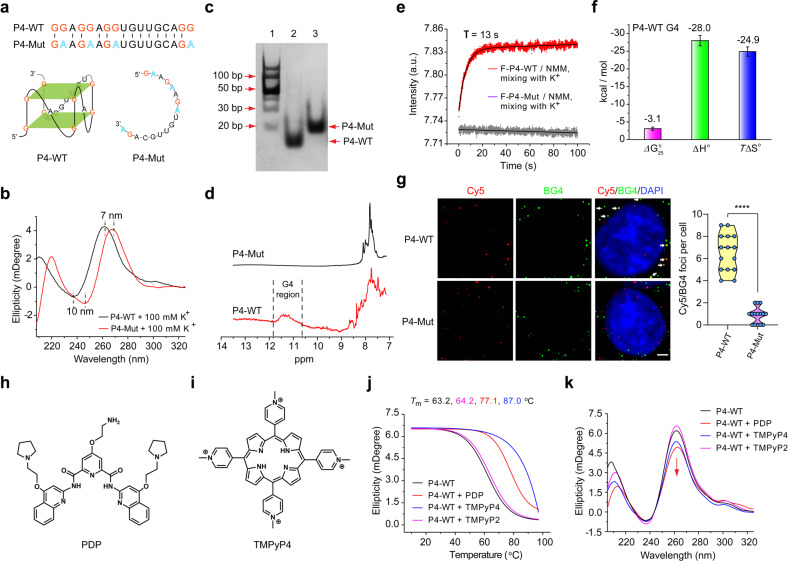
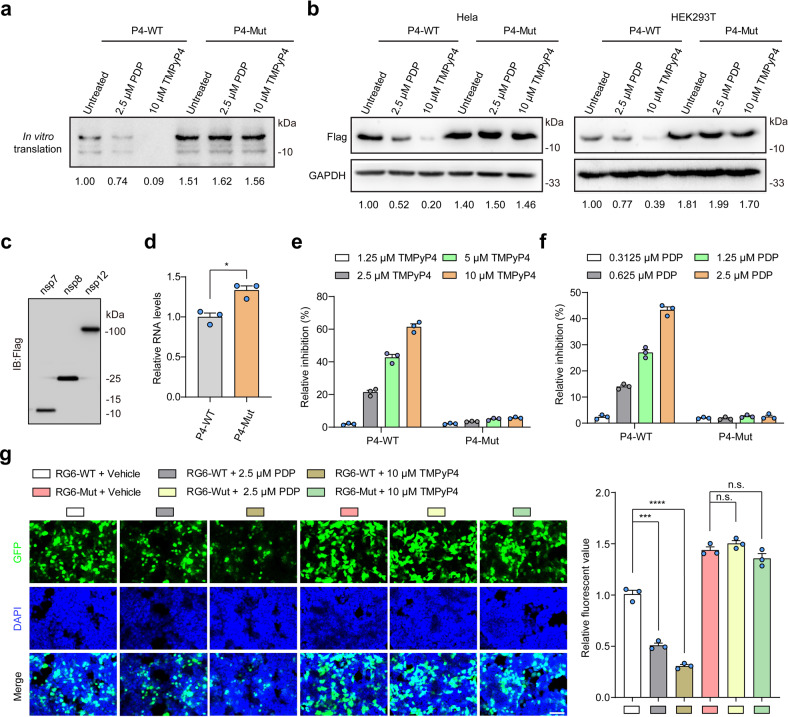
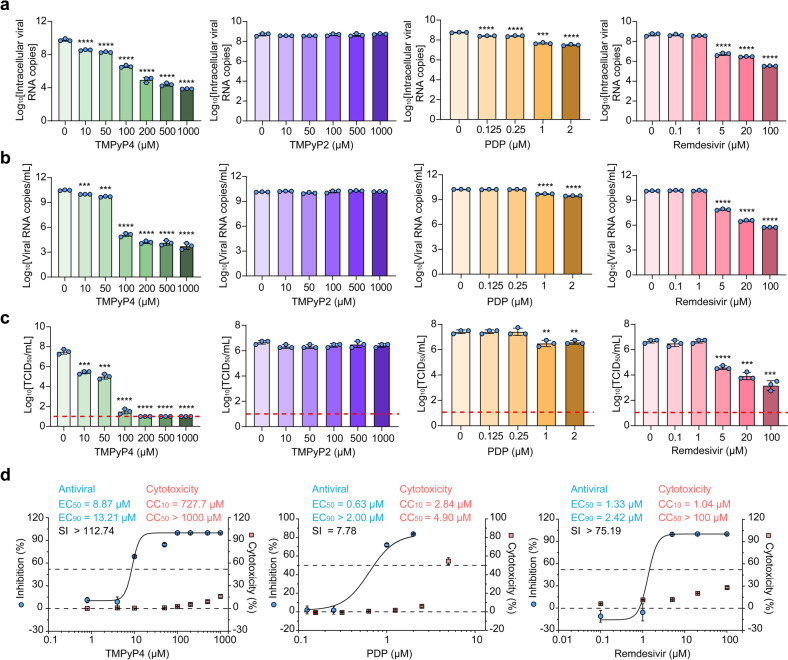
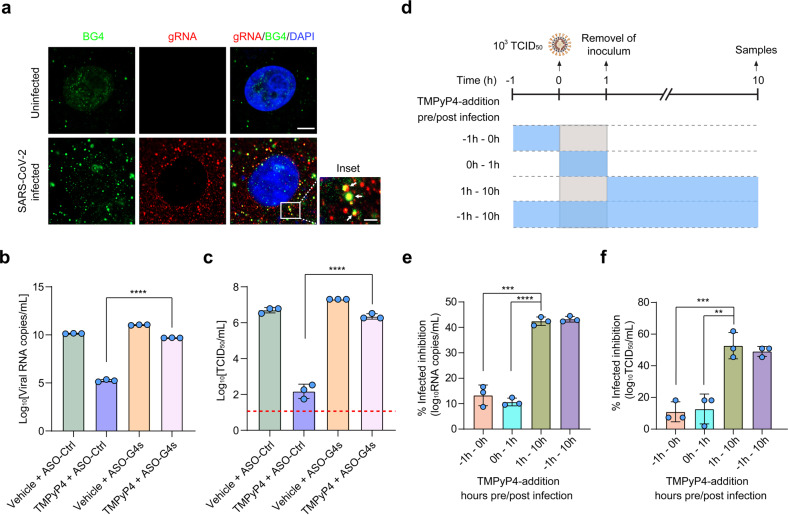
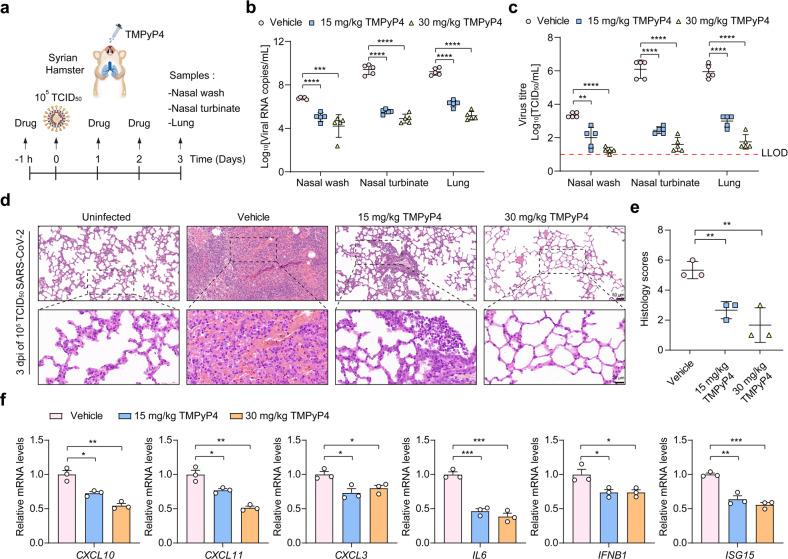
The ongoing COVID-19 pandemic has continued to affect millions of lives worldwide, leading to the urgent need for novel therapeutic strategies. G-quadruplexes (G4s) have been demonstrated to regulate life cycle of multiple viruses. Here, we identify several highly conservative and stable G4s in SARS-CoV-2 and clarify their dual-function of inhibition of the viral replication and translation processes. Furthermore, the cationic porphyrin compound 5,10,15,20-tetrakis-(N-methyl-4-pyridyl)porphine (TMPyP4) targeting SARS-CoV-2 G4s shows excellent antiviral activity, while its N-methyl-2-pyridyl positional isomer TMPyP2 with low affinity for G4 has no effects on SARS-CoV-2 infection, suggesting that the antiviral activity of TMPyP4 attributes to targeting SARS-CoV-2 G4s. In the Syrian hamster and transgenic mouse models of SARS-CoV-2 infection, administration of TMPyP4 at nontoxic doses significantly suppresses SARS-CoV-2 infection, resulting in reduced viral loads and lung lesions. Worth to note, the anti-COVID-19 activity of TMPyP4 is more potent than remdesivir evidenced by both in vitro and in vivo studies. Our findings highlight SARS-CoV-2 G4s as a novel druggable target and the compelling potential of TMPyP4 for COVID-19 therapy. Different from the existing anti-SARS-CoV-2 therapeutic strategies, our work provides another alternative therapeutic tactic for SARS-CoV-2 infection focusing on targeting the secondary structures within SARS-CoV-2 genome, and would open a new avenue for design and synthesis of drug candidates with high selectivity toward the new targets.
持续的新冠疫情继续影响着全球数百万人的生命,导致对新型治疗策略的迫切需求。已证明G-四链体(G4s)可调节多种病毒的生命周期。在此,我们在严重急性呼吸综合征冠状病毒2(SARS-CoV-2)中鉴定出几种高度保守和稳定的G4s,并阐明它们在抑制病毒复制和翻译过程中的双重功能。此外,靶向SARS-CoV-2 G4s的阳离子卟啉化合物5,10,15,20-四(N-甲基-4-吡啶基)卟啉(TMPyP4)显示出优异的抗病毒活性,而其对G4亲和力低的N-甲基-2-吡啶基位置异构体TMPyP2对SARS-CoV-2感染没有影响,这表明TMPyP4的抗病毒活性归因于靶向SARS-CoV-2 G4s。在SARS-CoV-2感染的叙利亚仓鼠和转基因小鼠模型中,以无毒剂量施用TMPyP4可显著抑制SARS-CoV-2感染,导致病毒载量和肺部病变减少。值得注意的是,体外和体内研究均证明TMPyP4的抗新冠病毒活性比瑞德西韦更强。我们的研究结果突出了SARS-CoV-2 G4s作为一种新型可成药靶点以及TMPyP4在新冠治疗中的巨大潜力。与现有的抗SARS-CoV-2治疗策略不同,我们的工作为SARS-CoV-2感染提供了另一种替代治疗策略,重点是靶向SARS-CoV-2基因组内的二级结构,并将为设计和合成对新靶点具有高选择性的候选药物开辟一条新途径。