The New Zealand Institute for Plant and Food Research Limited, Private Bag 11600, Palmerston North 4442, New Zealand.
Department of Agriculture, Food and Environment, University of Pisa, Italy.
Ann Bot. 2022 Nov 17;130(5):613-636. doi: 10.1093/aob/mcac109.
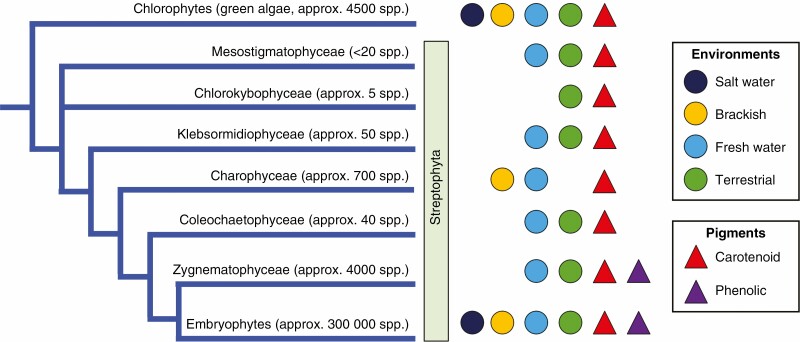
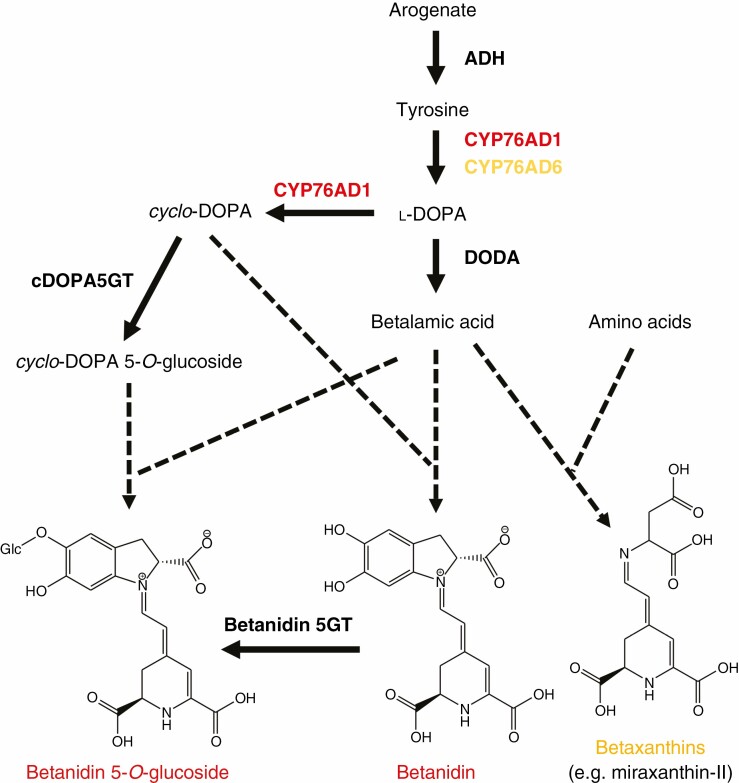
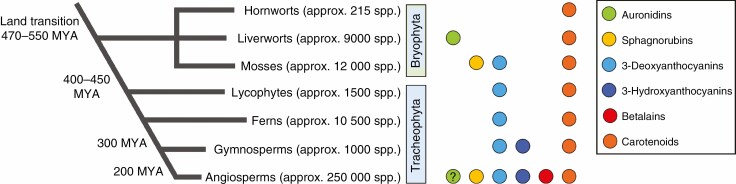
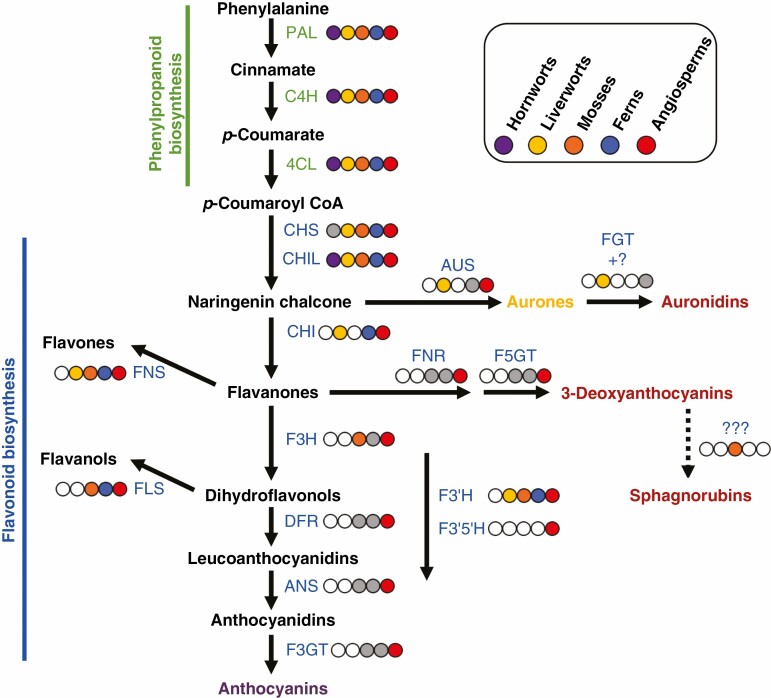
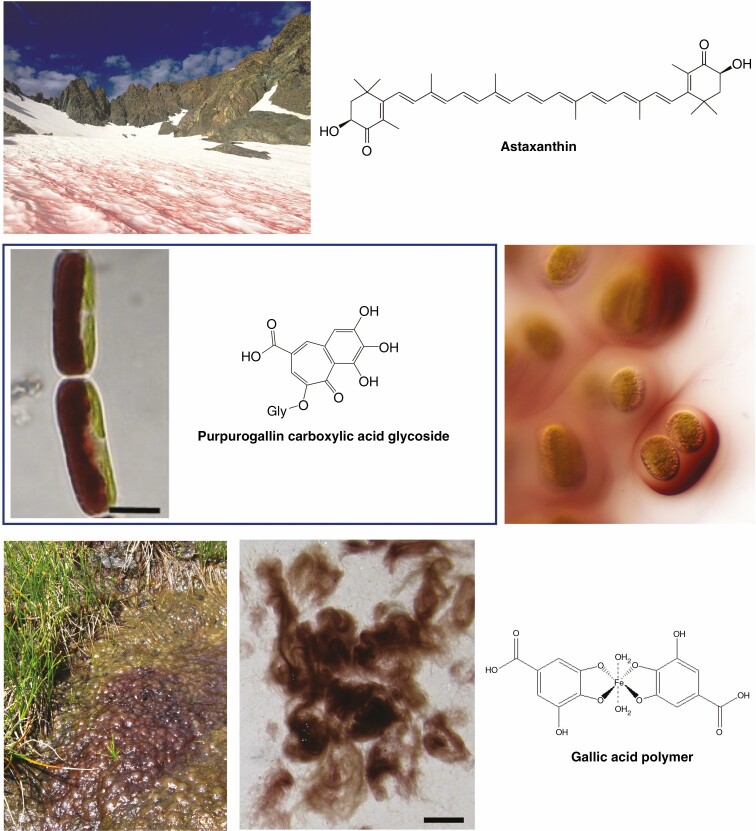
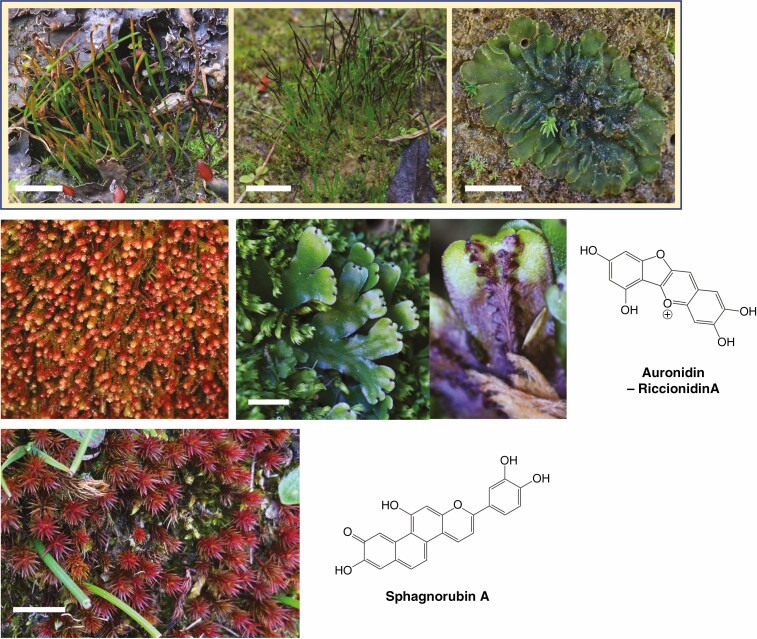
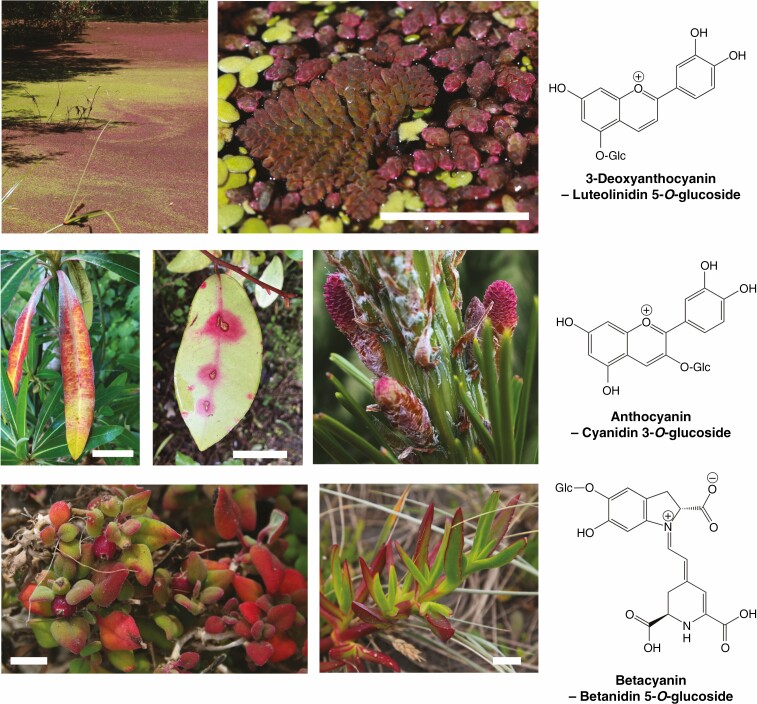
Land plants commonly produce red pigmentation as a response to environmental stressors, both abiotic and biotic. The type of pigment produced varies among different land plant lineages. In the majority of species they are flavonoids, a large branch of the phenylpropanoid pathway. Flavonoids that can confer red colours include 3-hydroxyanthocyanins, 3-deoxyanthocyanins, sphagnorubins and auronidins, which are the predominant red pigments in flowering plants, ferns, mosses and liverworts, respectively. However, some flowering plants have lost the capacity for anthocyanin biosynthesis and produce nitrogen-containing betalain pigments instead. Some terrestrial algal species also produce red pigmentation as an abiotic stress response, and these include both carotenoid and phenolic pigments.
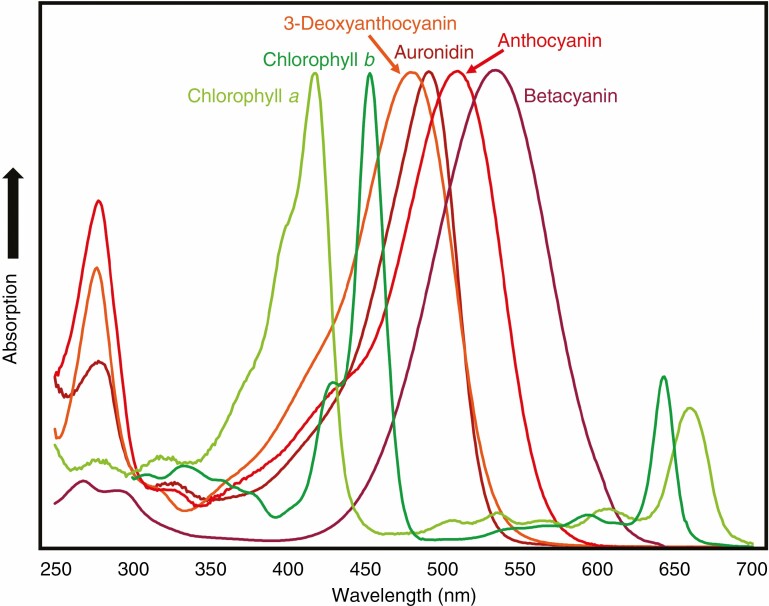
In this review, we examine: which environmental triggers induce red pigmentation in non-reproductive tissues; theories on the functions of stress-induced pigmentation; the evolution of the biosynthetic pathways; and structure-function aspects of different pigment types. We also compare data on stress-induced pigmentation in land plants with those for terrestrial algae, and discuss possible explanations for the lack of red pigmentation in the hornwort lineage of land plants.
The evidence suggests that pigment biosynthetic pathways have evolved numerous times in land plants to provide compounds that have red colour to screen damaging photosynthetically active radiation but that also have secondary functions that provide specific benefits to the particular land plant lineage.
陆地植物通常会产生红色色素作为对环境胁迫的反应,包括非生物和生物胁迫。产生的色素类型因不同的陆地植物谱系而异。在大多数物种中,它们是类黄酮,这是苯丙烷途径的一个大分支。能够赋予红色的类黄酮包括 3-羟基花青素、3-去氧花青素、泥炭红和金雀异黄素,它们分别是开花植物、蕨类植物、苔藓植物和地钱植物中主要的红色色素。然而,一些开花植物已经失去了花青素生物合成的能力,转而产生含氮的甜菜红素色素。一些陆地藻类物种也会产生红色色素作为非生物胁迫的反应,其中包括类胡萝卜素和酚类色素。
在这篇综述中,我们检查了:哪些环境触发因素会在非生殖组织中诱导产生红色色素;应激诱导色素形成的功能理论;生物合成途径的进化;以及不同色素类型的结构-功能方面。我们还将陆地植物的应激诱导色素数据与陆地藻类进行了比较,并讨论了陆地植物角苔谱系中缺乏红色色素的可能原因。
证据表明,色素生物合成途径在陆地植物中多次进化,以提供具有红色的化合物来屏蔽有害的光合作用活性辐射,但这些化合物也具有为特定陆地植物谱系提供特定益处的次要功能。