Dai Yan, Yang Ruoting, Yan Yuting, Wu Yong, Meng Xuanyi, Yang Anshu, Wu Zhihua, Shi Linbo, Li Xin, Chen Hongbing
State Key Laboratory of Food Science and Technology, Nanchang University, Nanchang, China.
School of Food Science and Technology, Nanchang University, Nanchang, China.
Front Nutr. 2022 Aug 22;9:955135. doi: 10.3389/fnut.2022.955135. eCollection 2022.
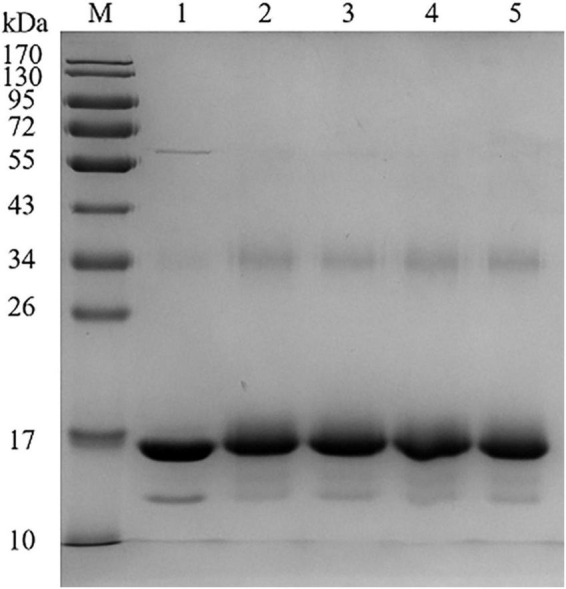
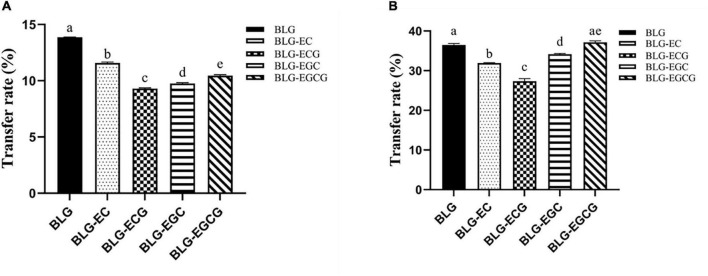
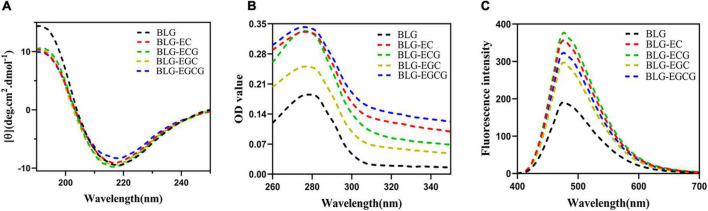
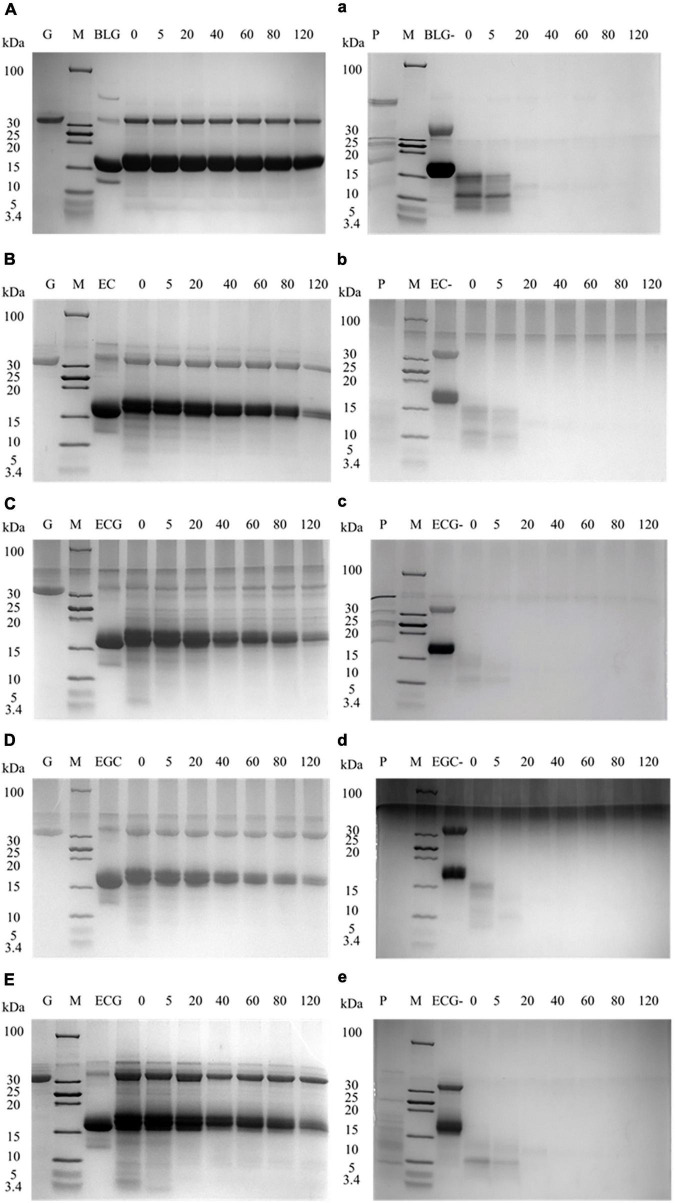
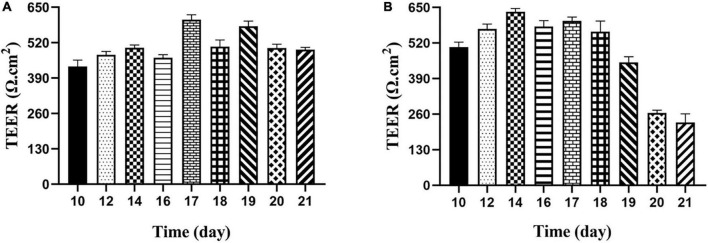
The current research on interaction between catechin and protein has focused on non-covalent crosslinking, however, the mechanism of free radical-induced crosslinking between catechin and β-lactoglobulin (BLG) is not known. In this study, BLG bound to four catechins [epicatechin (EC), epigallocatechin (EGC), epicatechin gallate (ECG), and epigallocatechin gallate (EGCG)]. The structure change of complex was investigated by circular dichroism spectroscopy, ultraviolet-visible (UV-vis) spectroscopy and Acid and 8-Anilino-1-naphthalenesulfonic acid (ANS) fluorescence spectroscopy. M cell model was constructed to evaluate the transintestinal epithelial transport capacity of complex digestive products. The results showed that catechins were covalently bound to BLG by C-S and C-N bonds and their binding content was EGCG>EGC>ECG>EC. Moreover, catechins could change the secondary structure of BLG, with the decrease of α-helix and reduction of the irregular coilings, which leads to the loose spatial structure of the protein. Moreover, the catechin could enhance further the digestibility of BLG. Transport capacity of digestive products of M cell model was about twice of that of the Caco-2 cell model, indicating that M cell model had better antigen transport capacity. The difference between groups indicated that the transport efficiency of digestive products was decreased with the presence of catechin, in which BLG-EGCG and BLG-EGC groups were transported more strong than those of BLG-EC and BLG-ECG groups. The transport efficiency of BLG-catechin complexes were lower than that of BLG, indicating that catechin had the protective and repair roles on intestinal barrier permeability.
目前关于儿茶素与蛋白质相互作用的研究主要集中在非共价交联方面,然而,自由基诱导儿茶素与β-乳球蛋白(BLG)之间交联的机制尚不清楚。在本研究中,BLG与四种儿茶素[表儿茶素(EC)、表没食子儿茶素(EGC)、表儿茶素没食子酸酯(ECG)和表没食子儿茶素没食子酸酯(EGCG)]结合。通过圆二色光谱、紫外可见(UV-vis)光谱以及酸性和8-苯胺基-1-萘磺酸(ANS)荧光光谱研究了复合物的结构变化。构建了M细胞模型以评估复合消化产物的经肠上皮转运能力。结果表明,儿茶素通过C-S和C-N键与BLG共价结合,其结合量为EGCG>EGC>ECG>EC。此外,儿茶素可改变BLG的二级结构,α-螺旋减少,无规卷曲减少,导致蛋白质空间结构松散。而且,儿茶素可进一步提高BLG的消化率。M细胞模型消化产物的转运能力约为Caco-2细胞模型的两倍,表明M细胞模型具有更好的抗原转运能力。各组之间的差异表明,儿茶素的存在会降低消化产物的转运效率,其中BLG-EGCG和BLG-EGC组的转运能力强于BLG-EC和BLG-ECG组。BLG-儿茶素复合物的转运效率低于BLG,表明儿茶素对肠道屏障通透性具有保护和修复作用。