Shum Cheryl W Y, Nong Wenyan, So Wai Lok, Li Yiqian, Qu Zhe, Yip Ho Yin, Swale Thomas, Ang Put O, Chan King Ming, Chan Ting Fung, Chu Ka Hou, Chui Apple P Y, Lau Kwok Fai, Ngai Sai Ming, Xu Fei, Hui Jerome H L
School of Life Sciences, Simon F.S. Li Marine Science Laboratory, State Key Laboratory of Agrobiotechnology, The Chinese University of Hong Kong, Hong Kong, China.
Dovetail Genomics, Scotts Valley, CA, United States.
Front Cell Dev Biol. 2022 Aug 17;10:900321. doi: 10.3389/fcell.2022.900321. eCollection 2022.
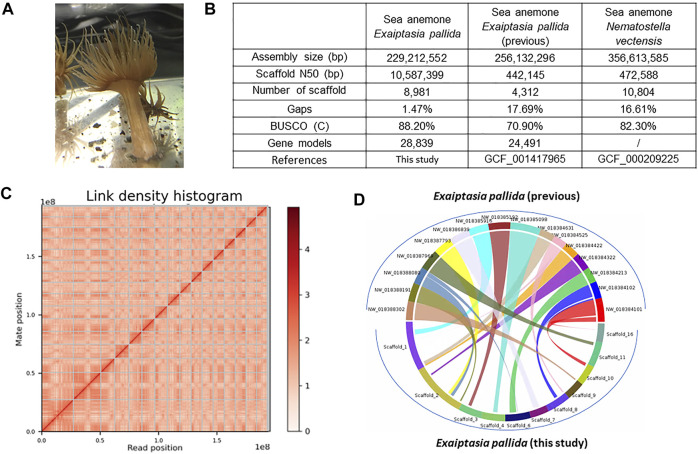
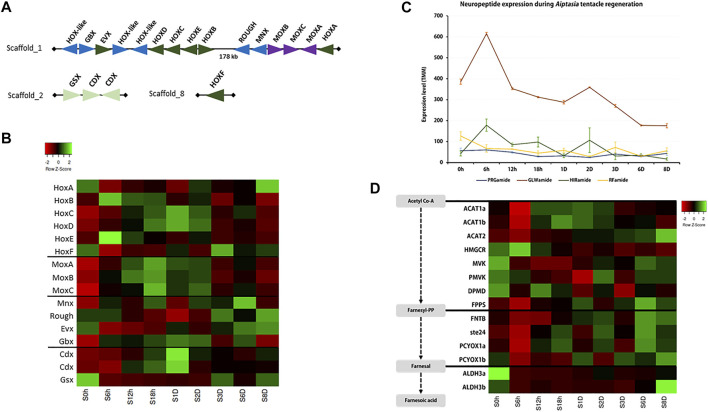
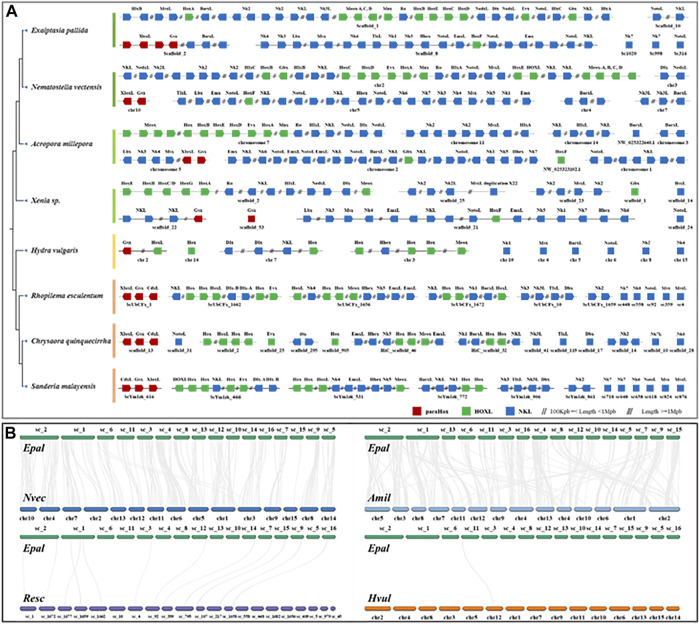
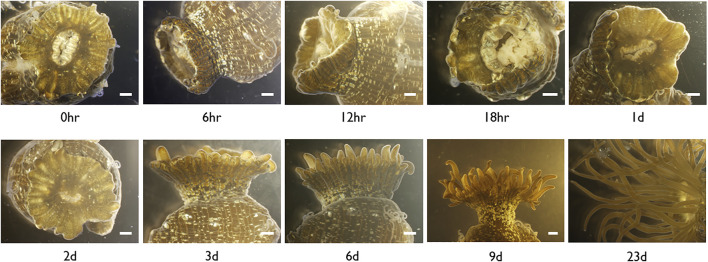
Cnidarians including sea anemones, corals, hydra, and jellyfishes are a group of animals well known for their regeneration capacity. However, how non-coding RNAs such as microRNAs (also known as miRNAs) contribute to cnidarian tissue regeneration is poorly understood. Here, we sequenced and assembled the genome of the sea anemone collected in Hong Kong waters. The assembled genome size of is 229.21 Mb with a scaffold N50 of 10.58 Mb and BUSCO completeness of 91.1%, representing a significantly improved genome assembly of this species. The organization of ANTP-class homeobox genes in this anthozoan further supported the previous findings in jellyfishes, where most of these genes are mainly located on three scaffolds. Tentacles of were excised, and both mRNA and miRNA were sequenced at 9 time points (0 h, 6 h, 12 h, 18 h, 1 day, 2, 3, 6, and 8 days) from regenerating tentacles. In addition to the Wnt signaling pathway and homeobox genes that are shown to be likely involved in tissue regeneration as in other cnidarians, we have shown that GLWamide neuropeptides, and for the first time sesquiterpenoid pathway genes could potentially be involved in the late phase of cnidarian tissue regeneration. The established sea anemone model will be useful for further investigation of biology and evolution in, and the effect of climate change on this important group of animals.
包括海葵、珊瑚、水螅和水母在内的刺胞动物是一类以其再生能力而闻名的动物。然而,人们对微小RNA(也称为miRNA)等非编码RNA如何促进刺胞动物组织再生知之甚少。在这里,我们对采集自香港水域的海葵基因组进行了测序和组装。组装后的基因组大小为229.21 Mb,支架N50为10.58 Mb,BUSCO完整性为91.1%,代表了该物种基因组组装的显著改进。该珊瑚虫中ANTP类同源框基因的组织进一步支持了先前在水母中的发现,其中大多数这些基因主要位于三个支架上。切除海葵的触手,并在再生触手的9个时间点(0小时、6小时、12小时、18小时、1天、2天、3天、6天和8天)对mRNA和miRNA进行测序。除了如在其他刺胞动物中显示可能参与组织再生的Wnt信号通路和同源框基因外,我们还表明GLWamide神经肽以及首次发现的倍半萜途径基因可能参与刺胞动物组织再生的后期阶段。所建立的海葵模型将有助于进一步研究这一重要动物群体的生物学和进化以及气候变化对其的影响。